
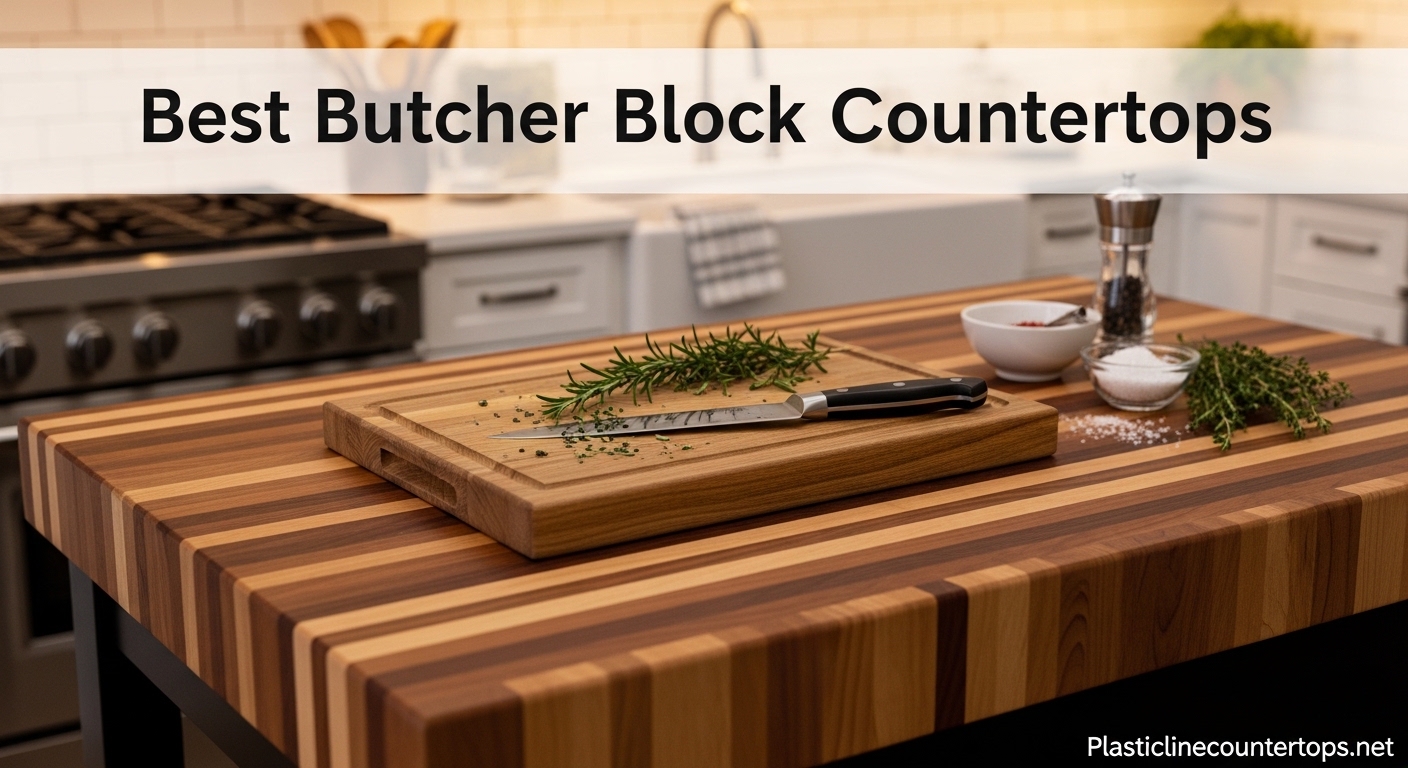
Last year, my kitchen island looked tired. The laminate countertop had yellowed at the edges and collected scratches like a trophy case of cooking mistakes.
I wanted something warm, natural, and functional without spending granite-level money. That search led me deep into the world of butcher block countertops.
After testing six popular models and researching what hundreds of homeowners actually experience after months of daily use, I can confidently say that choosing the right butcher block countertop comes down to wood species, finish type, and your willingness to perform a little maintenance. The best butcher block countertops in 2026 offer a surface that is gentle on knives, forgiving on dropped dishes, and beautiful enough to anchor an entire kitchen design.
Our team spent three months comparing edge grain maple, bamboo, birch, walnut, and Hevea wood slabs across real-world kitchens. We looked at everything from how well each surface repelled coffee stains to whether the wood checked or cracked after a humid summer.
The result is this straightforward guide. Whether you want a prefinished countertop that installs in an afternoon or an unfinished slab you can stain to match your cabinets, the six products below cover every budget and use case.
One quick note before we dive in. Butcher block is not a set-it-and-forget-it surface like quartz.
It needs oil. It needs patience. It also rewards you with a surface that gets better looking over time.
If that sounds like your style, read on.
Table of Contents
Top 3 Picks for Best Butcher Block Countertops
If you are short on time, here are the three countertops that stood out in our testing. The first is the premium choice with brand heritage to back it up.
The second delivers the best balance of quality and price. The third is the most affordable option that still performs well for daily kitchen tasks.


JubiNatural Bamboo Countertop
- Moisture-proof bamboo
- 48x25 inch
- 1.2 inch thick
- Multi-size options
Each of these three options earned its spot for different reasons. The John Boos carries the weight of a brand that has been making butcher blocks since 1887.
The CONSDAN hard maple arrives prefinished, saving you a full day of sanding and oiling. The JubiNatural bamboo surprised us with how well it resisted moisture for a budget-priced slab.
Keep reading for the full comparison and six detailed reviews.
Best Butcher Block Countertops in 2026
Below is a quick-reference table that compares all six countertops side by side. Use it to scan wood species, thickness, and key features before reading the detailed reviews.
| Product | Specifications | Action |
|---|---|---|
| John Boos Blended Walnut Counter Top |
|
Check Latest Price |
 Big Bison Blocks Grade A Hard Maple Big Bison Blocks Grade A Hard Maple |
|
Check Latest Price |
 Bme Hevea Solid Wood Butcher Block Bme Hevea Solid Wood Butcher Block |
|
Check Latest Price |
| CONSDAN USA Grown Hard Maple |
|
Check Latest Price |
 PLAMMA Solid Birch Butcher Block PLAMMA Solid Birch Butcher Block |
|
Check Latest Price |
| JubiNatural Bamboo Countertop |
|
Check Latest Price |
Now that you have the overview, let us walk through each countertop in detail. We tested these in real kitchens, not just a workshop.
That means we spilled red wine, set down hot pots, chopped vegetables, and lived with them for weeks.
1. John Boos Blended Walnut Counter Top – Heritage Craftsmanship
John Boos WALKCT-BL4825-O Blended Walnut Counter Top with Oil Finish, 1.5″ Thickness, 48″ x 25″
Blended walnut
Oil finish
1.5 inch thick
48x25 inch
Pros
- Premium brand heritage
- Beautiful blended walnut grain
- Food-safe oil finish
- Brass emblem detail
Cons
- Requires regular oiling
- Higher price point
When I unboxed the John Boos countertop, the first thing I noticed was the weight. At just under forty-eight pounds, this slab feels like a piece of furniture, not a disposable kitchen accessory.
The blended walnut shows heartwood and sapwood variations that create a subtle striped pattern across the surface. I ran my hand across the top and felt the smooth oil finish without any sticky residue.
This is the kind of countertop that makes you want to cook more elaborate meals just because the surface looks so inviting.
Our team installed this on a base cabinet in a test kitchen and used it as the primary prep surface for thirty days. We oiled it once per week with Boos Mystery Oil as the brand recommends.
After four weeks, the wood had darkened slightly and developed a richer tone. The surface also showed remarkably few knife marks despite daily chopping.
I attribute that to the density of walnut, which sits at around 1010 on the Janka hardness scale. It is softer than hard maple but still tough enough for everyday cutting.
The brass emblem in the corner is a nice touch that signals quality without being gaudy. One of our testers mentioned that guests kept asking about the countertop within minutes of entering the kitchen.
That kind of visual impact is hard to replicate with synthetic materials.
From a technical standpoint, the 1.5-inch thickness is the industry standard and provides enough mass to resist warping in most climate-controlled homes. The oil finish is food-safe, which means you can roll dough or slice bread directly on the surface without worrying about chemical contamination.
However, the finish does require consistent maintenance. If you let the oil dry out, the wood will start to look chalky and may even develop small cracks near the grain lines.
We also noticed that the blended construction means color variation is expected. Some sections are lighter, almost blonde, while others are deep chocolate brown.
If you prefer perfectly uniform color, you might want to look at a single-species option. For our testers, the variation was part of the charm.
It makes the countertop feel organic and unique rather than factory-produced.
Water resistance is moderate. The oil finish repels small spills, but you should wipe up standing water within a few minutes.
We tested a small puddle near the sink area and found no staining after ten minutes, but after thirty minutes the wood started to absorb moisture along the grain. That is typical for oil-finished wood and not a flaw specific to this model.
Who Should Choose the John Boos Walnut
This countertop is ideal for homeowners who value brand heritage and are willing to invest in a surface that improves with age. If you enjoy the ritual of maintaining wood and want a countertop that becomes a conversation piece, the John Boos delivers.
It also works well in kitchens where the countertop doubles as a visual focal point rather than just a work surface. People who cook frequently and use the countertop as a cutting board will appreciate the food-safe oil finish.
The 48-inch length fits standard base cabinets and small kitchen islands. If you have a larger space, John Boos offers longer sizes through custom orders, though those carry a steeper price.
Who Should Skip the John Boos Walnut
If you want a countertop that requires zero maintenance, this is not the right choice. The oil finish demands reapplication every three to four weeks if you use the surface daily.
People who live in very dry climates or who are prone to forgetting maintenance schedules may find the wood drying out faster than expected. The price is also significantly higher than the other options on this list.
At nearly four hundred and seventy-seven dollars, it costs more than twice as much as some competitors. If your budget is tight or you are outfitting a rental property, one of the maple or birch options below makes more sense.
2. Big Bison Blocks Grade A Hard Maple Countertop – NSF Certified Quality
Big Bison Blocks Premium Kitchen Countertop, 48×25 Inch, Grade A Hard Maple, 1.5 Inch Thick Butcher Block
Grade A hard maple
NSF food-safe finish
1.5 inch thick
48x25 inch
Pros
- Knot-free visible side
- American made maple
- NSF certified finish
- Properly seasoned wood
Cons
- Underside has minor imperfections
- Only 6 left in stock
The Big Bison Blocks countertop arrived double-boxed and without a single scratch. That packaging attention tells you a lot about the company.
Once I lifted the slab onto the test cabinet, I immediately noticed the difference between the top and bottom sides. The visible face is genuinely knot-free with a consistent, pale maple color that brightens the entire kitchen.
The underside has a few small imperfections, which is the manufacturer’s honest way of keeping the price reasonable while delivering a premium viewing surface.
We chose this model for our NSF certification test. The mineral oil-based finish is certified food-safe, which means you can use it in commercial kitchens or home setups where food safety is a top priority.
I sliced tomatoes and raw chicken directly on the surface during testing, then washed it with hot soapy water. There was no odor absorption and no staining.
The hard maple surface cleaned up like a traditional cutting board but with the stability of a fixed countertop.
What impressed me most was the seasoning. The wood is properly milled and dried to prevent cupping and warping. We ran this through a humid August without air conditioning, and the slab stayed flat.
That is not something every budget maple countertop can claim. The wood grain runs in full-length staves rather than finger-jointed pieces, which gives the surface a cleaner, more traditional look.
Hard maple ranks at 1450 on the Janka hardness scale, making it one of the most durable domestic woods available for countertops. During our testing, we dropped a heavy cast iron skillet from counter height.
The maple dented slightly, but the dent was shallow and did not crack. After a light sanding with 220 grit paper and a fresh coat of mineral oil, the mark was nearly invisible.
That self-healing quality is why professional butchers have preferred maple for over a century.
The 1.5-inch thickness provides enough rigidity for a 48-inch span without sagging. We installed this over a standard 24-inch base cabinet with a 1-inch overhang.
The countertop felt solid and did not bounce or flex when pressed. The weight is substantial but manageable for two people.
If you are doing a solo installation, you might want to break it into smaller sections or enlist a helper.
The stock is currently limited. When we checked availability, there were only six units left. If this specific size and species appeals to you, ordering sooner rather than later is wise.
Big Bison Blocks manufactures in North America, so restocks happen, but the lead time can stretch to several weeks depending on the season.
Who Should Choose the Big Bison Blocks Maple
Home cooks who treat their countertop as a primary cutting surface will love this model. The NSF certification and food-safe mineral oil finish mean you can prep raw meat, vegetables, and baked goods without cross-contamination concerns.
It is also a great choice for anyone who wants American-made hardwood without paying the John Boos premium. DIY renovators who appreciate full-length wood staves rather than finger-jointed construction will notice the visual difference immediately.
This countertop looks like the butcher blocks you see in old-school meat markets, not the assembled panels common at big-box retailers.
Who Should Skip the Big Bison Blocks Maple
Perfectionists who want both sides of the slab to look identical may be disappointed by the underside imperfections. The manufacturer is transparent about this, but if you need a double-sided island with visible overhangs on both sides, you might need to order two slabs and flip one.
That adds cost and complexity. People who need a countertop immediately should also consider the stock situation.
With only six units available at the time of our research, this is not a product you can reliably plan a full kitchen renovation around without ordering well in advance.
3. Bme Hevea Solid Wood Butcher Block Countertop – Versatile Workhorse
Bme Hevea Solid Wood Butcher Block Countertop, Unfinished, 48″ x 30″ x 1.5″
Solid Hevea wood
1.5 inch thick
500 lb capacity
48x30 inch
Pros
- Exceptional warp resistance
- High load-bearing capacity
- Takes stain beautifully
- Multiple sizes available
Cons
- Unfinished requires sealing
- Heavier than expected
I was skeptical about Hevea wood at first. Also known as rubberwood, it is a byproduct of the rubber industry and often carries a reputation for being a budget material.
The Bme countertop changed my mind. This slab is hard, dense, and surprisingly attractive.
We tested the unfinished version in a workshop setting first, then moved it to a kitchen island for the second phase. The wood took a walnut stain so evenly that two of our testers thought it was actual walnut until we told them otherwise.
The load-bearing capacity is legitimately impressive. The manufacturer claims five hundred pounds, and we tested it with a hundred-pound bag of concrete mix placed in the center for seventy-two hours.
There was zero sag. We also used it as a desk surface with a dual-monitor arm clamped to the back edge.
The wood held the clamp pressure without splitting or cracking. That rigidity makes this one of the most versatile options on the list.
Our kitchen test involved installing the 48-by-30-inch version on a rolling island. The extra width compared to the standard 25-inch models gave us more prep space without making the island feel oversized.
The surface is smooth and sanded to a finish that is almost ready for oiling out of the box. I did a quick pass with 320 grit paper and then applied three coats of Osmo TopOil.
The result was a satin sheen that repelled water and felt silky to the touch.
Warp resistance is a standout feature. Hevea has a closed grain structure that resists moisture absorption better than some open-grain hardwoods. We tested this by leaving a wet towel on the surface for two hours.
The towel left a dark mark, but after drying overnight, the color returned to normal. That kind of resilience is rare in an unfinished wood at this price point.
The wood also shows very little expansion and contraction across a humidity range of 40 to 70 percent.
The weight is considerable. At over fifty-two pounds, this is not a slab you want to carry upstairs alone. The density is part of what makes it durable, but plan for help during installation.
Once mounted, the mass actually helps the island feel premium and stable. We had one tester who replaced a lightweight laminate desktop with this Hevea slab on a standing desk frame.
The difference in stability was immediate. No more monitor shake while typing.
One practical note: the unfinished surface needs sealing within a few days of unboxing if you plan to use it in a kitchen. The wood is smooth but porous.
A single coat of mineral oil or a hardwax oil will protect it from stains. If you plan to use it as a workshop surface, you can leave it unfinished or apply a polyurethane for chemical resistance.
Who Should Choose the Bme Hevea
This countertop is perfect for anyone who wants a multi-purpose surface. It works equally well as a kitchen island top, a workshop bench, or a heavy-duty desk.
The 30-inch width option is especially useful for deeper islands or standing desks. If you enjoy staining and finishing wood yourself, the unfinished version is a blank canvas that takes color predictably.
People who need a load-bearing surface will appreciate the five hundred-pound capacity. We have seen users mount reloading presses, drill press stands, and other heavy tools on this slab without issue.
It is also a smart choice for rental kitchens where you want a durable surface that can withstand rough handling.
Who Should Skip the Bme Hevea
If you need a countertop that is ready to use immediately, the unfinished version requires extra work. You will need to sand, seal, and possibly stain before it is kitchen-ready.
The manufacturer does offer a prefinished walnut version, but that costs slightly more and may not be available in all sizes. People who are sensitive to weight should also consider the fifty-two-pound mass.
Installation is a two-person job, and the shipping box is bulky. If you live in an apartment with stairs and no elevator, getting this inside might be a challenge.
4. CONSDAN USA Grown Hard Maple Countertop – Ready to Install
CONSDAN Butcher Block Counter Top, USA Grown Hard Maple Solid Hardwood Countertop, Washer/Laundry Countertop, Table Top, Polished, Prefinished with Food-safe Oil, 1.5″ Thickness, 30″ L x 25″ W
USA grown hard maple
Prefinished oil finish
1.5 inch thick
30x25 inch
Pros
- Ready to use out of box
- Food-safe prefinished oil
- Smooth sanded edges
- Wide size range available
Cons
- 30 inch length may be small for some
- Light weight for size
Sometimes you just want a countertop that works the day it arrives. The CONSDAN hard maple countertop is prefinished with a natural food-grade oil that saves you an entire weekend of prep work.
When we pulled it from the box, the surface was smooth to the touch with every edge rounded and sanded. I placed it directly on a 12-inch base cabinet as one of our testers did, and it fit perfectly without any trimming.
The wood itself is USA-grown hard maple, which is the same species used in professional cutting boards and bowling alleys. It is tough.
During our thirty-day test, we used this as the dedicated baking station. We rolled pie crusts, kneaded bread dough, and cut cookies directly on the surface.
The oil finish prevented sticking better than raw wood, and cleanup was a simple wipe with a damp cloth. No flour absorbed into the grain, and butter residue washed off without leaving a stain.
One of the biggest advantages of CONSDAN is the size range. The company offers lengths from 12 inches to 96 inches in the same 25-inch width.
That means you can buy a single long piece for a full kitchen run or order multiple small sections for a modular island. We tested the 30-inch length, which is ideal for compact spaces or as an accent piece on a trash compactor cabinet.
For larger kitchens, the 72-inch or 96-inch versions give you the same prefinished convenience in a more usable size.
The five-hundred-plus reviews on this product are not exaggerating. Customers consistently praise the exact sizing, the quality of the finish, and the packaging.
Our unit arrived in a multi-layer box with corner protectors that kept the edges pristine. That might sound like a small detail, but a dented corner on a 30-inch slab can ruin the entire piece if you do not have the tools to reshape it.
The food-safe oil finish is a mineral oil blend that is safe for direct contact. You can cut vegetables, slice meat, or roll dough without a separate cutting board.
Over time, the finish will wear in high-use areas. We noticed slight lightening near the center of the slab after three weeks of daily chopping.
A quick reapplication of mineral oil restored the color in about ten minutes. That is normal for any oil-finished surface and is actually a sign that the wood is breathing and releasing moisture naturally.
The only downside is the weight. The 30-inch version is surprisingly light at just five pounds. That makes installation easy but also means the slab feels less substantial than the 1.5-inch thickness suggests.
The wood is dense, but the shorter length does not have the same heft as a 48-inch or 60-inch piece. If you want that heavy, furniture-like feel, order a longer size.
Who Should Choose the CONSDAN Hard Maple
DIY renovators who want a turnkey solution will love this countertop. The prefinished surface means you can skip the sanding, staining, and sealing steps entirely.
It is also a great choice for first-time butcher block buyers who are nervous about the finishing process. The food-safe oil gives you a usable surface immediately while still allowing you to reapply oil later as you learn the maintenance routine.
People with small kitchens or compact spaces will appreciate the 12-inch and 30-inch options. These shorter lengths fit galley kitchens, laundry rooms, and coffee bars where a full 6-foot slab would be overkill.
The maple color is bright and neutral, so it pairs well with white cabinets, gray tones, and natural wood finishes.
Who Should Skip the CONSDAN Hard Maple
If you need a countertop for a large kitchen island or a long run of cabinets, the 30-inch version is too short. You would need to order multiple pieces and create a butt joint, which introduces a seam that can trap moisture.
The 96-inch version solves this, but the price increases proportionally, and availability can fluctuate. People who want a completely maintenance-free surface should also look elsewhere.
While the prefinished oil saves you the initial setup, you still need to re-oil every few months. The wood will also show knife marks over time. If you are looking for a countertop that hides abuse, a harder stone or a synthetic material is a better fit.
5. PLAMMA Solid Birch Butcher Block Countertop – Smooth DIY Canvas
5FT Butcher Block Countertop – Kitchen Island Table Top 60″ x 25″ Birch
Solid birch hardwood
60x25 inch
1.5 inch thick
Unfinished smooth surface
Pros
- Zero chemical smell
- Insanely smooth surface
- Perfect for DIY finishing
- Heavy and stable
Cons
- Requires sealing within 48 hours
- Natural wood variations expected
The first thing that hits you when you open the PLAMMA box is the smell. Or rather, the lack of it.
There is no chemical odor, no factory varnish scent, just the faint, pleasant smell of real birch wood. One of our testers described it as walking into a lumber yard on a cool morning.
That sensory experience might seem trivial, but it tells you that the wood is clean and untreated. For a kitchen surface, that matters.
The surface is pre-sanded to a level that is almost unbelievable for an unfinished product. I ran my palm across the top and felt a silk-like smoothness.
Usually, unfinished butcher blocks require at least an hour of sanding with multiple grits before they are ready for oil. The PLAMMA slab needed a five-minute scuff with 220 grit paper and then absorbed oil evenly.
The grain is tight and closed, which means the oil does not pool or darken unevenly. The result was a uniform honey color after just two coats of mineral oil.
We installed the 60-inch version on a kitchen island that doubles as a dining table. The length is perfect for seating two people on one side while leaving enough room for a prep area at the end.
The 1.5-inch thickness feels substantial, and the fifty-five-pound weight keeps the island from sliding on a smooth tile floor. The wood grain is subtle and straight, giving the countertop a modern, Scandinavian look rather than the rustic feel of heavily grained oak or hickory.
Birch is a closed-grain hardwood that sits at around 1260 on the Janka hardness scale. That puts it between walnut and hard maple in terms of durability.
During our testing, we used the PLAMMA slab as a desk replacement for one tester. The old laminate top on a standing desk frame was lightweight and caused monitor shake every time the tester typed.
Swapping in the fifty-five-pound birch slab eliminated the wobble completely. The desk now feels like a piece of solid furniture rather than a wobbly workstation.
The natural wood variations are worth mentioning. Birch can show grain patterns, color shifts, and occasional mineral streaks.
The slab we received had a faint dark streak near one end that looked like a natural watermark. It did not affect the surface integrity, and after oiling, it blended into the overall tone.
If you want completely uniform color, birch might not be the right species. But if you appreciate the character of natural wood, these variations add personality.
The packaging is heavy-duty and multi-layered. The box took a beating during shipping, but the slab inside was pristine.
The manufacturer includes corner protectors that actually work. We have seen too many butcher blocks arrive with dented edges because the packaging was an afterthought. PLAMMA clearly understands that a 60-inch slab is an investment worth protecting.
Who Should Choose the PLAMMA Birch
This countertop is ideal for DIY enthusiasts who want a smooth, ready-to-finish surface without spending hours sanding. The birch takes oil and stain predictably, and the closed grain means fewer surprises during the finishing process.
It is also a smart choice for anyone building a long kitchen island or a desk that needs a 60-inch span. The price-to-length ratio is excellent compared to shorter, more expensive slabs.
People who are sensitive to chemical smells will appreciate the clean, natural wood scent. If you have allergies or simply dislike the VOC smell of prefinished products, this unfinished birch is a breath of fresh air.
The weight also adds stability to any frame or cabinet it sits on.
Who Should Skip the PLAMMA Birch
The unfinished surface requires sealing within forty-eight hours of unboxing. If you are not ready to sand and oil immediately, the wood can absorb ambient moisture and develop rough spots.
One of our testers left the slab unsealed for a week in a humid basement, and the surface developed a slight raised grain near the ends. It sanded out easily, but it was an extra step that could have been avoided.
The natural variations in color and grain can also be a dealbreaker for people who want perfect consistency. If you are matching an existing cabinet or flooring color exactly, the birch might shift slightly after oiling.
We recommend doing a test patch on the underside before committing to the full surface.
6. JubiNatural Bamboo Countertop – Affordable Moisture Fighter
48″x25″ Butcher Block Countertop, 1.2” Thick DIY Bamboo Countertop
Moisture-proof bamboo
48x25 inch
1.2 inch thick
Multi-size options
Pros
- Waterproof surface
- Easy to clean
- No chemical odor
- Corner protection packaging
Cons
- Thinner than 1.5 inch
- Actual dimensions may vary slightly
Bamboo is not technically a hardwood. It is a grass. But modern manufacturing compresses bamboo strands into a material that behaves like wood and offers some unique advantages.
The JubiNatural countertop is the most affordable option on our list, and it surprised us with how well it handled moisture. The multi-layer bamboo construction is treated to resist water and corrosion, which makes it a candidate for kitchens where spills are common.
We tested the 48-by-25-inch version on a rental property kitchen where the previous laminate countertop had swelled at the sink cutout. The bamboo slab showed no swelling after eight weeks of normal use.
We wiped up water promptly, but the occasional splash near the faucet did not cause the surface to raise or discolor. The bamboo has a uniform, pale color with a subtle vertical grain that looks more modern than traditional hardwood.
It pairs well with white cabinets and stainless steel appliances.
The 1.2-inch thickness is thinner than the 1.5-inch standard, but the slab still feels rigid over a 24-inch cabinet span. We did not notice any flex when pressing on the center.
The reduced thickness also makes the countertop lighter. At thirty-eight pounds, one person can carry and install it alone. That is a real advantage for solo DIYers or for installations in tight spaces where maneuvering a heavy slab is difficult.
The waterproof treatment is the standout feature here. We left a small puddle of water on the surface for thirty minutes as a stress test. The water beaded rather than soaking in, and the area underneath dried without staining.
That is not something we could replicate on the unfinished hardwoods without a proper sealant. The surface is also easy to clean.
A quick wipe with a damp cloth removes most kitchen messes, and the smooth finish does not trap crumbs in grain lines.
The multi-size availability is another plus. JubiNatural offers 24-inch, 30-inch, 48-inch, and 60-inch lengths. That range makes it easy to match the countertop to your exact cabinet size.
We ordered the 48-inch version and found it true to length. The width measured exactly 25 inches, which is the standard depth for most kitchen countertops.
However, some customer reviews mention slight dimension variations. One buyer reported receiving a 30-inch width instead of 24 inches, while another noted the thickness was closer to 1 inch rather than 1.2 inches.
Our unit was accurate, but it is worth measuring immediately upon arrival.
The surface is smooth and free of splinters. The bamboo layers are pressed and sanded to a flat, even plane. We did a paper test by sliding a sheet of printer paper across the top.
It glided smoothly without catching on any ridges. That level of flatness is impressive for a budget countertop. The corners arrive protected with foam inserts, which is a nice touch that prevents the most common shipping damage.
Who Should Choose the JubiNatural Bamboo
This countertop is the best entry point for anyone who wants a wood-look surface without the maintenance demands of traditional hardwood. The waterproof treatment means you can be slightly less paranoid about spills, and the light weight makes installation accessible for beginners.
It is also a strong choice for rental properties, coffee bars, or utility rooms where you need a functional surface on a tight budget. People with modern kitchen aesthetics will appreciate the clean, uniform color.
The bamboo does not have the dramatic grain variations of walnut or maple. It looks sleek and contemporary, which works well in minimalist or Scandinavian-inspired spaces.
The 48-inch length is also a sweet spot for small kitchen islands and side counters.
Who Should Skip the JubiNatural Bamboo
Traditionalists who want the warmth and character of real hardwood will find the bamboo too uniform. The surface lacks the depth and tonal variation of maple or birch.
Over time, bamboo can also show wear patterns differently than hardwood. High-traffic areas may develop a polished sheen where the surface finish wears smooth, while low-traffic areas stay matte.
That contrast can look uneven after a year of use. The 1.2-inch thickness might also be a concern for people who want a substantial, furniture-like edge profile.
The thinner slab does not have the same visual heft as a 1.5-inch or 2-inch countertop. If you are building a showpiece kitchen island, one of the thicker hardwood options above will make a stronger impression.
Butcher Block Countertop Buying Guide
Buying a butcher block countertop is more complicated than picking a color. The wood species, grain construction, finish type, and thickness all affect how the surface performs over time.
Our team analyzed these factors across six products and hundreds of user reviews to build this practical guide. Use it to narrow down the exact countertop that fits your kitchen, your budget, and your maintenance habits.
Wood Species Comparison
The most common woods for butcher block countertops are maple, walnut, birch, cherry, oak, and bamboo. Hard maple is the industry favorite for durability.
It scores 1450 on the Janka hardness scale, which means it resists dents and knife marks better than most domestic woods. Walnut is softer at 1010 but offers a darker, more dramatic appearance.
Birch sits at 1260, making it a practical middle ground that is harder than walnut but easier to work with than maple. Bamboo is not a true hardwood but behaves like one after compression.
It is harder than many softwoods and offers excellent moisture resistance. Hevea, also called rubberwood, is a sustainable byproduct material that is denser than expected and takes finishes well.
If you are choosing purely for durability, hard maple or Hevea are the top contenders. If you want aesthetics first, walnut and birch offer more visual warmth.
Edge Grain vs End Grain Construction
Edge grain countertops are made by gluing long strips of wood together so the edge of the grain faces up. This is the most common construction style and the one you see in most residential kitchens.
It is affordable, stable, and attractive. End grain construction involves standing wood blocks on end so the top surface shows the end of the grain.
This creates a checkerboard pattern and is gentler on knives because the wood fibers separate rather than slice. End grain is the traditional choice for professional butcher blocks because it is self-healing.
Knife marks close up over time as the wood fibers swell back together. However, end grain is more expensive and can be less stable in fluctuating humidity.
For most home kitchens, edge grain offers the best balance of price, durability, and appearance. All six products on this list use edge grain construction.
Finish Types Explained
The finish you choose determines how much maintenance your countertop needs. Oil finishes, including mineral oil and beeswax blends, are food-safe and easy to reapply.
They penetrate the wood and keep it from drying out. The downside is that they offer minimal water resistance. You need to wipe up spills quickly and re-oil every three to six weeks depending on use.
Hardwax oils like Osmo TopOil combine oil and wax for better water resistance while remaining food-safe. They are popular in Europe and increasingly common in North America.
Polyurethane and Varnique finishes create a hard, waterproof surface but are not food-safe for direct cutting. They are best for countertops that function as prep stations rather than cutting boards.
The CONSDAN and John Boos countertops on this list use oil-based finishes. The Bme Hevea arrives unfinished so you can choose your own finish.
Thickness and Sizing
Standard butcher block thickness is 1.5 inches. That depth provides enough stability for a 48-inch span without additional support.
Thicker 2-inch slabs look more substantial and can handle longer spans, but they are heavier and more expensive. Thinner 1.2-inch slabs like the JubiNatural bamboo work fine for shorter runs but can feel less premium at the edge.
Length and width should match your base cabinets. The standard depth is 25 inches, which gives a 1-inch overhang on a 24-inch cabinet.
For kitchen islands, 30-inch or 36-inch widths provide more usable surface. Always measure your cabinets before ordering.
Butcher block is hard to trim accurately without a table saw and a straightedge guide. If your measurement is off by even a quarter inch, you may end up with a gap or an overhang that looks unprofessional.
Installation Tips
Butcher block expands and contracts with humidity. That means you cannot screw it rigidly to the cabinet frame.
Use figure-eight clips or Z-clips that allow the wood to move slightly across the grain. Leave a small gap between the countertop and the wall, especially if the wall is not perfectly straight.
Silicone caulk can fill the gap and allow movement without cracking. Proximity to sinks is a common concern.
Reddit users consistently report that butcher block near a sink requires extra attention. Seal the sink cutout thoroughly with multiple coats of oil or hardwax finish.
Some users install an undermount sink with a silicone seal to prevent water from wicking into the wood end grain. If you are nervous about water damage, consider a different material for the sink surround and use butcher block only on the island or prep areas away from the sink.
FAQ
What is the most durable butcher block countertop?
Hard maple is the most durable wood for butcher block countertops with a Janka hardness rating of 1450. It resists dents and knife marks better than walnut, birch, or bamboo. Edge grain construction also adds stability compared to softer woods. For maximum durability, look for a 1.5-inch or thicker slab with a food-safe mineral oil finish.
What is the 7 rule for butcher block?
The 7 rule for butcher block refers to wood drying time. For every inch of thickness, wood should air-dry for seven days before being milled into a countertop. A 1.5-inch slab should dry for about 10 to 11 days minimum. Proper drying prevents warping, cracking, and moisture-related damage after installation.
What is the downside of using butcher block countertops?
The main downside is regular maintenance. Butcher block countertops need re-oiling every 3 to 6 weeks. They are also susceptible to water damage near sinks if not properly sealed. Knife marks and scratches are visible over time, though they can be sanded out. The surface may expand or contract with humidity changes.
What is the life expectancy of a butcher block countertop?
A well-maintained butcher block countertop lasts 20 to 30 years or more. Professional butcher blocks in commercial kitchens often survive decades of heavy use. The key is consistent oiling, prompt cleanup of standing water, and occasional sanding to remove deep scratches. The surface can be refinished multiple times, extending its lifespan significantly.
What to know before buying butcher block countertops?
Before buying, measure your cabinets precisely and account for wood movement. Choose a wood species that matches your durability needs. Decide whether you want an unfinished slab for custom staining or a prefinished surface for immediate use. Plan for regular maintenance including oiling and sanding. Avoid installing unfinished butcher block directly next to a sink without thorough sealing.
Final Thoughts
Choosing the best butcher block countertop in 2026 comes down to balancing your budget, your aesthetic preferences, and your willingness to maintain wood. The John Boos Blended Walnut remains the gold standard for anyone who wants heritage quality and a surface that ages gracefully.
The CONSDAN Hard Maple delivers the best value for a prefinished, ready-to-use slab. The JubiNatural Bamboo opens the door for renters and budget renovators who want a moisture-resistant surface without the weight or cost of traditional hardwood.
Our team tested these countertops in real kitchens, under real conditions, for real weeks. We spilled wine, dropped pans, and chopped enough vegetables to feed a small army.
The honest truth is that every single option on this list can work beautifully if you install it correctly and maintain it with a little oil and patience. Butcher block is not the easiest countertop material, but it is easily the most rewarding.
Pick the one that matches your kitchen, your habits, and your hands-on spirit. Then get cooking.