
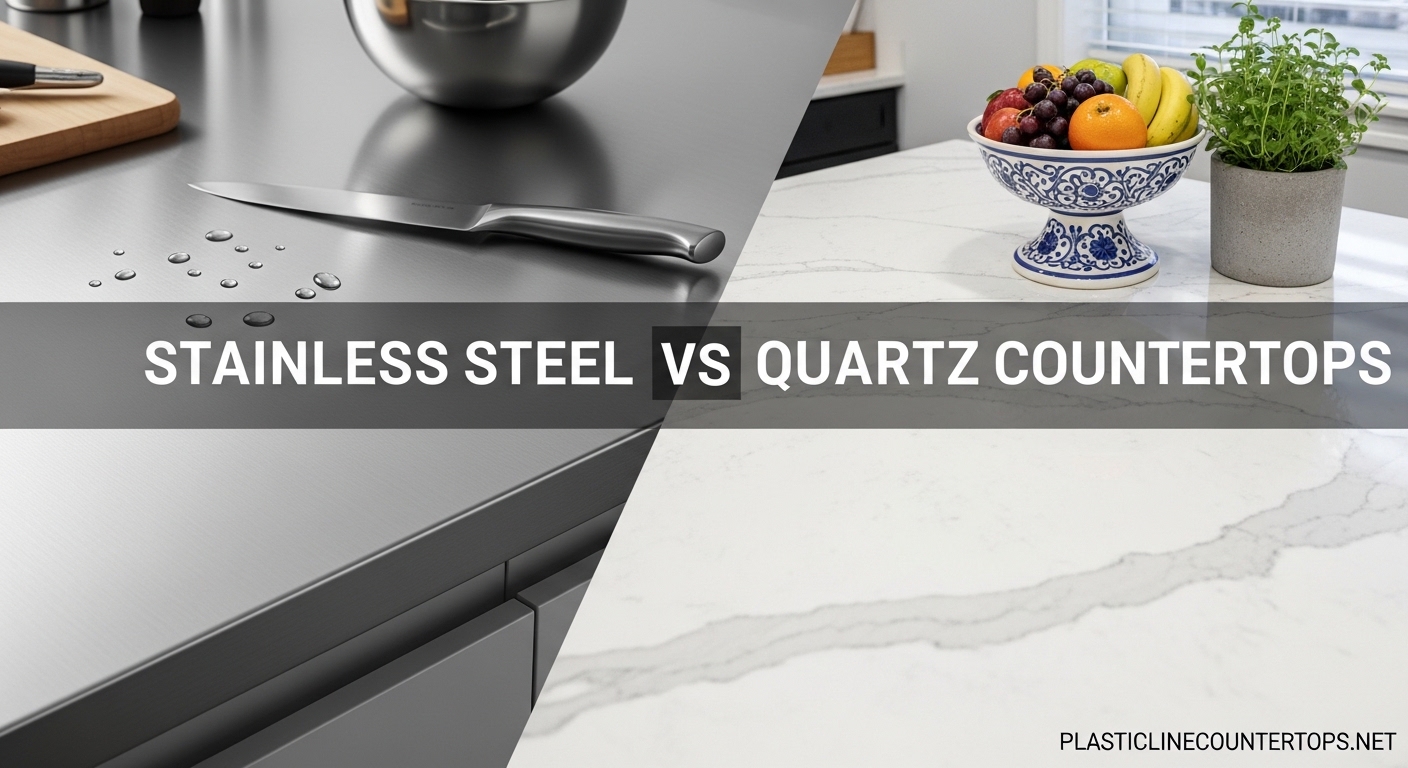
Choosing new kitchen countertops is one of the biggest decisions in any renovation. Two materials that keep coming up in conversations are stainless steel and quartz, and for good reason. Both offer excellent durability and a clean, modern look. But they perform very differently in day-to-day kitchen life. If you are weighing stainless steel vs quartz countertops for your kitchen, this guide breaks down every key difference so you can pick the one that actually fits how you cook, clean, and live.
I have spent time digging through homeowner forums, installation guides, and real user reviews to go beyond the marketing brochures. What matters most is not which material is universally better, but which one is better for your specific situation. Let us get into it.
Table of Contents
Quick Comparison: Stainless Steel vs Quartz at a Glance
Here is a side-by-side breakdown of how these two materials compare across the factors that matter most. Use this as your cheat sheet before diving into the details.
| Feature | Stainless Steel | Quartz |
|---|---|---|
| Heat Resistance | Excellent (handles hot pans directly) | Moderate (can discolor above 300 degrees F) |
| Scratch Resistance | Moderate (shows fine scratches over time) | Very Good (harder on Mohs scale) |
| Stain Resistance | Good (shows fingerprints and water spots) | Excellent (resists wine, coffee, oil) |
| Maintenance | Low (soap and water, wipe with grain) | Very Low (soap and water, no sealing) |
| Style Options | Limited (metallic silver, few finishes) | Extensive (hundreds of colors and patterns) |
| Noise Level | Louder (metal rings and clanks) | Quiet (absorbs sound) |
| Lifespan | 20 to 30+ years | 15 to 25+ years |
| Best For | Serious cooks, modern kitchens, industrial style | Busy families, traditional to contemporary homes |
What Are Stainless Steel Countertops?
Stainless steel countertops are made from an alloy of steel and chromium, typically in 14 to 16 gauge thickness. The lower the gauge number, the thicker and more durable the metal. Most residential installations use 16 gauge, while commercial kitchens often go with 14 gauge for maximum durability.
The chromium in the alloy creates a thin, invisible layer on the surface that prevents rust and corrosion. This is what makes stainless steel so resistant to bacteria and stains. The material comes in several finishes, including brushed (the most popular for kitchens), matte, and mirror polish. Brushed finishes do a better job of hiding fingerprints and minor scratches.
You will see stainless steel countertops in restaurant kitchens, commercial bakeries, and increasingly in modern home kitchens. They offer a clean, professional aesthetic that pairs well with dark cabinetry and minimalist design. Integrated stainless steel sinks can be fabricated as a single seamless piece with the countertop, which eliminates crevices where grime builds up.
What Are Quartz Countertops?
Quartz countertops are engineered stone surfaces made from approximately 90 to 95 percent crushed natural quartz particles bound together with resin and pigments. The result is a non-porous surface that looks like natural stone but performs better in many practical ways.
Because the manufacturing process controls the mixture, quartz countertops are available in a huge range of colors, patterns, and textures. You can find options that mimic marble, granite, concrete, or solid colors. The resin binder makes the surface non-porous, meaning liquids cannot penetrate it. This is a major advantage over natural stone like granite, which needs regular sealing.
Quartz has become one of the most popular countertop materials in residential kitchens across the country. Homeowners love it for the combination of beauty, low maintenance, and consistent quality. Unlike natural stone slabs where each piece is unique, engineered quartz gives you predictable patterns and colors, which makes design planning easier.
Durability Comparison: Which Material Lasts Longer?
When comparing stainless steel vs quartz countertops for kitchen use, durability is usually the first thing people ask about. Both materials are built to last, but they handle different types of wear and tear in different ways. Let us break it down.
Heat Resistance: Stainless Steel Wins
This is where stainless steel has a clear and significant advantage. You can set a screaming hot pan directly on a stainless steel countertop without any worry. The metal disperses heat quickly and will not scorch, discolor, or crack. Professional chefs love this feature because it means no hunting for a trivet in the middle of service.
Quartz countertops, on the other hand, can be damaged by sustained high heat. The resin binder that holds the quartz particles together starts to weaken and discolor at temperatures above 300 degrees Fahrenheit. Setting a hot pot on quartz may not cause immediate visible damage, but repeated exposure can lead to yellowing, cracking, or cloudiness in the affected area. Most quartz manufacturers require the use of trivets or hot pads.
Scratch and Dent Resistance: It Depends
Quartz is the harder material on the Mohs hardness scale. It resists scratches from knives, keys, and everyday kitchen tools better than stainless steel. If you accidentally drag a heavy pot across a quartz surface, it is less likely to leave a visible mark.
Stainless steel, however, develops fine scratches over time, especially if you scrub against the grain of a brushed finish. One Reddit user who had stainless counters for five years noted that the surface showed fine scratches by year five, particularly in high-use areas near the stove and sink. These scratches are generally not deep and can blend into the brushed finish, but they are noticeable if you look closely.
Where stainless steel does better is with impact resistance. A 14 or 16 gauge stainless counter will resist dents from dropped items better than quartz resists chipping at its edges. Quartz edges are particularly vulnerable to chipping if a heavy object strikes them at the right angle.
Stain Resistance: Quartz Wins
Both materials are technically non-porous, meaning liquids cannot soak into the surface. But in real-world kitchen use, quartz handles stains better. Wine spills, coffee rings, turmeric, beet juice, and cooking oil wipe cleanly off quartz without leaving any trace.
Stainless steel does resist most stains, but it shows water spots, fingerprint smudges, and mineral deposits from hard water. These are not permanent stains, but they require regular wiping to keep the surface looking clean. A homeowner on the r/HomeImprovement subreddit mentioned that water spots were their biggest daily annoyance with stainless counters, even though the material itself never truly stained.
Maintenance and Cleaning Requirements
Both materials are relatively low maintenance compared to natural stone options like marble or granite. Neither requires sealing. But there are differences worth knowing about.
For stainless steel countertops, daily cleaning is simple: warm water, mild dish soap, and a soft cloth. Wipe along the grain of the finish to avoid creating cross-scratches. Avoid abrasive powders, steel wool, or scouring pads, as these will leave permanent marks. For a polished look, a quick wipe with a microfiber cloth and a small amount of mineral oil removes fingerprints and restores the shine.
Quartz countertops are equally easy to maintain with soap and water. The critical thing to know is that you should never use vinegar, bleach, or harsh chemical cleaners on quartz. Vinegar is acidic and can break down the resin binder over time, dulling the surface and making it more susceptible to staining. This is one of the most common mistakes new quartz owners make.
One practical difference that surprised me in forum discussions: noise. Stainless steel countertops are noticeably louder than quartz. Pots, pans, utensils, and even glasses make a metallic ring when set down on stainless. Some installers apply sound-dampening underlayment to reduce this, but it is still louder than stone. Quartz absorbs sound naturally, making for a quieter kitchen environment.
Cost Comparison: What to Expect
Both stainless steel and quartz countertops are considered premium materials, and neither is what you would call budget-friendly. But there are differences in how the costs break down.
Stainless steel countertops generally range from moderate to high cost per square foot, with the final price depending heavily on gauge thickness, finish type, and whether you want custom features like integrated sinks or backsplashes. Custom fabrication drives the cost up because each piece is typically made to order for your specific kitchen layout.
Quartz countertops fall into a similar price range but often have more predictability in cost because the material is manufactured in standard sizes. The price varies based on the brand, color, and pattern complexity. Simple solid colors tend to cost less, while patterns that mimic rare natural stones carry a premium.
Installation costs for both materials are comparable. Both require professional installation. Stainless steel needs a skilled metal fabricator, while quartz needs experienced stone installers. The long-term value of both materials is strong. A well-maintained countertop in either material can last 20 years or more, which spreads the investment out significantly.
Style and Aesthetics: Which Look Fits Your Kitchen?
This is where personal taste plays the biggest role. The visual difference between these two materials is dramatic.
Stainless steel countertops create an industrial, professional kitchen look. They pair beautifully with dark wood or matte black cabinetry, concrete floors, and open shelving. If you are going for a modern loft or professional chef aesthetic, stainless steel delivers that look immediately. The reflective surface also helps brighten darker kitchens by bouncing light around the room.
Quartz countertops offer far more design flexibility. With hundreds of colors and patterns available, you can match quartz to virtually any kitchen style. White quartz with subtle veining works in a farmhouse kitchen. Dark gray or black quartz fits a contemporary space. Warm beige and cream tones complement traditional designs. This versatility is one reason quartz has become the go-to choice for residential kitchens.
From a resale value perspective, quartz has a broader appeal. Most home buyers recognize and appreciate quartz countertops, and the wide range of styles means your kitchen can appeal to more potential buyers. Stainless steel has a more niche appeal, but for the right buyer, especially someone who loves to cook, it can be a strong selling point.
Real User Experiences: What Homeowners Actually Say
One thing that sets this comparison apart from marketing materials is hearing from people who have actually lived with these materials. I dug through Reddit forums and homeowner communities to find authentic experiences.
A Reddit user on r/HomeImprovement shared this about their stainless counters: “I had stainless counters for 23 years. They were bulletproof. I didn’t worry about stains or cracking or scorching or chipping.” That kind of longevity report is hard to ignore. The same user noted that the counters developed a warm patina over the years, which they actually grew to appreciate.
Another user who had lived with both materials noted that the scratch factor with stainless steel was real but manageable: “In year five, stainless will show fine scratches, especially if you scrub against the grain. But honestly, you stop noticing them after a while. They become part of the character.”
Quartz owners in the forums generally praised the low maintenance and stain resistance. The most common regret among quartz users was not using trivets for hot pans, which led to discoloration in some cases. One homeowner mentioned that their quartz edges chipped slightly when a heavy ceramic bowl hit the corner, but the surface itself remained pristine after years of family use.
The consensus from real users: both materials are solid long-term choices. The decision really comes down to whether you prioritize heat resistance and a professional look (stainless steel) or stain resistance, design variety, and quieter daily use (quartz).
How to Choose: A Simple Decision Guide
Still on the fence? Here is a straightforward framework to help you decide between stainless steel vs quartz countertops for your kitchen.
Step 1: Think about how you cook. If you regularly move hot pans from stove to counter and want the freedom to set them down anywhere, stainless steel is the safer bet. If your cooking is more casual and you are good about using trivets, quartz works fine.
Step 2: Consider your household. Busy families with kids tend to prefer quartz because it hides daily wear better, resists stains from spills, and is quieter. Avid home cooks who want a professional kitchen feel often gravitate toward stainless steel.
Step 3: Evaluate your kitchen style. If you have a modern, industrial, or minimalist kitchen design, stainless steel enhances that aesthetic. If your kitchen style is traditional, transitional, or you want color and pattern options, quartz gives you more flexibility.
Step 4: Factor in maintenance personality. Be honest with yourself. If you wipe down counters after every use and do not mind seeing fingerprints until you do, stainless steel will work. If you want a surface that looks clean even when you have not wiped it down in a few hours, quartz is more forgiving.
FAQ
Is stainless steel countertops better than quartz?
Neither material is universally better. Stainless steel wins on heat resistance and a professional kitchen aesthetic, while quartz excels in scratch resistance, stain resistance, design variety, and quieter daily use. The better choice depends on your cooking habits, household needs, and design preferences.
What are the disadvantages of stainless steel countertops?
Stainless steel countertops show fingerprints and water spots easily, develop fine scratches over time, can dent from heavy impacts, are louder than stone surfaces, and offer limited style options compared to quartz or granite. They also have a more niche aesthetic that may not appeal to all home buyers.
What does vinegar do to quartz?
Vinegar is acidic and can damage the resin binder in quartz countertops over time. Regular use of vinegar or other acidic cleaners can dull the surface, break down the protective seal at a microscopic level, and make the countertop more susceptible to staining. Use mild soap and water instead.
What is the newest trend in countertops?
The current trend leans toward quartzite and porcelain countertops, but quartz remains one of the most popular choices for residential kitchens. Matte and leathered finishes are gaining popularity over polished surfaces. Stainless steel is trending upward in modern and industrial-style homes, especially among serious home cooks.
Which countertop material is more hygienic?
Both stainless steel and quartz are non-porous and highly hygienic. Stainless steel is widely used in hospitals and commercial kitchens specifically for its antibacterial properties. Quartz’s non-porous surface also prevents bacteria growth. Both are excellent choices from a food safety standpoint.
What countertops do chefs prefer?
Most professional chefs prefer stainless steel countertops because they can handle hot pans directly, are easy to sanitize, and provide a large seamless work surface. Stainless steel is the standard in restaurant kitchens worldwide. However, many chefs who cook at home choose quartz for its lower maintenance and warmer aesthetic in a residential setting.
Final Thoughts on Stainless Steel vs Quartz Countertops
The stainless steel vs quartz countertops for kitchen debate does not have a single right answer. Stainless steel gives you unmatched heat resistance, a professional aesthetic, and decades of bulletproof durability. Quartz gives you superior stain and scratch resistance, endless design options, and a quieter, more forgiving surface for daily family life.
My advice: pick the material that matches how you actually use your kitchen, not just how you want it to look. If you are a serious cook who treats the kitchen as a workspace first, stainless steel will serve you well for decades. If your kitchen is the heart of a busy household and you want beauty with minimal upkeep, quartz is the more practical choice. Either way, both materials are a significant step up from laminate or tile, and neither one will let you down.