
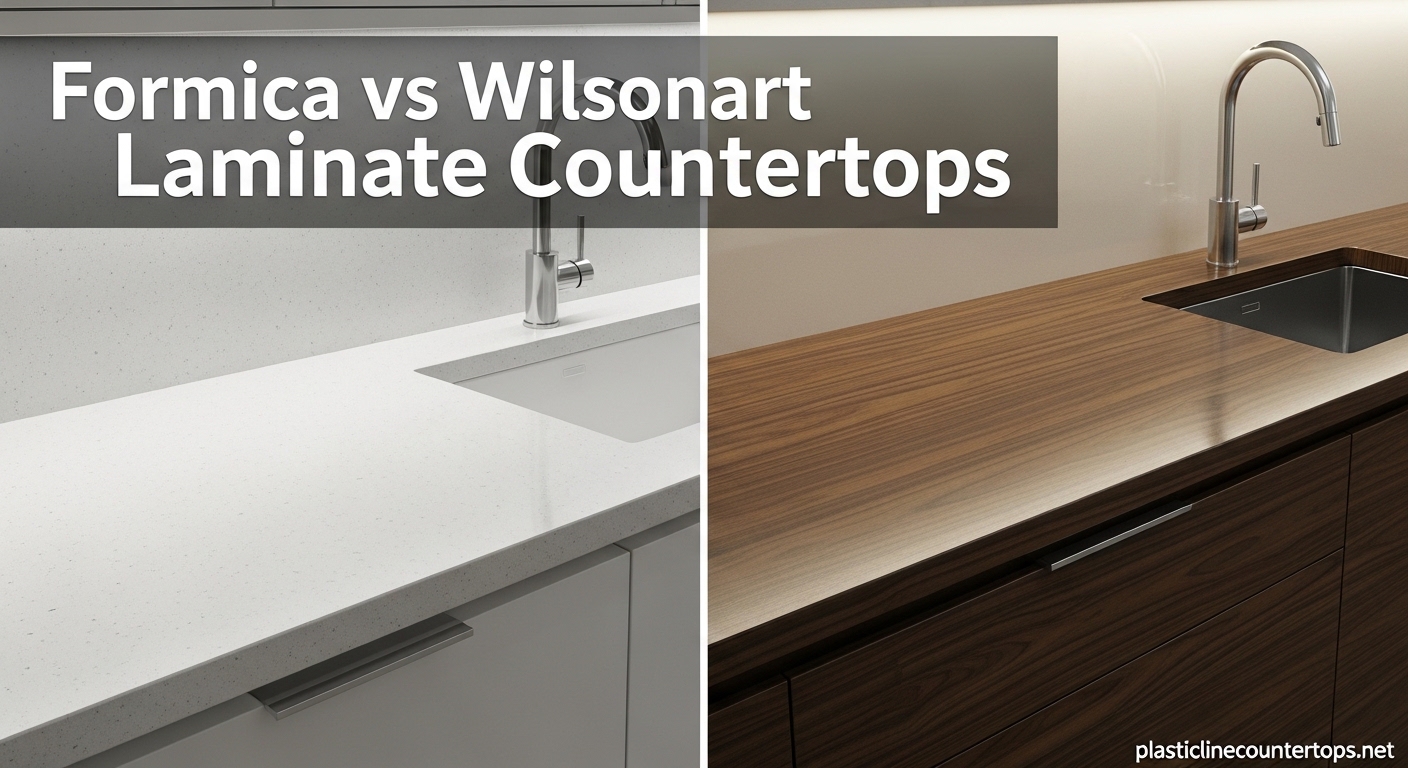
Formica vs Wilsonart laminate countertops is a decision most homeowners face when choosing high-pressure laminate surfaces for their kitchen or bathroom. Both brands have been manufacturing laminate for decades, but they offer different approaches to design, durability, and value.
I have worked with both brands on countless projects, and the truth is simpler than most articles suggest. Both Formica and Wilsonart produce excellent high-pressure laminate (HPL) surfaces. The real question is not which brand is objectively better, but which one fits your specific project needs, budget, and design vision.
In this guide, I will break down exactly how Formica and Wilsonart compare across the categories that matter most: design options, durability, price, and real-world performance. You will leave knowing which brand to choose for your next countertop project.
Table of Contents
What Is the Difference Between Laminate, Formica, and Wilsonart?
Let me clear up the confusion first. Laminate is the generic material. Formica and Wilsonart are brand names that manufacture laminate. Think of it like the difference between tissues and Kleenex. Kleenex is a brand of tissue, just as Formica is a brand of laminate.
High-pressure laminate (HPL) is made by bonding multiple layers of kraft paper with phenolic resin under heat and pressure, typically around 1,000 PSI. A decorative melamine layer sits on top, providing color and pattern. Both Formica and Wilsonart use this same fundamental manufacturing process, though each adds proprietary technologies and finishes.
Formica has been around since 1912, originally creating insulation products before pivoting to decorative laminates in the 1930s. Wilsonart entered the market later but has built a strong reputation for innovation, particularly their AEON Enhanced Performance technology that improves scratch and scuff resistance.
Formica vs Wilsonart Design and Pattern Options
Both brands offer extensive design libraries, but their approaches differ significantly.
Formica currently offers over 400 patterns across their collections, ranging from classic solids to realistic stone and wood reproductions. Their 180fx and FX180 lines are particularly notable for large-scale patterns that mimic natural stone with minimal repetition. Formica tends toward classic, timeless designs that work well in traditional kitchens and bathrooms.
Wilsonart offers a similarly large selection but with a stronger focus on contemporary and on-trend designs. Their HD line features high-definition printing that creates stunning realism, especially in their marble and quartz patterns. Wilsonart also offers more specialty finishes like their ultra-matte Fenix line, which features fingerprint-resistant surfaces with a soft touch feel.
If you want classic, widely-appealing designs that have stood the test of time, Formica may suit you better. If you prefer cutting-edge, contemporary aesthetics with premium texture options, Wilsonart delivers more innovation in this category.
Finish and Texture Comparison
The tactile experience of your countertop matters just as much as the visual appearance. This is where the brands show clear differences.
Wilsonart has built a reputation around texture innovation. Their AEON Enhanced Performance finish is a standout feature that significantly improves abrasion resistance. The Wilsonart HD line includes textures that match the visual pattern, creating surfaces that feel like natural stone or wood, not just look like them. Their specialty collections include everything from glossy finishes to deeply textured options.
Formica offers a comprehensive range of finishes too, but their strength lies in consistency and predictability. Their standard gloss and matte finishes are widely available and well-understood by fabricators. Formica also offers premium textures, but the selection tends to be more conservative than Wilsonart’s.
For homeowners who prioritize tactile quality and texture variety, Wilsonart has the edge. For those who prefer reliable, familiar finishes, Formica remains an excellent choice.
Durability and Performance Comparison
Is Wilsonart as good as Formica when it comes to durability? Both brands produce laminate that lasts 20+ years with proper care, but there are subtle differences worth noting.
Wilsonart’s AEON Enhanced Performance technology gives their laminate a measurable advantage in scratch and scuff resistance. In independent testing, AEON-enhanced surfaces show significantly better performance against everyday wear. This makes Wilsonart particularly suitable for high-traffic kitchens or families with children.
Formica laminate offers excellent durability for standard residential use. Their products resist stains, impact, and moisture when properly installed. The brand has a long track record of performance, with many homeowners reporting their Formica countertops lasting well over two decades.
Both brands struggle with the same laminate limitations. Neither is truly heat resistant to hot pans placed directly on the surface. Both can chip or delaminate at edges if impacted sharply. Both show seams at edge joints unless professionally fabricated with postforming or applied edges.
From my experience and forum research, both brands perform similarly in real-world conditions. The difference is marginal for most homeowners, though Wilsonart’s AEON finish does provide meaningful improvement in scratch resistance.
Formica vs Wilsonart Price Comparison
Price is often a deciding factor, and here Formica generally has an advantage. Formica laminate typically runs slightly less expensive than comparable Wilsonart options, though the gap has narrowed in recent years.
Standard Formica laminate sheets usually fall in the lower to mid-range of laminate pricing. Wilsonart’s standard lines are competitive, but their premium collections, especially HD and Fenix, command higher prices.
Remember that material cost is only part of your total countertop investment. Fabrication and installation typically represent 60-70% of your total project cost. Both brands fabricate similarly, so labor costs should not differ significantly between them.
If budget is your primary concern, Formica offers excellent value. If you are willing to pay slightly more for enhanced textures and finishes, Wilsonart justifies the premium.
Formica vs Wilsonart Pros and Cons
Formica Pros
- Generally more affordable than Wilsonart
- Extensive color and pattern selection
- Time-tested reliability and brand reputation
- Widely available through most fabricators
- Excellent postforming capabilities for seamless edges
Formica Cons
- Texture selection is more limited than Wilsonart
- Standard finishes lack the advanced scratch resistance of AEON
- Some designs feel dated compared to Wilsonart’s contemporary options
Wilsonart Pros
- AEON Enhanced Performance for superior scratch resistance
- Outstanding texture and finish variety
- HD line offers exceptional realism in stone and wood patterns
- Innovative options like the Fenix ultra-matte line
- Strong contemporary design focus
Wilsonart Cons
- Typically costs more than comparable Formica options
- Some premium lines have limited availability
- Texture options can be overwhelming for indecisive homeowners
When to Choose Formica vs Wilsonart
Choose Formica when you want proven reliability at a competitive price. Formica works best for traditional kitchens, rental properties, and projects where you want classic designs that will not look dated. If you have a tight budget but still want quality, Formica delivers excellent value.
Choose Wilsonart when you want the latest design trends and advanced performance features. Wilsonart is ideal for contemporary kitchens, homeowners who cook frequently and need scratch resistance, and anyone who values texture variety. If you want countertops that feel as good as they look, Wilsonart’s tactile finishes are worth the investment.
Both brands work well for bathroom vanities, laundry rooms, and commercial spaces. The choice matters most in high-use kitchen applications where you will interact with the surface daily.
Installation and Care Tips
Both brands fabricate using standard laminate techniques. Postforming creates seamless rolled edges, while applied edges use separate edge strips. Both methods work equally well with Formica and Wilsonart.
For maintenance, treat both brands identically. Clean with mild soap and water. Avoid abrasive cleaners that can scratch the surface. Never place hot pans directly on laminate, regardless of brand. Use cutting boards to prevent scratches.
Water damage to the substrate is the biggest threat to laminate longevity. Ensure proper sealing at seams and edges. This matters equally for both brands.
FAQ
Is Wilsonart as good as Formica?
Yes, Wilsonart is comparable to Formica in quality. Both are leading high-pressure laminate manufacturers with excellent durability. Wilsonart offers enhanced scratch resistance with their AEON technology, while Formica provides consistent quality at competitive prices. Both brands typically last 20+ years with proper care.
What is the highest quality laminate countertop?
The highest quality laminate countertops come from premium lines of major manufacturers. Wilsonart HD with AEON Enhanced Performance and Formica’s 180fx are considered top-tier options. These feature high-definition printing, superior textures, and enhanced durability. Wilsonart Fenix also offers premium ultra-matte finishes with fingerprint resistance.
Is Wilsonart laminate good quality?
Yes, Wilsonart laminate is excellent quality. The company is one of the two largest laminate manufacturers in North America. Their standard lines offer solid durability, while their AEON Enhanced Performance technology provides superior scratch and scuff resistance. Wilsonart backs their products with strong warranties and has a reputation for innovation in textures and finishes.
What is the difference between laminate, Formica, and Wilsonart?
Laminate is the generic material made by bonding kraft paper layers with resin. Formica and Wilsonart are brand names that manufacture laminate. Think of it like tissues versus Kleenex. Both Formica and Wilsonart produce high-pressure laminate using similar processes, though each offers unique technologies, finishes, and design collections.
Is Formica cheaper than Wilsonart?
Generally yes, Formica tends to be slightly less expensive than Wilsonart for comparable products. However, the price difference is usually modest and varies by specific product line. Both brands offer options across multiple price tiers. Remember that material cost is only 30-40% of your total countertop project cost.
Which laminate brand do professionals prefer?
Professional fabricators often prefer Formica for its consistent quality and predictable fabrication behavior. However, many also appreciate Wilsonart for their innovative textures and finishes. Preference varies by region and individual fabricator experience. Both brands are widely stocked and respected in the industry.
Conclusion
Formica vs Wilsonart laminate countertops is not a battle with a clear winner. Both brands manufacture excellent high-pressure laminate that will serve you well for decades.
Choose Formica if you prioritize value, classic designs, and proven reliability. Choose Wilsonart if you want cutting-edge aesthetics, superior textures, and enhanced scratch resistance through AEON technology.
The best countertop is the one that fits your budget, matches your design vision, and meets your performance needs. Both Formica and Wilsonart deliver quality that justifies their position as industry leaders. Order samples, visit showrooms, and trust your hands and eyes to make the final decision for your laminate countertop project.