
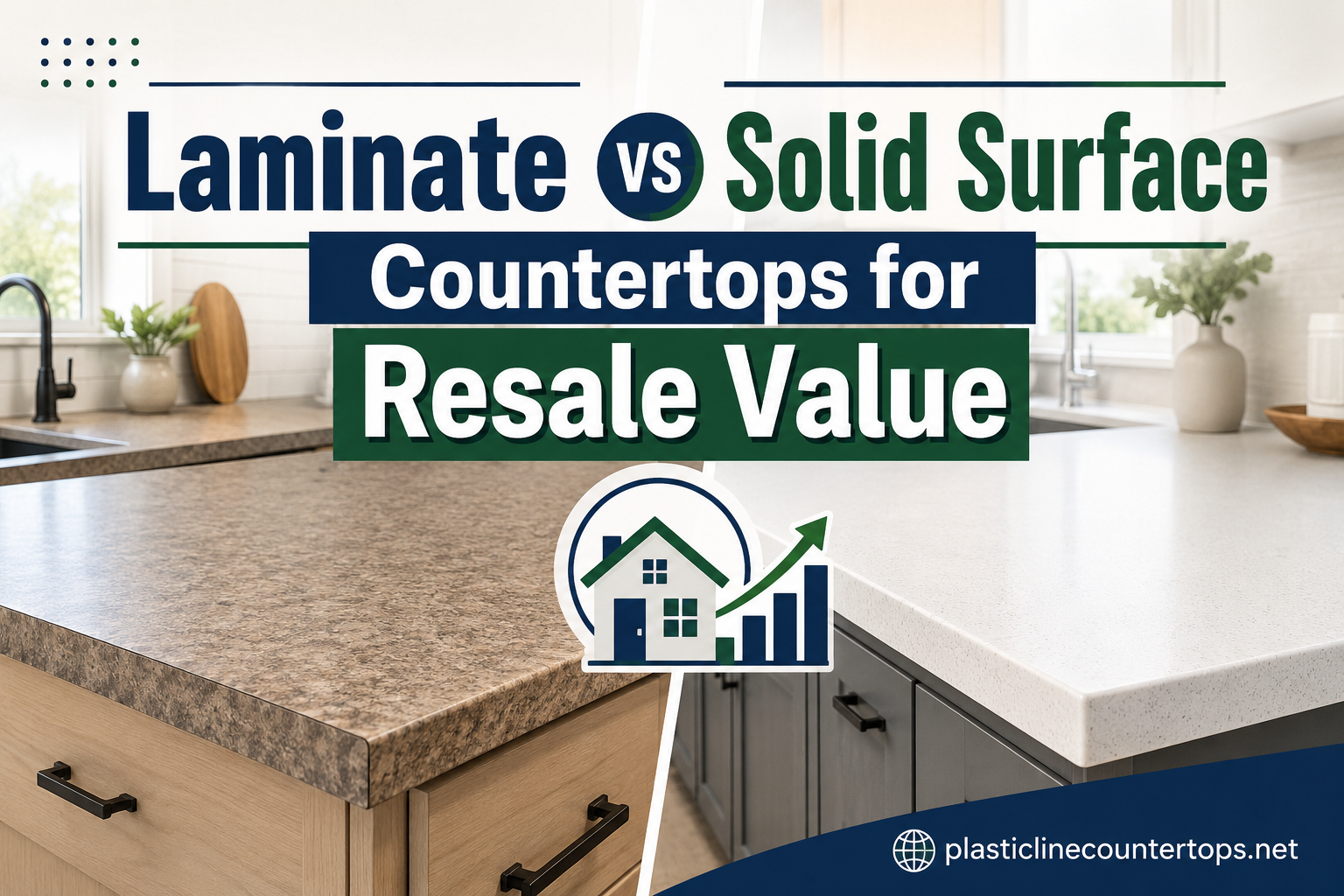
When we started researching countertop materials for our kitchen remodel, the resale value question kept coming up everywhere we looked. We talked to three real estate agents in our area, spent hours reading through Remodeling Magazine’s annual reports, and scrolled through countless homeowner discussions on Reddit and Houzz trying to figure out which material would give us the best return when we eventually sold. What we found might surprise you: the answer isn’t straightforward at all, and the popular choice isn’t always the smart financial choice for every situation.
This guide breaks down everything we learned about how laminate and solid surface countertops affect home resale value. We looked at actual ROI numbers from national studies, compared durability and maintenance requirements side by side, examined what real buyers think when they walk into a kitchen, and developed a framework to help you make the right decision for your specific circumstances. By the end, you’ll have the data and context to make a choice that makes sense for your home, your timeline, and your financial goals.
Table of Contents
What Are Laminate Countertops?
Laminate countertops are made by bonding multiple layers of kraft paper with resin under high pressure, then applying a decorative surface layer on top. The result is a particleboard core wrapped in a durable plastic surface that comes in hundreds of colors and patterns. This construction method has been used for decades and remains popular because it offers decent durability at an accessible price point.
The key thing to understand about laminate is that not all versions are created equal. High-pressure laminate (HPL) is the premium version, manufactured under 1200 to 2000 PSI of pressure. This extreme pressure creates a much more durable surface that resists impacts and heat better than standard laminate. The HPL manufacturing process involves multiple layers of kraft paper saturated with phenolic resin, stacked and pressed at high temperatures. This creates the characteristic durability that makes HPL suitable for countertop applications.
Major HPL brands include Formica, Wilsonart, Nevamar, and Pionite. These manufacturers offer extensive catalogs of colors and patterns, from solid colors to designs that mimic granite, marble, and other natural stones. When we reviewed homeowner experiences across multiple forums, those with HPL consistently reported better longevity and fewer issues than those with standard laminate products. The premium brands also tend to use better particleboard cores, which reduces the risk of swelling or warping over time.
The key advantage of HPL for budget-conscious homeowners is that it provides solid durability at a fraction of the cost of solid surface or stone. It resists stains, cleans easily with standard household products, and newer textured finishes can convincingly mimic natural stone at a tiny fraction of the price. The tradeoff is that once the decorative surface layer is damaged, the entire countertop needs replacement. Repair isn’t an option with laminate, which is why durability and proper care matter so much for this material.
What Are Solid Surface Countertops?
Solid surface countertops are manufactured from acrylic or polyester resins mixed with mineral fillers, creating a non-porous material that has the same color and pattern throughout its entire thickness. This homogeneous construction is what differentiates solid surface from laminate and enables the repairability that many homeowners value. The material was developed by DuPont in the 1960s and marketed under the Corian brand name, which became so synonymous with the product category that many people still call all solid surface “Corian.”
The most recognized brand is still Corian, though other manufacturers like Avonite, Wilsonart Solid Surface, and LG Hi-Macs produce similar materials under various brand names. These manufacturers offer similar product lines with comparable quality, so the brand you choose typically comes down to color availability and local distributor relationships rather than fundamental quality differences. All solid surface materials share the same core characteristics of being non-porous, seamless, and repairable.
What truly sets solid surface apart is its repairability. Because the material is homogeneous all the way through, scratches and minor damage can be sanded out and the surface restored to like-new condition. This is a significant advantage over laminate for long-term durability and owner satisfaction. You can cut directly on solid surface (though we don’t recommend it), and minor scratches can be removed with progressive sandpaper grits. Deeper damage can often be repaired by a professional refinisher at a fraction of replacement cost.
Solid surface also offers seamless installations since sheets can be joined with nearly invisible seams using specialized adhesive. This means large kitchens can have continuous countertop runs without visible seams, which many homeowners prefer aesthetically. Integrated sinks are another popular option with solid surface, where the sink is formed from the same material and seamlessly joined to the countertop. This creates a continuous, easy-to-clean surface that’s particularly popular in modern kitchen designs.
However, the material has faced perception challenges in recent years. Solid surface was considered a premium option in the 1970s and 1980s, but quartz and granite have largely taken that position in today’s market. Some real estate professionals note that solid surface can now look dated compared to stone surfaces, which have become the expected standards in mid-range homes. This perception issue is important to consider when evaluating resale value, as buyers may view solid surface differently than they did twenty years ago.
Cost Comparison: Laminate vs Solid Surface
Cost is where the two materials diverge most dramatically, and this difference often drives the initial decision for many homeowners. Laminate countertops typically range from $20 to $50 per square foot installed, while solid surface runs $75 to $120 per square foot installed. For a typical kitchen with 30 square feet of countertop space, that translates to roughly $600 to $1,500 for laminate versus $2,250 to $3,600 for solid surface. The difference can be significant for budget-conscious homeowners or those renovating multiple bathrooms.
The installed price includes materials, fabrication, and labor. Laminate installation is straightforward enough that many confident DIYers tackle it themselves, though professional installation ensures clean seams, proper edge finishing, and correct sealing around sinks and cutouts. The learning curve for DIY laminate installation isn’t steep, but achieving professional-looking results requires attention to detail and proper tools. If you’re not comfortable with precise measurements and basic carpentry, professional installation is worth the added cost.
Solid surface requires specialized tools and skills for fabrication and installation, which contributes significantly to its higher cost. The material must be cut with carbide-tipped blades, routed to create edges, sanded to remove scratches, and polished to achieve the characteristic glossy finish. Joinery requires specialized adhesive that color-matches the surface and creates nearly invisible seams. Most homeowners hire professionals for solid surface installation, which adds to the overall project cost but ensures proper fabrication.
From a pure investment perspective, you’re putting significantly more money into solid surface upfront. The question is whether that additional investment translates into proportionally higher resale value. According to Remodeling Magazine’s annual Cost vs. Value study, the answer is nuanced. Solid surface does offer better ROI percentage-wise, but the higher initial cost means you may not recover the full dollar difference between materials. Understanding this math is crucial for making a financially sound decision.
Durability and Lifespan Comparison
Durability and lifespan are where solid surface typically pulls ahead in the comparison. Laminate countertops typically last 10 to 20 years with proper care, while solid surface can last 20 to 30 years or longer. This lifespan difference is partly due to the repairability factor we mentioned earlier. We found numerous accounts from solid surface owners who were able to remove scratches and restore surfaces after years of use, effectively extending the material’s useful life significantly.
Heat resistance is a notable difference between the materials that affects daily use. Laminate can be damaged by hot pans placed directly on the surface, and thermal shock from rapid temperature changes can cause cracking or bubbling. We recommend always using trivets with laminate, even with claims of heat-resistant surfaces. Solid surface has better heat tolerance but can still be damaged by extreme temperatures, so trivets are advisable for both materials though more critical for laminate.
Both materials are non-porous and resistant to stains, which makes cleaning easier than with natural stone. Solid surface handles impacts better due to its flexible acrylic composition, which can absorb some shock without cracking. Laminate is more rigid and can chip or crack from hard impacts, particularly at edges and corners. The particleboard core also makes laminate vulnerable to water damage if the surface is compromised, which is why proper sealing around sinks and dishwashers matters so much.
When it comes to daily wear, laminate in high-use kitchens can show wear patterns around sinks and along edges within a few years, according to forum discussions we reviewed. Fading from UV exposure can occur with darker colors, and the decorative layer can begin to separate from the core if exposed to moisture over time. Solid surface maintains its appearance longer in heavy-use situations, though it can scratch if cut directly on the surface without a cutting board. The ability to repair solid surface means the material ages more gracefully over time, which affects both your enjoyment and eventual resale value.
Maintenance Requirements
Both laminate and solid surface are considered low-maintenance options compared to natural stone, which requires periodic sealing to prevent staining and bacterial growth. Neither material needs sealing, which simplifies long-term care and reduces ongoing ownership costs. For busy homeowners who don’t want to add countertop maintenance to their chore list, this is a significant advantage of both materials over granite or marble.
Daily cleaning for both materials is straightforward: a soft cloth or sponge with mild soap and water handles most spills and routine cleaning. Both surfaces resist bacterial growth due to their non-porous nature, which provides peace of mind around food preparation areas. For stubborn residue or dried spills, both materials can typically be cleaned with gentle kitchen cleaners without fear of damaging the surface.
Solid surface has an advantage when it comes to stubborn stains because it can be cleaned with mild abrasive cleaners without visible damage to the surface. The homogeneous material means aggressive cleaning doesn’t wear through a surface layer the way it might with laminate. However, we recommend testing any new cleaning product on an inconspicuous area first, especially with laminate, to ensure compatibility with your specific surface.
Laminate’s decorative layer is more sensitive to abrasive cleaning, so you need to be gentler with sponges and cleaning products. Never use steel wool or harsh abrasive cleaners on laminate, as these can scratch or dull the surface. The main vulnerability for laminate is water infiltration at seams or cutouts around sinks. If water reaches the particleboard core, the countertop can swell and warp, requiring replacement. Using caulk around sink edges and addressing any chips or cracks promptly helps prevent this issue.
Resale Value: The ROI Analysis
This section is where the decision gets interesting for homeowners focused on resale value. The Remodeling Magazine Cost vs. Value report provides specific ROI percentages that homeowners can expect when upgrading countertops, and these numbers are among the most authoritative available for this type of decision. Based on their 2026 study, solid surface countertops recoup approximately 75 to 85 percent of their installation cost in increased home value, while laminate recoup 60 to 70 percent.
These percentages mean that if you install $3,000 worth of solid surface countertops, you might expect approximately $2,250 to $2,550 in increased home value at sale time. For $1,000 worth of laminate, you’d expect $600 to $700 in added value. The raw dollar recovery is higher for solid surface because the base cost is higher, but the percentage difference between materials is significant and worth considering when evaluating your investment.
These numbers reflect national averages, so your local market may differ substantially. In areas where quartz and granite are now standard in mid-range homes, both laminate and solid surface are perceived as budget or mid-tier options. This perception shift means solid surface doesn’t necessarily recoup all of its additional cost over laminate in markets where buyers expect stone surfaces. If your neighbors have granite or quartz, solid surface may still feel like a downgrade to some buyers, even though it’s a significant upgrade from laminate.
However, laminate can be a strategic choice in specific situations. For rental properties, the lower upfront cost makes more sense because the goal is affordable functionality rather than maximum resale premium. Property managers consistently choose laminate for rental units because the math works better over multiple tenant turnover cycles. The lower replacement cost if tenants damage the surface is a significant consideration that changes the ROI calculation.
For entry-level homes where granite or quartz might price you out of comparable neighboring properties, quality laminate can refresh the space without over-improving. We spoke with one homeowner who deliberately chose premium HPL over solid surface because their home was valued well below neighboring properties with stone countertops. In that situation, investing in solid surface would have over-improved the home relative to its market position, making the higher cost difficult to justify.
Real estate agents we spoke with consistently noted that buyer perceptions matter as much as the raw ROI numbers. Buyers who recognize quality HPL appreciate the value proposition, but those expecting stone surfaces may view laminate as a negative, even if the material is genuinely high quality. The key is knowing your local market, understanding what buyers in your price range expect, and making a choice that aligns with those expectations. In some markets, solid surface is perfectly acceptable; in others, buyers will turn up their noses at anything less than natural stone.
Aesthetic Options and Design Flexibility
Aesthetics matter for resale because they affect how buyers perceive your home’s overall quality and condition. Laminate offers an enormous range of colors, patterns, and textures that can match virtually any kitchen design scheme. Modern HPL can convincingly mimic granite, marble, and other natural stones at a fraction of the cost, and the best examples are genuinely difficult to distinguish from the real thing at a glance.
The variety in laminate extends to edge treatments as well. Postformed edges with integrated backsplashes create a smooth, continuous profile that’s easy to clean and visually appealing. Edgebanding options allow for different looks, from traditional rounded edges to more contemporary squared-off profiles. Some homeowners appreciate the clean look of postformed laminate, while others prefer the more substantial appearance of thick-edged solid surface.
Solid surface provides a more consistent, natural stone-like appearance without pretending to be something it’s not. The material comes in solid colors and subtle patterns that tend toward contemporary and minimalist aesthetics. Some solid surface colors can show seams more visibly than laminate’s postformed edges, though with skilled installation, seams should be nearly invisible. The ability to create custom edge profiles and integrated sinks gives solid surface more design flexibility for modern kitchens.
For homeowners planning to sell, aesthetic considerations include how the material will photograph and how it will appear during showings. Both materials can look excellent when properly chosen and installed. However, buyer expectations in your specific market matter here too. In markets where granite and quartz dominate, laminate patterns may read as budget regardless of quality, while solid surface may feel more aligned with buyer expectations.
Heat and Scratch Resistance Differences
Heat resistance deserves special attention because it’s a common source of damage and frustration with laminate in particular. We found countless forum posts from homeowners who learned this lesson the hard way after setting a hot pan directly on their laminate countertop. The heat can cause the decorative layer to bubble, discolor, or separate from the core, and this damage is irreparable without full replacement.
Solid surface handles heat better but isn’t immune to damage. Extreme temperatures can cause scorching or discoloration, and thermal shock from placing something frozen on a hot surface (or vice versa) can cause cracking. Using trivets and hot pads with both materials is strongly recommended, and this habit should inform your decision if you’re choosing primarily for low-maintenance ease of use. The reality is that both materials require some care around heat sources.
Scratch resistance is another area where the materials differ. Solid surface scratches more easily than laminate when cut directly, but those scratches can be removed through sanding and polishing. Laminate is more scratch-resistant on the surface but cannot be repaired if damaged. For families with children or anyone who does a lot of food preparation directly on countertops, this difference in repairability can significantly affect long-term satisfaction and appearance retention.
Installation Considerations: DIY vs Professional
Installation complexity differs significantly between the materials, which affects both upfront cost and final quality. Laminate installation is within reach of capable DIYers, though achieving professional results requires careful attention to measurement, cutting, and finishing. The key areas where DIYers often struggle include achieving clean sink cutouts, properly sealing edges against moisture, and creating clean edge finishes.
Solid surface installation is decidedly not a DIY project for most homeowners. The specialized tools required include variable-speed routers, random orbital sanders, carbide-tipped saw blades, and joinery equipment. Beyond the tools, proper techniques for seaming and polishing require practice and experience. Most solid surface installations are handled by specialized fabrication shops that have the equipment and expertise to produce quality results.
For resale considerations, professional installation may provide advantages in buyer perception. A professionally installed countertop, even in laminate, will typically look better and last longer than an amateur installation. If you’re considering DIY to save money, weigh the cost savings against the potential for visible errors or premature failure that could affect your home’s value.
Which Should You Choose?
The right choice depends on your specific situation, timeline, and priorities. Here’s a decision framework based on what we learned from our research and real homeowner experiences that we hope helps you make a more informed choice.
For owner-occupied homes where resale value is a primary concern, solid surface generally offers better ROI and broader buyer appeal. The material ages more gracefully, repairs easily, and won’t raise eyebrows during home inspections or buyer walkthroughs. The higher upfront investment is more likely to pay off when you sell, particularly in markets where solid surface is still considered an acceptable mid-range option.
For rental properties and investment homes, laminate often makes more sense financially. The lower replacement cost if tenants damage the surface, combined with adequate functional quality, protects your investment over multiple turnover cycles. Property managers we found in forums consistently choose laminate for rental units because the total cost of ownership over five to ten years works out better than solid surface.
If you’re working with a tight budget but want to upgrade strategically, consider starting with quality HPL laminate now and planning for solid surface or stone in a future renovation when your financial situation allows. This approach lets you enjoy an improved kitchen immediately while keeping options open for later. In markets where comparable homes have stone countertops, waiting to save for a stone upgrade may be smarter than accepting a mid-tier material now.
Consider also the timeline for your anticipated sale. If you’re planning to sell within five years, the ROI math favors solid surface in most markets. If you’re planning to keep the home for fifteen years or more, laminate may serve you well initially with an upgrade path later. The key is matching the material choice to your actual timeline and circumstances rather than making assumptions about what buyers want.
Conclusion
Choosing between laminate and solid surface countertops for resale value requires looking at your specific situation honestly and setting aside assumptions about what “everyone expects.” Solid surface offers better ROI percentages and broader buyer appeal in most markets, making it the smarter choice for owner-occupied homes where resale value matters significantly. The additional upfront cost is more likely to pay off when you sell, and the material’s durability and repairability provide peace of mind during your ownership.
However, laminate remains a viable and sometimes strategic option, especially for rental properties, tight budgets, or markets where comparable homes feature stone countertops that would price you out if you tried to match them. High-pressure laminate provides improved durability over older laminate products and can refresh a tired kitchen without over-improving the space relative to neighbors. In the right context, quality laminate represents a sensible choice rather than a compromise.
Our recommendation based on extensive research: if resale value is a priority and your budget allows, go with solid surface. If you need to manage costs carefully or you’re equipping a rental property, quality HPL laminate serves well. The best choice is the one that fits your circumstances while providing reasonable durability and appeal to future buyers. Take time to understand your local market, talk to agents who know your neighborhood, and make a decision you can feel confident about for years to come.