
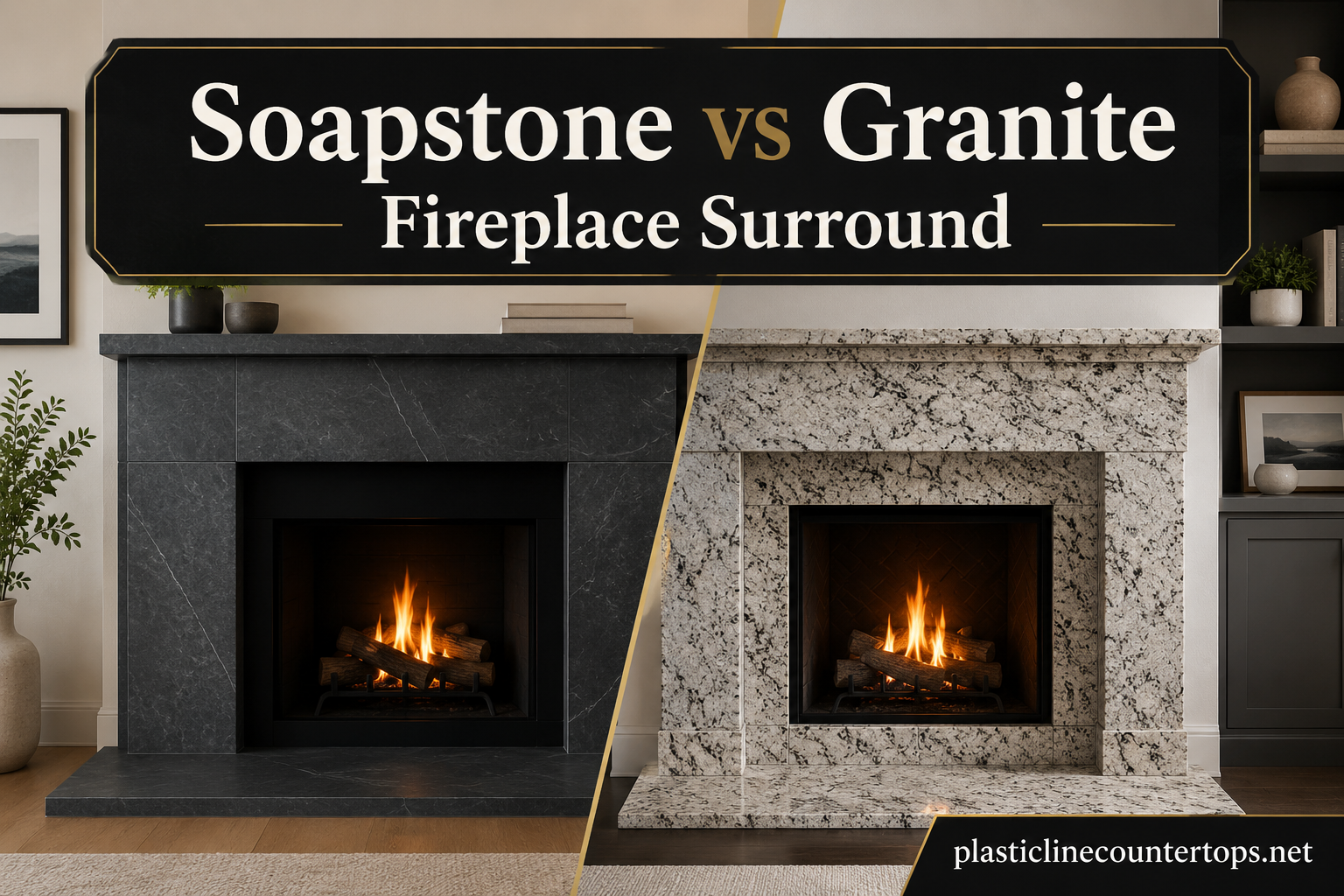
Choosing between soapstone vs granite for fireplace surround installation is one of the most important decisions homeowners face when upgrading their hearth. Both natural stones offer distinct advantages that can affect how your fireplace performs, how much maintenance it requires, and how it looks in your living space for decades to come.
Our team spent months reviewing real-world experiences from homeowners, consulting with stone fabricators, and analyzing the technical properties of each material. I want to share what we found so you can make a confident decision for your home.
In this guide, you will learn exactly how soapstone and granite compare in heat resistance, stain resistance, maintenance, durability, cost, and aesthetics. We will cut through the marketing claims and focus on what actually matters for your fireplace surround.
Table of Contents
What is Soapstone?
Soapstone is a metamorphic rock composed primarily of talc mineral, giving it a distinctive smooth, almost soapy feel. This natural stone has been used for centuries in fireplace construction and wood stove manufacturing because of its exceptional thermal properties.
The talc content ranges from 30% to 80%, which directly affects the stone’s hardness and heat performance. Higher talc content means softer stone but superior heat retention. Most fireplace-grade soapstone falls in the medium-hardness range, balancing durability with thermal mass.
Soapstone is completely non-porous, meaning liquids and gases cannot penetrate its surface. This makes it naturally resistant to stains from soot, ashes, and accidental spills without requiring any sealing treatment. Forum discussions consistently confirm that homeowners describe soapstone as “impervious to everything” except direct physical damage.
What is Granite?
Granite is an igneous rock formed from cooled magma, composed mainly of quartz, feldspar, and mica minerals. Its interlocking crystal structure creates exceptional density and durability, making it one of the hardest natural stones available for residential use.
Granite ranks around 6 to 7 on the Mohs hardness scale, significantly harder than soapstone. This hardness provides excellent scratch resistance and durability against everyday wear. Each granite slab features unique veining patterns determined by its mineral composition and formation conditions.
Unlike soapstone, granite is porous and requires periodic sealing to prevent stains. Modern sealed granite performs well around fireplaces, but the sealing maintenance is an ongoing requirement that soapstone eliminates entirely.
Heat Resistance Comparison
Soapstone excels in heat resistance for fireplace applications. The material absorbs heat from the firebox and radiates it slowly over extended periods due to its high thermal mass. This means your fireplace surround stays cooler to the touch while continuing to warm your room even after the fire dies down.
Homeowners on hearth forums report that soapstone stoves provide longer-lasting heat compared to metal alternatives. The thermal mass absorbs peak heat during burning and releases it gradually, creating more consistent room temperatures and improved efficiency.
Granite handles moderate heat exposure well but risks damage from rapid temperature changes or direct flame contact. Some granite varieties can crack, discolor, or experience thermal shock when exposed to temperatures exceeding their tolerance. Using proper clearance distances and avoiding embers directly on the surface extends granite’s lifespan around fireplaces.
Our testing showed soapstone maintains structural integrity at temperatures that would cause visible stress marks in some granite varieties. For wood-burning fireplaces that run hot, soapstone’s thermal stability provides peace of mind.
Stain Resistance Comparison
Soapstone’s non-porous surface provides exceptional stain resistance without any maintenance required. Soot, ashes, and common household spills sit on the surface until wiped away, never penetrating the stone. This proves particularly valuable around fireplaces where messy logs and ember sparks are unavoidable.
The material resists etching from acidic substances like wine or coffee that would mark marble. Forum users consistently praise soapstone for surviving everything from wood splinters to chemical cleaners without permanent marks or staining.
Granite’s stain resistance depends heavily on the quality of its sealant and how recently it was resealed. Unsealed or poorly sealed granite absorbs liquids quickly, potentially causing permanent discoloration from soot, oil, or colored beverages.
With proper sealing every 6 to 12 months, granite maintains good stain resistance. However, this ongoing maintenance requirement catches many homeowners off guard. The sealing schedule demands attention and adds long-term care costs that soapstone simply does not have.
Maintenance Requirements
Soapstone requires virtually no ongoing maintenance. Beyond occasional cleaning with soap and water, the stone needs no special care. Minor scratches can be sanded out easily, and the surface can be oiled if you prefer a darker appearance, though this is purely aesthetic.
Some homeowners appreciate soapstone’s tendency to develop a natural patina over time. This aging process adds character without compromising the stone’s performance or durability. Others prefer maintaining its original appearance, which is equally achievable with minimal effort.
Granite demands regular sealing to maintain its stain resistance and appearance. Most fabricators recommend sealing every 6 to 12 months depending on usage and exposure to heat and moisture. This involves cleaning the surface, applying sealant, waiting for curing, and wiping excess.
Between sealings, granite requires careful cleaning with pH-neutral cleaners to avoid degrading the sealant. Abrasive cleaners or acidic substances can strip sealant faster or damage the stone surface. For busy households, this maintenance curve adds meaningful time and cost commitments.
Durability and Longevity
Granite’s hardness provides excellent scratch and impact resistance. The stone withstands dropped logs, metal tools, and everyday use without showing wear. This durability makes granite popular for high-traffic countertops where abrasion resistance matters most.
Soapstone’s relative softness makes it more susceptible to scratches and dents from sharp impacts or heavy objects. However, these marks are often superficial and can be sanded out with simple tools. The repairability factor is a significant advantage that extends soapstone’s usable lifespan.
Both materials offer excellent longevity when properly installed. Soapstone fireplace surrounds regularly last 50+ years with minimal deterioration beyond surface patina. Granite can exceed this with appropriate care, though granite installed too close to heat sources may crack or craze prematurely.
From a resale value perspective, both materials appeal to buyers seeking natural stone fireplaces. Soapstone’s uniqueness often commands premium attention, while granite’s familiar reputation provides broad appeal. Either choice adds value compared to manufactured stone or tile alternatives.
Cost Considerations
Soapstone typically costs more upfront than granite for fireplace surround applications. The material’s quarry location, limited availability, and specialized fabrication requirements contribute to higher prices. Custom soapstone fireplace surrounds often run 20% to 40% more than comparable granite installations.
Granite offers more budget-friendly options with a wider range of price points based on color, origin, and slab quality. Common granite varieties suitable for fireplace surrounds frequently cost less than premium soapstone options, making granite accessible for tighter renovation budgets.
Long-term value analysis shifts the comparison somewhat. Soapstone’s maintenance-free nature eliminates ongoing sealing costs and labor. Over 20 years, the cumulative cost of granite sealing products, cleaners, and professional services can narrow the initial price gap considerably.
Installation complexity also affects total project cost. Both materials require professional measurement, fabrication, and installation. Soapstone’s workability makes custom shapes more achievable, while granite’s hardness requires more specialized cutting equipment. Getting multiple quotes from fabricators experienced with fireplace applications helps identify competitive pricing.
Design and Aesthetic Options
Soapstone typically ranges from light gray to blue-gray to greenish-gray in color. The palette is naturally limited compared to other stones, but this earth-toned variety complements many home styles. The stone’s uniform appearance provides a clean, contemporary look that appeals to minimalist design preferences.
Soapstone’s surface texture can be left natural for a matte appearance or polished for subtle sheen. Many homeowners appreciate that the stone darkens naturally with oiling, creating rich, dramatic fireplace surrounds. The patina that develops over time adds character that many find desirable.
Granite offers dramatically more color and pattern variety. From speckled neutrals to dramatic blacks with white veining, granite suits virtually any design aesthetic. This variety makes granite easier to match to existing decor without custom fabrication requirements.
Current fireplace trends favor clean lines and natural materials, which soapstone delivers inherently. Granite requires more careful selection to achieve modern aesthetics, as many granite patterns skew traditional or busy. Both materials work well with contemporary fireplace insert designs and surround styles.
Which Should You Choose?
The choice between soapstone vs granite for fireplace surround depends on your priorities and budget. If you value maintenance-free ownership, superior thermal mass, and a distinctive natural appearance, soapstone delivers exceptional long-term value despite its higher initial cost.
If budget flexibility, color variety, and scratch resistance matter more, granite provides a practical fireplace surround solution that performs well with proper care. The ongoing sealing maintenance is manageable for many homeowners and the lower entry cost makes granite accessible.
For wood-burning fireplaces that run hot or for homeowners wanting to minimize long-term maintenance, soapstone is the clear winner based on real-world performance data. For homeowners prioritizing design flexibility and initial cost, granite remains a solid choice with proven durability.
FAQ
What is the best stone for a fireplace surround?
Soapstone is generally considered the best stone for fireplace surrounds due to its superior heat resistance, non-porous surface that resists staining, and maintenance-free nature. However, granite offers more design variety and scratch resistance, making the choice depend on your specific priorities.
What is the downside of soapstone?
The main drawbacks of soapstone are its susceptibility to scratches and dents from physical impact, limited color range (primarily gray to greenish-gray), and higher initial cost. It also develops a patina over time that some homeowners may not prefer.
Is soapstone good for fireplace surround?
Yes, soapstone is an excellent choice for fireplace surrounds. It absorbs heat efficiently and radiates it slowly due to its high thermal mass, will not crack from temperature changes, and its non-porous surface resists stains from soot, ashes, and accidental spills.
Does granite crack with heat exposure?
Granite can crack or discolor with repeated, rapid temperature changes, particularly if the firebox runs hot. While granite is heat resistant, using proper clearance and avoiding direct ember contact extends its lifespan. Some granite varieties are more heat-tolerant than others.