
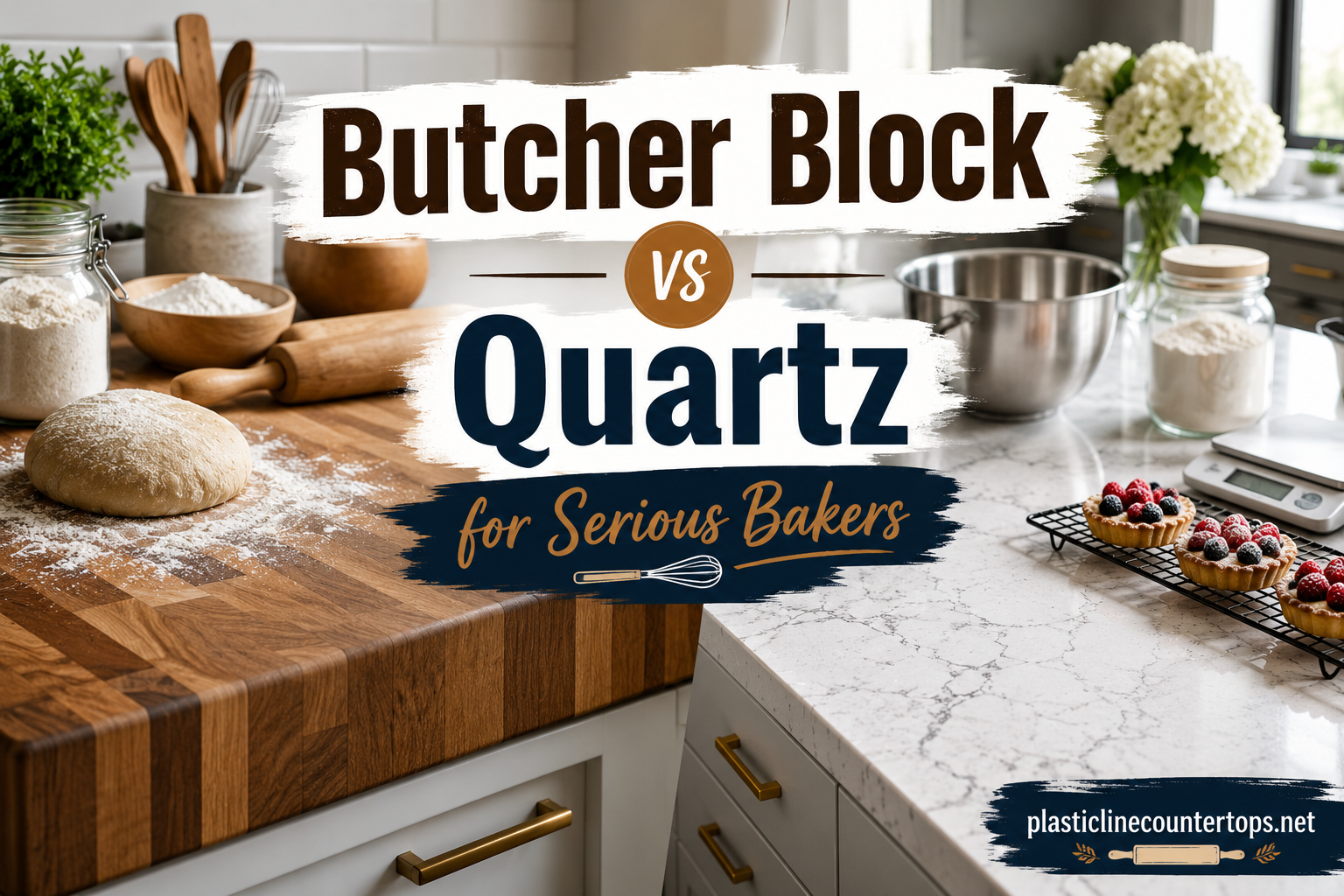
Choosing the right countertop material can make or break your baking experience. If you spend hours kneading dough, rolling pastry, and proofing bread, you need a surface that works with your workflow, not against it.
Butcher block and quartz represent two fundamentally different approaches to kitchen surfaces. One offers warmth, tradition, and a forgiving surface for dough work. The other provides durability, low maintenance, and consistent performance. Both have passionate advocates in the baking community, but which one actually suits serious home bakers?
In this guide, I will compare butcher block vs quartz for serious bakers based on real-world performance, maintenance demands, and how each material affects your baking process. By the end, you will know exactly which countertop deserves space in your kitchen.
Table of Contents
Butcher Block vs Quartz: Quick Comparison
Here is how these materials stack up across the categories that matter most to bakers.
| Feature | Butcher Block | Quartz |
|---|---|---|
| Durability | Prone to scratches and dents, can be sanded and refinished | Extremely scratch and chip resistant |
| Maintenance | Requires oiling every 1-3 months, sealing recommended | Minimal maintenance, soap and water only |
| Heat Resistance | Moderate, trivets required for hot pans | Moderate, trivets required for hot pans |
| Stain Resistance | Porous, stains if spills sit | Non-porous, highly stain resistant |
| Water Resistance | Vulnerable near sinks, requires vigilance | Excellent, no water damage concerns |
| Dough Working | Warm surface temperature aids fermentation | Room temperature, neutral for dough |
| Initial Cost | $40-100 per square foot installed | $60-150 per square foot installed |
| Long-term Cost | Ongoing maintenance products and time | Minimal ongoing costs |
Both materials demand heat trivets and cutting boards for protection. The real differences emerge in daily maintenance, how they handle spills, and how they affect your dough.
What Is Butcher Block?
Butcher block countertops are wood surfaces crafted from straight cuts of hardwood glued together into thick slabs. The name comes from traditional butcher shops where thick wooden blocks provided sturdy, forgiving cutting surfaces.
Most butcher block countertops use maple, oak, walnut, or cherry. The wood strips are arranged in edge grain or end grain patterns. Edge grain shows long wood strips on the surface, while end grain displays the cut ends of wood pieces for a checkerboard appearance. Edge grain is more common for countertops because it offers a smoother surface at a lower price point.
The natural composition of wood makes butcher block unique among countertop materials. It is warm to the touch, forgiving under knives, and develops a patina over time that many homeowners find charming. However, that same organic composition makes it vulnerable to moisture, staining, and bacterial growth if not properly maintained.
What Is Quartz?
Quartz countertops are engineered stone surfaces created by combining 90-95% crushed natural quartz crystals with polymer resins under intense pressure. The result is a non-porous, extremely hard surface that resists stains, scratches, and bacteria.
Unlike natural stone slabs cut from quarries, quartz is manufactured in consistent patterns and colors. This process allows for precise control over the final appearance, from subtle solid colors to dramatic veining that mimics marble or granite. Popular brands include Caesarstone, Cambria, Silestone, and MSI.
The polymer resins that bind the quartz crystals make the surface non-porous. This means liquids, bacteria, and stains cannot penetrate the material. For bakers, this translates to a surface where flour, oil, and sticky dough wipe away easily without leaving residue or harboring bacteria.
Butcher Block vs Quartz: Durability Comparison
When you are pounding dough, rolling fondant, or shaping loaves, your countertop takes abuse. Understanding how each material holds up helps you choose wisely.
Scratch and Dent Resistance
Quartz ranks 7 on the Mohs hardness scale, making it significantly harder than butcher block. This hardness means quartz resists scratches from knives, pastry cutters, and metal utensils. However, quartz can chip if you drop heavy cast iron or ceramic bakeware on the edge.
Butcher block is much softer and shows scratches readily. Every knife mark, every sliding baking sheet, every scrape from a bench scraper leaves evidence. The silver lining? You can sand and refinish butcher block to erase years of wear. Many bakers view the developing patina as character rather than damage.
Longevity Expectations
With proper care, quartz countertops last 25-30 years or more with minimal change in appearance. The engineered composition resists fading, staining, and structural degradation.
Butcher block can last equally long but requires a different mindset. The surface evolves. You will sand out scratches periodically, reapply oil regularly, and eventually embrace the worn, loved appearance of well-used wood. Some bakers prefer this living finish; others find it frustrating.
Butcher Block vs Quartz: Maintenance Requirements
Maintenance demands often determine which material suits your lifestyle. Serious bakers need a surface that supports their workflow without adding burdensome upkeep.
Daily Care Routines
Quartz needs almost nothing. Wipe with warm soapy water, dry with a cloth, done. No special cleaners, no ongoing treatments, no worries about forgetting to oil or seal.
Butcher block requires more attention. You must wipe spills immediately, especially acidic substances like lemon juice or tomato sauce that can stain wood. Standing water is the enemy, so you cannot leave wet bowls or damp towels on the surface. After cleaning, many wood owners apply mineral oil or butcher block conditioner to maintain the protective finish.
The 7 Rule for Butcher Block
Many butcher block owners follow the “7 rule” for maintenance: oil your countertop every 7 days during the first month after installation, then every 7 weeks for the first year, and finally every 7 months thereafter. This gradual reduction allows the wood to build up a protective seasoning while accommodating its decreasing thirst for oil as it ages.
In addition to regular oiling, butcher block benefits from annual sanding and refinishing if you want to maintain a pristine appearance. Without this attention, the surface gradually darkens, develops scratches, and shows water marks.
Long-term Upkeep Costs
Quartz wins on maintenance costs hands down. Beyond occasional replacement of worn cutting boards and trivets, quartz requires no financial investment in upkeep products.
Butcher block accumulates costs over time. Mineral oil, butcher block conditioner, sandpaper, and refinishing supplies add up. Factor in the time value of regular maintenance, and the total cost of ownership skews toward quartz over a decade of use.
Heat Resistance Properties
Bakers handle hot pans, cookie sheets straight from the oven, and warm dough. Understanding heat tolerance prevents costly damage.
Neither material tolerates extreme heat well. Quartz can discolor or crack if you set a hot cast iron skillet directly on the surface. The polymer resins that bind the material soften under sustained high temperatures, potentially leaving permanent marks.
Butcher block fares slightly better with brief contact but sustained heat can scorch wood, leaving dark burns that require sanding to remove. The organic nature of wood means it can dry out and crack near consistently hot appliances like toaster ovens.
The practical reality? Both materials require trivets or hot pads for anything above room temperature. This is non-negotiable regardless of which surface you choose. Invest in quality silicone trivets and make their use a kitchen habit.
Stain and Water Resistance Comparison
Flour, oil, fruit juices, and food coloring are part of a baker’s life. How each material handles these substances matters.
Stain Resistance
Quartz is virtually stain-proof. Because the surface is non-porous, liquids and pigments cannot penetrate. Red wine, beet juice, turmeric, and berry stains wipe away without a trace. For bakers who work with colorful fondant, fruit fillings, and natural dyes, this is a significant advantage.
Butcher block is porous and absorbs stains readily. Dark liquids like coffee, wine, and juice leave permanent marks if not wiped immediately. Oil stains darken wood permanently, which some bakers embrace as part of the natural aging process. Others find it unsightly.
Water Damage Concerns
Water is butcher block’s mortal enemy. Prolonged exposure causes wood to swell, warp, and eventually rot. Areas near sinks see the most damage, as water splashes accumulate in seams and under faucet bases.
Real-world user experiences confirm this vulnerability. Many Reddit users report switching to quartz after their butcher block “looked terrible” within two years near the sink area. Water stains, raised grain, and darkening are common complaints.
Quartz faces no water damage risks. You can leave wet towels, stand dishes in water, and splash freely without consequence. For bakers who wash lots of mixing bowls and stand mixer attachments, this peace of mind is valuable.
Temperature Behavior for Dough Working
This section matters specifically for serious bakers. The temperature of your working surface affects dough behavior in ways casual cooks might not appreciate.
How Surface Temperature Affects Dough
Butcher block stays slightly warmer than room temperature because wood is an insulator. This warmth can aid yeast fermentation, helping dough rise faster during cool weather. Many artisan bakers prefer wood specifically because it does not chill dough the way stone or quartz surfaces can.
Quartz maintains room temperature precisely. In summer, this means a cool surface that prevents butter from melting in pastry dough. In winter, it means a cold surface that can slow fermentation. Some bakers find quartz too cold for comfortable hand kneading during winter months.
Practical Baking Implications
For bread bakers working with wet, sticky dough, butcher block offers a forgiving surface that does not cling the way colder materials can. The slight warmth keeps dough relaxed and workable.
For pastry chefs working with laminated doughs and butter-heavy recipes, quartz offers consistent temperature control. You do not have to worry about warm spots softening butter prematurely or cold spots making dough difficult to roll.
Many experienced bakers solve this dilemma with a hybrid approach. They install quartz for the main countertops but keep a large butcher block cutting board permanently on the surface for dough work. This gives them the warmth of wood when needed while maintaining the durability of quartz for everything else.
Food Safety and Sanitation
Bakers handle raw dough, eggs, and dairy. Surface sanitation matters for food safety.
Quartz is inherently hygienic. The non-porous surface prevents bacteria from penetrating, and the smooth finish wipes completely clean. You can sanitize quartz with mild bleach solutions or commercial disinfectants without damaging the surface.
Butcher block presents more challenges. The porous wood can harbor bacteria in scratches and cuts. However, research shows that wood has natural antimicrobial properties. Maple and other hardwoods contain compounds that inhibit bacterial growth. Still, proper cleaning is essential.
For butcher block, use hot soapy water followed by a vinegar solution or hydrogen peroxide spray. Avoid harsh chemicals that can damage the wood or leave residues. Some bakers dedicate specific butcher block areas for raw dough work and other areas for finished baked goods to minimize cross-contamination.
The safest approach for either material? Use cutting boards for raw ingredients and keep the countertop surface for mixing and shaping already-prepared doughs.
Aesthetic Differences
Beyond function, appearance matters. Your kitchen should inspire you to bake.
Butcher block brings warmth and organic texture to kitchens. The natural wood grain complements farmhouse, rustic, and Scandinavian design styles. Over time, the surface develops a rich patina that tells the story of countless baking sessions. Each scratch and oil mark becomes part of the narrative.
Quartz offers consistency and modern elegance. The engineered patterns provide predictability that appeals to minimalist and contemporary tastes. Quartz comes in colors ranging from pure white to dramatic black, with veining options that mimic marble without the maintenance.
Neither material is objectively more beautiful. The choice depends on your kitchen’s style and your personal aesthetic preferences. Some bakers find wood more inspiring for traditional baking; others prefer the clean, professional look of quartz.
Cost Comparison
Budget constraints influence many renovation decisions. Here is how the costs break down.
Initial Installation Costs
Butcher block typically costs $40-100 per square foot installed, depending on wood species and edge grain versus end grain construction. Maple and oak fall on the lower end; walnut and cherry command premium prices. DIY installation is possible for handy homeowners, potentially reducing costs.
Quartz ranges from $60-150 per square foot installed. The engineered nature requires professional fabrication and installation. Complex edge profiles, dramatic veining patterns, and thicker slabs increase costs. Expect quotes toward the higher end for quality brands.
Long-term Cost of Ownership
Factor in maintenance when calculating true costs. Butcher block requires ongoing investment in oils, conditioners, and refinishing supplies. Over ten years, expect to spend $200-500 on maintenance products and several hours of labor annually.
Quartz requires virtually no ongoing investment. Occasional replacement of cutting boards and trivets represents minimal cost. The total cost of ownership over a decade often favors quartz despite higher upfront costs.
Resale value considerations also matter. Quartz is widely recognized as a premium material that appeals to buyers. Butcher block has a more niche appeal that may not add the same value for all prospective homeowners.
Best Applications and Use Cases
Sometimes the answer is not choosing one material, but strategically placing both.
When Butcher Block Shines
Consider butcher block for kitchen islands dedicated to baking and food prep. Away from the sink, wood performs beautifully without water damage concerns. Islands see less daily wear than perimeter countertops, preserving the wood’s appearance longer.
Butcher block also works well for dedicated baking stations in butler’s pantries or secondary prep areas. If you have a separate space for bread making, wood provides the warmth and forgiving surface serious bakers appreciate.
When Quartz Wins
Quartz dominates near sinks, cooktops, and high-traffic areas. The water resistance, stain resistance, and durability handle the demands of daily cooking and cleanup without constant vigilance.
For busy bakers who juggle multiple projects and cannot monitor every spill, quartz offers peace of mind. You can walk away from a flour-covered counter, deal with a phone call, and return to a surface that wipes clean effortlessly.
The Combination Approach
Many experienced bakers choose both. Install quartz for the perimeter countertops and a butcher block island for dedicated prep work. This gives you the durability where you need it most and the warmth where it enhances your baking.
Alternatively, install quartz throughout and keep large butcher block cutting boards for dough work. This portable approach lets you move the wood surface as needed and replace it when worn. As one Reddit user noted, “I do all my prep, cutting, and breadmaking on a butcher block board that stays out almost all day on my quartz counter. Best of both worlds.”
Verdict for Serious Bakers
After comparing butcher block vs quartz across all the factors that matter to serious bakers, here is my recommendation.
Choose quartz if: You value low maintenance, worry about water damage, prefer consistent performance without upkeep, or bake frequently with colorful ingredients that stain. Quartz supports your baking without demanding attention.
Choose butcher block if: You prioritize the tactile experience of working on wood, appreciate how warmth aids fermentation, enjoy the evolving patina, and do not mind regular maintenance. Butcher block rewards diligent care with character and warmth.
Consider both if: You have the space and budget for a hybrid approach. Quartz near the sink and cooktop, butcher block on an island or as a dedicated baking station. Many serious bakers find this combination ideal.
The bottom line? If you are forgetful with spills or love baking marathons, quartz is the safer choice. Butcher block works beautifully if you are diligent about maintenance and keep it away from water exposure.
FAQ
What is the best countertop for a baker?
The best countertop depends on your priorities. Quartz offers low maintenance and stain resistance, making it ideal for busy bakers. Butcher block provides warmth that aids dough fermentation and a forgiving surface for kneading. Many serious bakers choose quartz for main countertops with a butcher block island or cutting board for dough work.
Is quartz better than butcher block?
Quartz is better for low-maintenance durability and water resistance. Butcher block is better for warmth and traditional baking feel. Neither is universally superior. The choice depends on your willingness to maintain wood surfaces and how you use your kitchen.
What is the 7 rule for butcher block?
The 7 rule is a maintenance schedule: oil your butcher block every 7 days for the first month, then every 7 weeks for the first year, and finally every 7 months thereafter. This gradual reduction accommodates the wood’s decreasing need for oil as it builds up a protective seasoning.
What type of countertop is best for baking?
For serious baking, consider how the material affects dough. Wood stays warmer than room temperature, which can aid yeast fermentation. Quartz maintains room temperature consistently, which helps with temperature-sensitive pastries. Many bakers prefer a combination: quartz for durability and a butcher block cutting board for dough work.
Conclusion
Choosing between butcher block vs quartz for serious bakers comes down to priorities. If you want a surface that performs flawlessly with minimal attention, quartz is your answer. If you value the traditional baking experience and do not mind maintenance, butcher block delivers warmth and character.
Consider your workflow, your tolerance for upkeep, and your kitchen layout. Many bakers find the combination approach ideal: quartz for durability near water sources, butcher block for dedicated dough work. Whatever you choose, invest in quality cutting boards and trivets to protect your investment. Happy baking!