
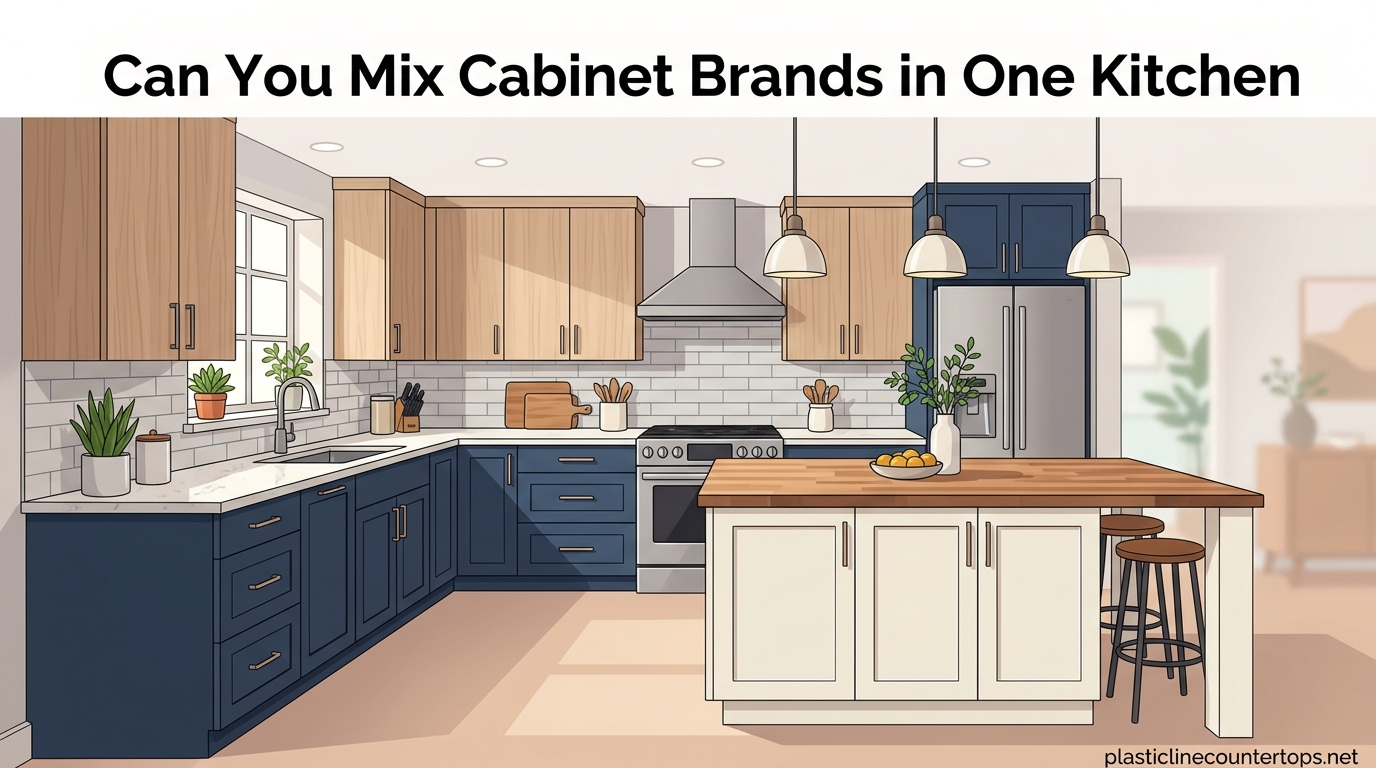
Yes, you can mix cabinet brands in one kitchen. In fact, combining cabinets from different manufacturers is a well-established design approach that many homeowners and designers use to create kitchens with more personality, better functionality, and smarter budgets. The key is planning your combinations so the final result feels intentional rather than accidental.
We have seen kitchen renovations where homeowners paired budget-friendly base cabinets from one brand with premium wall cabinets from another, and the result looked like a custom kitchen at half the cost. The trick comes down to understanding a few design principles and technical details before you start ordering boxes and doors.
In this guide, we will walk through everything you need to know about mixing cabinet brands in one kitchen. You will learn which style combinations work best, what technical details to watch for when pairing brands, common mistakes that ruin an otherwise good plan, and how to keep the whole room looking cohesive. Whether you are planning a full remodel or just refreshing a few sections, this article covers the decisions that matter most.
Table of Contents
Can You Mix Cabinet Brands in One Kitchen?
The short answer is absolutely yes. Mixing cabinet brands in one kitchen is not only possible, it is a strategy that professional designers use regularly. The idea that every cabinet in your kitchen must come from the same manufacturer is a myth that limits your design options and often costs you more money.
Think about it this way: you probably do not buy every piece of furniture in your living room from the same store. Your sofa, coffee table, and bookshelf can all come from different places and still look great together because you chose pieces that complement each other. Kitchen cabinets work the same way when you approach the selection with a clear plan.
Homeowners on forums like Reddit and Houzz share successful mixed-brand kitchen projects all the time. One common example is using IKEA SEKTION frames with door fronts from a different manufacturer. The boxes are affordable and well-engineered, while the aftermarket doors give you access to styles and finishes that IKEA does not offer. People also mix brands by using one manufacturer for the perimeter cabinets and a completely different brand for the kitchen island.
The important thing to remember is that mixing brands requires more planning than buying everything from a single source. You need to pay attention to dimensions, door overlay types, finish tones, and hardware compatibility. We cover all of these details in the sections below so you can mix cabinet brands with confidence.
Benefits of Mixing Cabinet Brands
Before diving into the how-to, it helps to understand why so many homeowners choose to mix cabinet brands rather than sticking with a single manufacturer. There are real advantages that go beyond simply wanting a different look.
Save Money Without Sacrificing Style
The biggest reason people mix brands is cost. Budget cabinets from one manufacturer can handle the heavy storage functions, like pantry cabinets and base cabinets under the countertops. Meanwhile, you can invest in premium cabinets for the visible showpiece areas, like the range hood surround or open shelving. This approach can cut your total cabinet cost by 20 to 40 percent compared to using a single premium brand throughout.
Some homeowners use this strategy to get the high-end look they want in the areas that matter most, while keeping costs down on the cabinets that are less visible. A pantry cabinet hidden behind a closed door, for instance, does not need the same door quality as the cabinets flanking your range. Mixing brands lets you allocate your budget where it has the most visual impact.
Create a Kitchen That Looks Custom
When every cabinet comes from the same line, the kitchen can look a bit cookie-cutter. Mixing brands lets you combine different door styles, finishes, and textures in ways that feel custom-designed for your space. A slab-door island paired with shaker perimeter cabinets, for example, creates visual depth that a single style cannot match.
This custom look is something that many high-end designers charge a premium for. By mixing brands yourself, you can achieve a similar effect without the designer price tag. The contrast between two coordinated styles gives the impression that the kitchen was carefully curated rather than ordered from a catalog.
Access Unique Sizes and Features
Not every manufacturer offers the same cabinet configurations. One brand might have excellent corner cabinets, while another offers better drawer organizers or deeper pantry options. Mixing brands gives you the freedom to pick the best solution for each specific area of your kitchen instead of compromising on what a single brand has available.
This is especially useful if your kitchen has unusual dimensions or specific storage needs. You might find that Brand A makes the perfect tall pantry cabinet but their drawer bases are too shallow, while Brand B has excellent drawer bases but lacks a good pantry option. Combining the best of both brands gives you a kitchen that works better than either brand could deliver on its own.
Understanding Cabinet Overlay Differences
This is the technical detail that most guides gloss over, but it matters enormously when you mix cabinet brands. Overlay refers to how much the cabinet door covers the face frame or the cabinet box when the door is closed. Getting this wrong is one of the fastest ways to make a mixed-brand kitchen look off.
Full Overlay
Full overlay doors cover nearly the entire face frame, leaving only a tiny gap between doors. This gives a clean, modern look where you see mostly door and very little of the cabinet frame. Most European-style and contemporary cabinets use full overlay construction. The gaps between doors are typically around 2 millimeters, creating a nearly seamless wall of door fronts.
Standard Overlay
Standard overlay doors cover less of the face frame, so you can see more of the frame around each door. This is the traditional look common in American-style cabinetry. The visible frame creates a more classic appearance with clearly defined individual doors. The reveal, which is the visible frame around each door, is usually about half an inch on each side.
Why This Matters When Mixing Brands
If you put a full overlay cabinet next to a standard overlay cabinet, the difference in how much frame is visible will stand out immediately. The doors will look like they sit at different depths, and the spacing between doors will be noticeably different. This is one of the fastest ways to make a mixed-brand kitchen look unplanned.
When mixing brands, try to match the overlay type across all cabinets in the same run. You can use different overlays in different zones, like full overlay on the perimeter and standard overlay on the island, because the physical separation makes the difference less noticeable. But within a continuous row of cabinets, keep the overlay consistent.
Framed vs Frameless Cabinets
Another technical factor is whether the cabinets are framed or frameless. Framed cabinets have a face frame attached to the front of the box, and the doors attach to that frame. Frameless cabinets, also called European-style, have no face frame, and the doors attach directly to the cabinet box. Frameless cabinets almost always use full overlay doors because there is no frame to show.
Mixing framed and frameless cabinets in the same row can create alignment issues because the door mounting points and hinge positions differ. The depth of the cabinet box itself may also vary between framed and frameless construction, which can cause the countertops to sit at slightly different heights if not adjusted properly. If you plan to mix these two construction types, place them in separate zones of the kitchen rather than side by side.
Best Cabinet Style Combinations That Work
Not all style pairings look good together. After reviewing dozens of mixed-brand kitchens and designer recommendations, these combinations consistently produce attractive, cohesive results.
Shaker and Slab Cabinets Together
This is the most popular pairing, and for good reason. Shaker cabinets have a recessed center panel with a simple framed border. Slab cabinets have a completely flat door with no framing or detail. The contrast between the textured shaker profile and the clean slab surface creates visual interest without clashing.
A common application is using shaker cabinets for the perimeter walls and a slab-door island as the focal point. The shaker style keeps the overall look grounded and familiar, while the slab island adds a modern accent that draws the eye. This combination works particularly well in transitional kitchens that sit somewhere between traditional and contemporary.
Two-Tone Upper and Lower Cabinets
Using different colors for upper and lower cabinets is a design trend that has been strong for several years, and it pairs naturally with mixing brands. You might choose white upper cabinets from one manufacturer and navy blue base cabinets from another. The color contrast makes the style difference feel intentional.
Forum users on Reddit report that two-tone cabinets work best when there is a clear visual reason for the contrast. Dark lowers and light uppers, for instance, ground the room and make the ceiling feel higher. Random color choices without a design logic tend to look choppy and unplanned. Pairing this color strategy with different brands is a natural fit because each manufacturer can provide the color they do best.
Island Accent vs Perimeter Cabinets
The kitchen island is the natural place to introduce a contrasting cabinet brand or style. Because the island sits physically apart from the perimeter cabinets, differences in door style, color, or overlay are much easier to pull off. Many designers use a completely different brand for the island specifically because the separation gives you more creative freedom.
Popular pairings include light perimeter cabinets with a dark-stained island, or painted perimeter cabinets with a natural wood island. The contrast creates a furniture-like feel for the island that makes it the centerpiece of the room. Some designers take this even further by adding decorative legs, a different countertop material, or a furniture-style toe kick to reinforce the idea that the island is a separate piece.
Open Shelving Mixed With Closed Cabinetry
Replacing some upper cabinets with open shelves is another way to mix things up. You can use a different brand or style for the shelving brackets and supports while keeping the closed cabinets consistent. This combination works well in smaller kitchens where removing some upper cabinets makes the room feel more open and airy.
The key to making this pairing work is ensuring the shelf material, whether wood or metal, picks up on one of the finishes or colors already present in the closed cabinetry. A walnut floating shelf that matches the walnut accents on your island, for example, ties the open shelving back to the overall design rather than letting it feel like an afterthought.
How to Keep Mixed Cabinets Looking Cohesive
The difference between a kitchen that looks thoughtfully designed and one that looks thrown together comes down to cohesion. These are the design rules that tie mixed cabinet brands together into a unified look.
Limit Your Color Palette to Two or Three Colors
Interior designers consistently recommend sticking to two or three cabinet colors maximum. One color should dominate, covering roughly 60 to 70 percent of the visible cabinetry. A second color provides contrast on about 20 to 30 percent. A third color, if used at all, should be a subtle accent on 10 percent or less.
When you mix cabinet brands, this rule becomes even more important because different manufacturers may have slightly different undertones in what they both call “white” or “gray.” Limiting your palette reduces the risk of clashing tones. If you are using two brands, consider having each brand provide a different color rather than trying to match the same color across manufacturers.
Match Your Hardware Across All Brands
Cabinet hardware is the easiest way to create visual unity across different brands. Use the same knob or pull style, finish, and size on every cabinet in the kitchen regardless of manufacturer. If your perimeter cabinets are from Brand A and your island is from Brand B, matching hardware tells the eye that the combination was planned.
Common hardware finishes that work across brands include brushed brass, matte black, satin nickel, and polished chrome. Pick one finish and use it everywhere, including on drawers, doors, and appliance handles. This single consistency element does more to unify a mixed-brand kitchen than almost anything else.
The 1/3 Rule for Cabinets
Designers often reference the 1/3 rule when mixing materials or colors in a space. The idea is that your contrasting element should occupy roughly one-third of the visual area, while the dominant element covers about two-thirds. This ratio keeps the contrast feeling balanced rather than overwhelming.
In practical terms, if you have a U-shaped kitchen with three walls of cabinets and an island, the island represents roughly one-third of the total cabinet area. Making the island your contrasting element naturally follows this rule. If you are mixing upper and lower cabinets, the uppers typically represent about one-third of the visual weight because wall cabinets are smaller than base cabinets.
Keep Proportions Consistent
Door dimensions matter more than most people realize. If one brand uses doors with a 2-inch stile width and another uses 3-inch stiles, the difference will be visible when the cabinets sit near each other. Try to match stile and rail dimensions, door thickness, and overall proportions when mixing brands in the same zone.
This is less critical when the brands are separated by physical distance, like perimeter versus island. But when two brands share the same wall or the same run of base cabinets, proportion matching helps maintain a consistent rhythm across the installation.
Watch Your Finish and Sheen
Two cabinets can be the exact same color but look mismatched if one has a matte finish and the other has a glossy sheen. When ordering cabinets from different brands, request finish samples and compare them under the lighting conditions in your kitchen. Pay attention to both the color and the sheen level. A satin finish from one manufacturer may look different enough from a satin finish at another manufacturer that you need to adjust your plan.
Sheen differences are especially visible under direct lighting like under-cabinet LEDs or pendant lights. What looks fine in a showroom can look noticeably different in your actual kitchen. This is why physical samples compared in your space are so important.
When You Should NOT Mix Cabinet Brands
Mixing cabinet brands is not always the right choice. There are situations where sticking with a single manufacturer makes more sense and produces a better result.
Very Small Kitchens
In a small galley kitchen or a compact apartment kitchen, the cabinets are all within a few feet of each other. Any differences in style, color, or overlay will be very obvious in such tight quarters. Forum users report that small kitchens with mixed styles often feel busy and cramped rather than interesting. For kitchens under 80 square feet, a single brand and style usually produces a cleaner, more spacious-feeling result.
When You Want a Perfect Match
If your design goal is a perfectly uniform look where every cabinet is indistinguishable from the next, mixing brands will not work. Even cabinets that look similar in product photos can have subtle differences in finish, edge profiles, and construction details that become apparent once installed. For seamless uniformity, buy everything from one manufacturer and from the same production batch if possible.
More Than Two Door Styles
Two door styles can look intentional and designed. Three or more door styles in the same kitchen almost always looks chaotic. If you are already mixing colors, materials, and brands, adding a third or fourth door style pushes the design into cluttered territory. Stick with two door styles maximum, and use them in clearly defined zones.
Common Mistakes to Avoid When Mixing Cabinets
Learning from the mistakes others have made can save you time, money, and frustration. These are the errors that come up most frequently in forums and remodel discussions.
Ignoring Door Alignment and Spacing
Different brands have different reveal dimensions, which is the gap between doors when they are closed. If Brand A has a 1/8-inch reveal and Brand B has a 3/16-inch reveal, the spacing inconsistency will catch your eye every time you look at the cabinets. Check the reveal specifications before ordering, and avoid mixing brands with significantly different spacing in the same continuous run.
Skipping Physical Finish Samples
Ordering cabinets online based on product photos is risky enough with a single brand. When you mix brands, the risk doubles because you need finishes from two different manufacturers to look good together. Always order physical door samples from every brand you plan to use. Compare them side by side in your actual kitchen lighting before committing to the full order. The small cost of samples is nothing compared to the cost of replacing cabinets that do not match.
Forgetting About Corner Cabinets
Corner base cabinets are one of the trickiest elements to coordinate across brands. Different manufacturers use different corner cabinet configurations, including lazy Susan styles, blind corner units, and corner drawers. If your layout includes corner cabinets that transition from one brand to another, map out the exact dimensions and door configurations before ordering. Forum posts on Houzz are full of stories from homeowners who discovered too late that their corner cabinets from two different brands did not align properly.
Mismatching Quality Levels Too Dramatically
Saving money by mixing brands is smart, but there is a limit. If your premium cabinets have dovetail drawers, soft-close hinges, and solid wood doors, do not pair them with the cheapest entry-level boxes from another brand. The quality difference will be obvious every time you open a drawer or close a door. A good rule of thumb is to keep quality levels within one tier of each other. Pair mid-range with mid-range, or mid-range with premium, but avoid pairing premium with entry-level.
DIY vs Professional Installation for Mixed Cabinets
No competitor guide addresses this question, but it comes up constantly in forum discussions. The answer depends on how you plan to mix the brands and how comfortable you are with cabinet installation work.
When DIY Works
If you are mixing brands but keeping them in separate zones, like one brand on the perimeter and another on the island, DIY installation is very manageable. Each zone can be installed following the manufacturer’s instructions independently. The only coordination point is where the two zones meet, which is usually a filler strip or a panel that hides the transition.
When to Hire a Professional
If you plan to mix brands within the same continuous run of cabinets, hire a professional installer. Aligning doors from different manufacturers in the same run requires precise shimming, adjusting hinge mounts, and potentially modifying filler pieces to make the spacing look consistent. A good installer can make two brands look like one, but it takes experience that most DIYers do not have.
Cost of Professional Help
Professional cabinet installation typically runs between 150 and 300 dollars per cabinet, depending on your area and the complexity of the job. If mixing brands adds significant complexity to the installation, expect to pay toward the higher end of that range. Even with the added installation cost, the savings from mixing brands usually still come out ahead compared to buying all premium cabinets.
FAQ
Is it okay to mix kitchen cabinet styles?
Yes, mixing kitchen cabinet styles is perfectly acceptable and increasingly popular. Designers regularly combine styles like shaker and slab to add visual depth and personality. The key is keeping the combination intentional by matching hardware, limiting colors to two or three, and placing different styles in clearly defined zones like perimeter vs island.
What is the 1/3 rule for cabinets?
The 1/3 rule suggests that your contrasting cabinet element should take up roughly one-third of the visual space, while the dominant style covers about two-thirds. This ratio keeps the contrast balanced. For example, using a contrasting island in a kitchen where the perimeter cabinets represent the dominant two-thirds naturally follows this rule.
Can you mix IKEA cabinets with other brands?
Yes, many homeowners successfully mix IKEA SEKTION cabinets with other brands. The most common approach is using IKEA boxes with aftermarket door fronts from companies that specialize in IKEA-compatible doors. Some people also use IKEA for base cabinets and a different brand for wall cabinets or the island. Pay attention to the standard IKEA dimensions (which are European) versus standard US cabinet sizes when planning your layout.
Should upper and lower cabinets match?
Upper and lower cabinets do not need to match. Two-tone kitchens with different colors on upper and lower cabinets have been a popular design choice for years. Dark lowers with light uppers is a common combination that grounds the room while making ceilings feel higher. The important thing is that the two colors complement each other and work with the overall kitchen palette.
Conclusion
You absolutely can mix cabinet brands in one kitchen, and doing so can save you money while giving your space a custom, designer-quality look. The homeowners who get the best results are the ones who plan carefully: they match overlay types within continuous runs, coordinate hardware across all brands, limit their color palette, and test finish samples before committing.
Start by choosing two brands and two door styles at most. Decide which zones each brand will cover. Order physical samples. Then use the cohesion tips in this guide to tie everything together. With the right approach, your mixed-brand kitchen will look like it was designed by a professional, because in a way, it was.