
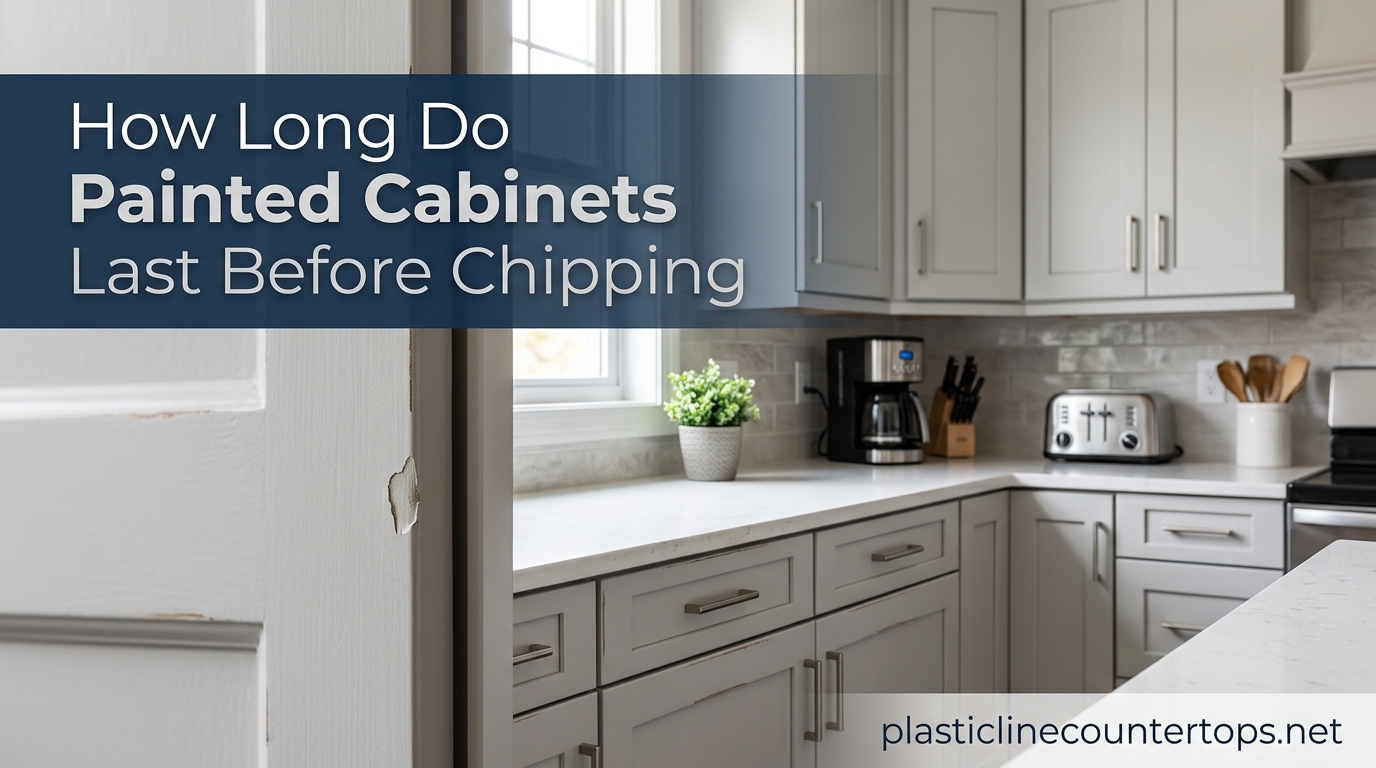
If you are wondering how long painted cabinets last before chipping, the answer most homeowners should expect is 5 to 10 years. That range is wide for a reason — the actual lifespan of your painted cabinets depends heavily on surface preparation, paint quality, and how you use your kitchen every day. Our team has looked at dozens of professional painting jobs and homeowner experiences, and the results vary dramatically based on a few key decisions made before the first coat ever goes on.
Professionally painted cabinets with proper prep work, quality primer, and durable enamel paint can reach the 8 to 10 year mark before showing any meaningful chipping. On the other hand, a rushed job with minimal sanding and cheap paint might start peeling in as little as 2 years. I have seen both extremes firsthand, and the difference almost always comes down to preparation and product choice.
This guide breaks down exactly what determines how long your painted cabinets will last, what causes premature chipping, and the specific steps you can take to push that number closer to a decade. Whether your cabinets are freshly painted or you are considering the investment, understanding these factors will save you time, frustration, and money.
Table of Contents
How Long Do Painted Cabinets Last Before Chipping: The Real Numbers
Painted cabinets last between 5 and 10 years before chipping becomes noticeable in most homes. But that single range does not tell the full story. The actual lifespan of your cabinet paint falls into three distinct tiers based on the quality of the job and the conditions in your kitchen.
A poorly prepared paint job — one where cabinets were not properly cleaned, sanded, or primed — typically starts showing chips within 2 to 4 years. This is the category where most DIY projects and budget contractor jobs land. The paint may look fine for the first few months, but adhesion problems beneath the surface start showing up once the kitchen goes through normal daily use.
An average quality paint job with decent prep and standard paint products generally lasts 5 to 7 years before chipping becomes a concern. Many homeowners fall into this tier, especially when working with contractors who do a reasonable job but cut corners on things like cure time between coats or using a dedicated bonding primer.
A high-quality professional job with thorough surface preparation, bonding primer, premium enamel paint, and proper cure times can last 8 to 10 years or longer. Professional painters who specialize in cabinets achieve these results consistently because they control every variable from surface prep to application method to drying conditions.
Lifespan by Cabinet Material
The material your cabinets are made from plays a bigger role in paint longevity than most people realize. Solid wood cabinets hold paint the longest because the natural grain provides mechanical adhesion for primer to grip. When properly sanded and primed, solid wood can maintain a painted finish for the full 8 to 10 year range.
MDF (medium density fiberboard) cabinets present a different challenge. MDF is smooth and non-porous on the surface, which means primer adhesion relies entirely on the chemical bond rather than mechanical grip. MDF can still achieve good paint longevity — typically 5 to 8 years — but only when painted with a high-quality bonding primer designed for non-porous surfaces. Skipping that step on MDF is one of the fastest paths to premature peeling.
Laminate cabinets are the toughest substrate for paint adhesion. Without proper etching and a specialized bonding primer, paint on laminate may start lifting within 1 to 3 years. The smooth, factory-applied finish on laminate simply does not give paint much to hold onto. If you have laminate cabinets and want them painted, make sure whoever does the work uses a bonding primer specifically rated for laminate surfaces.
Why Painted Cabinets Chip: The 6 Biggest Causes
Understanding why painted cabinets chip is just as important as knowing how long they last. Once you recognize the root causes, you can address most of them before they become problems. Here are the six factors that account for nearly all premature cabinet paint failure.
1. Poor Surface Preparation
This is the single biggest factor in how long painted cabinets last before chipping. Kitchen cabinets accumulate layers of grease, cooking oil, and general grime over years of use. If these contaminants are not completely removed before painting, the paint bonds to the grease rather than the cabinet surface. That bond is weak from the start and will fail under normal use.
Proper prep means degreasing every surface with a strong degreaser, sanding to create a mechanical profile for the primer, and applying a bonding primer before the paint goes on. Skipping or rushing any of these steps cuts years off the lifespan of the finish. Professional cabinet painters spend 60 to 70 percent of their total project time on preparation alone, and that ratio exists for a reason.
2. Using the Wrong Paint or Primer
Not all paint is created equal when it comes to cabinet durability. Standard wall paint lacks the hardness and adhesion properties needed for surfaces that get touched, bumped, and scrubbed daily. The right choice for cabinets is a durable enamel finish — either alkyd (oil-based) or acrylic urethane (water-based) — applied over a bonding primer.
Bonding primers are specifically formulated to create a strong adhesive layer between the cabinet surface and the topcoat. Without one, even expensive paint will struggle to stick. Sherwin Williams and Benjamin Moore both make cabinet-specific primers and paints that professionals rely on, and the quality difference compared to standard products is noticeable within the first year.
3. Moisture and Steam Exposure
Kitchens generate enormous amounts of moisture, especially around the sink, dishwasher, and stove areas. Steam from boiling water penetrates paint finishes over time, weakening the bond between paint and surface. Cabinets directly above or beside the stove and dishwasher are almost always the first to show chipping and peeling.
Humidity also plays a role in painted cabinet longevity. Homes in humid climates or regions with wide seasonal humidity swings put more stress on painted finishes because the wood substrate expands and contracts with moisture changes. This movement creates tiny stress fractures in the paint film that eventually become chips and cracks.
4. Grease, Food Acids, and Heat
Cooking generates airborne grease particles that settle on nearby cabinet surfaces. Over time, these grease deposits penetrate the paint film, creating a gummy texture around handles and along the edges closest to the stove. Once grease works its way into the paint layer, it breaks down the resin formulation and softens the finish.
Food acids from cooking can also degrade paint surfaces, particularly around the stove and prep areas. Combined with the heat from cooking, these factors create a harsh environment that no other painted surface in your home has to endure. This is why kitchen cabinet paint typically fails faster than paint on bathroom vanities or other cabinetry.
5. Wood Expansion and Contraction
Wood naturally expands and contracts with changes in temperature and humidity. This movement is subtle but constant, and it puts stress on the paint film covering the wood surface. Over years of cycling between expansion and contraction, hairline fractures develop at joints, seams, and along edges.
These hairline cracks are usually the first visible sign of paint failure. Once the paint film is cracked, moisture and contaminants can get underneath, accelerating the chipping process. This is why you will often see the first chips appear at joint lines and panel edges rather than on flat surfaces.
6. Harsh Cleaning Products
Using the wrong cleaning products can strip the protective finish off painted cabinets in a matter of months. Abrasive cleaners, scouring pads, and harsh chemical degreasers break down the paint film every time they are used. Even some supposedly gentle all-purpose cleaners contain solvents that degrade cabinet paint over repeated exposure.
The safest approach for cleaning painted cabinets is warm water with a small amount of mild dish soap, applied with a soft microfiber cloth. This combination removes grease and grime without attacking the paint finish. If you need something stronger for stubborn spots, look for cleaners specifically labeled as safe for painted surfaces.
Cabinet Material Matters: MDF vs Solid Wood vs Laminate
The material underneath the paint has a direct impact on how long the finish lasts before chipping. I touched on this briefly in the lifespan section, but it deserves a closer look because this is one of the most overlooked factors in cabinet paint longevity.
Solid wood cabinets offer the best foundation for a long-lasting paint job. The natural grain structure gives primer something to mechanically grip, and wood tolerates sanding well to create an ideal surface profile. Oak, maple, and birch are particularly good substrates for paint adhesion. Painted solid wood cabinets can reliably reach the 8 to 10 year mark when properly prepared.
MDF cabinets require a different approach. Because MDF has no grain and a very smooth surface, the primer must create a chemical bond rather than relying on mechanical adhesion. This means using a high-quality bonding primer rated for glossy and non-porous surfaces is not optional — it is essential. When MDF is properly primed and painted, you can expect 5 to 8 years before chipping becomes an issue.
Laminate and thermofoil cabinets present the biggest challenge. These surfaces are essentially plastic coatings that resist adhesion by design. Painting laminate requires specialized etching primers or liquid deglossers to create a surface that paint can actually bond to. Even with proper preparation, painted laminate typically lasts 3 to 5 years before showing wear, making it the least durable option for painting.
Zone-Specific Wear: Where Cabinets Chip First
Not all cabinets in your kitchen age at the same rate. Certain zones experience dramatically more wear and tear, and the cabinets in these areas will chip years before cabinets in lower-traffic spots. Knowing which zones are vulnerable helps you target maintenance where it matters most.
Sink Base and Dishwasher Zones
The cabinets directly around your sink and dishwasher face a triple threat: constant moisture exposure, steam from the dishwasher vent, and frequent contact with wet hands. Sink base cabinets in particular often show paint failure along the top edge and around the faucet cutout where water pools.
If your dishwasher vents from the front, the cabinet directly above or beside it receives a blast of steam with every cycle. Over time, that repeated steam exposure weakens the paint film and causes bubbling and peeling. These cabinets often need attention 2 to 3 years sooner than cabinets in drier areas of the kitchen.
Stove and Range Areas
Cabinets flanking the stove and the range hood area above it deal with heat, grease splatter, and food acids on a daily basis. Grease from cooking settles on these surfaces faster and in greater concentration than anywhere else in the kitchen. The combination of heat and grease creates a hostile environment for paint adhesion.
Homeowners who do a lot of frying, sauteing, or high-heat cooking will see paint deterioration around the stove area accelerate. Using a splatter screen and running the range hood fan every time you cook can significantly extend the paint life in this zone.
Around Handles and High-Touch Spots
Cabinet doors and drawers around the handles receive the most physical contact in the entire kitchen. Every time you open a cabinet, oils and moisture from your hands transfer to the paint surface. Over time, this creates a characteristic gummy or sticky texture right around the handle area.
The chemistry of hand grease is surprisingly destructive to paint finishes. Natural skin oils contain acids and salts that break down paint resins through repeated contact. This is why handles and the surrounding area are often the first places to show softening, discoloration, and eventual chipping. Regular cleaning of these areas with gentle soap and water can slow this process considerably.
How to Make Painted Cabinets Last Longer Without Chipping
The difference between cabinets that chip after 3 years and cabinets that look great after 8 years often comes down to maintenance habits. These specific practices can add years to the life of your painted cabinets, and most of them cost nothing but a little time and attention.
Wait for Full Cure Time (21-30 Days)
This is the most commonly ignored factor in cabinet paint longevity. Paint may feel dry to the touch within hours, but it takes 21 to 30 days for most cabinet paints to reach full hardness and chemical resistance. During this cure period, the paint is vulnerable to scratching, marring, and damage from cleaning products.
I have seen homeowners scrub their freshly painted cabinets with strong cleaners just days after the job was completed, only to watch the finish deteriorate immediately. Treat your new paint job gently for the first month. Avoid hanging wet towels on cabinet doors, limit cleaning to dry dusting or a barely damp cloth, and keep harsh chemicals far away until the paint has fully cured.
Weekly Cleaning Habits That Protect Paint
A quick weekly wipe-down with a soft microfiber cloth and warm soapy water removes grease and grime before it can build up and penetrate the paint film. Focus on the areas around handles, the edges near the stove, and any surface you touch regularly. This 10-minute weekly routine does more to extend paint life than almost anything else you can do.
Avoid paper towels for weekly cleaning — the wood fibers in paper towels can create microscopic scratches in the paint surface over time. Microfiber cloths are softer, more effective at lifting grease, and reusable. Keep a few designated cabinet cleaning cloths in your kitchen so the habit is easy to maintain.
Monthly Deep Cleaning Routine
Once a month, give your painted cabinets a more thorough cleaning. Mix warm water with a few drops of mild dish soap and wash all exterior surfaces, paying special attention to the zones mentioned earlier — around the sink, stove, and handles. Dry immediately with a clean cloth to prevent water from sitting on the surface.
For stubborn grease spots, a 50/50 mixture of white vinegar and water works well as a gentle degreaser that will not harm properly cured paint. Test any cleaning solution on an inconspicuous area first, and never let cleaning solutions sit on the paint surface for more than a few seconds before wiping dry.
Protective Accessories Worth Using
Cabinet bumpers — those small felt or silicone pads — are a simple and inexpensive way to prevent chips caused by doors banging against frames. Apply them to the inside corners of cabinet doors where they contact the frame. This absorbs impact and prevents the paint from cracking at contact points.
Self-adhesive cabinet liners protect the interior paint on shelves from scratches caused by dishes, pots, and utensils. While interior paint does not face the same environmental challenges as exterior surfaces, shelf liners prevent the kind of abrasion that leads to chipping over years of sliding items in and out.
Consider installing soft-close hinges if your cabinets do not already have them. The repeated slamming of cabinet doors is a major source of impact damage that leads to chipping at the edges. Soft-close hardware costs a few dollars per hinge and can be installed as a direct replacement for most existing hinges.
Touch-Up Painting on a Schedule
Addressing small chips and nicks promptly prevents them from growing into larger problems. Keep a small amount of your original cabinet paint in a clearly labeled container for touch-ups. Use a fine-tipped artist brush to dab paint into chips rather than brushing over a wider area, which creates visible texture differences.
The best time for touch-ups is as soon as you notice a chip. Exposed wood or primer absorbs moisture and contaminants, which undermines the paint around the damaged area and causes the chip to spread. A 30-second touch-up today can prevent a repainting project next year.
DIY vs Professional Cabinet Painting: Lifespan Comparison
The gap between DIY and professional cabinet painting results is significant when it comes to longevity. A professional cabinet painting job typically lasts 8 to 10 years, while the average DIY project lands closer to 3 to 5 years before chipping becomes noticeable. Understanding why this gap exists helps you decide which approach makes sense for your situation.
Professional cabinet painters bring three advantages that are difficult to replicate at home. First, they use commercial-grade spray equipment that applies paint in a thin, even film with consistent coverage. Brush and roller application, which is what most DIY painters use, leaves a thicker film with texture variations that chip more easily under stress.
Second, professionals control the environment during painting and curing. Temperature and humidity affect how paint flows, levels, and cures. Professionals work in controlled spaces where these variables are managed. Home DIYers often paint in their own kitchens where conditions fluctuate.
Third, experience matters more than most people expect. A professional who has painted hundreds of sets of cabinets knows exactly how long to wait between coats, how to handle tricky areas like raised panels and inside corners, and how to spot adhesion problems before the paint goes on. This accumulated knowledge translates directly into longer-lasting results.
That said, a careful DIY painter who follows proper preparation procedures, uses quality materials, and allows adequate cure time can achieve respectable results. The key is investing the time in surface preparation that most people want to rush through. If you are willing to spend the majority of your project time on cleaning, sanding, and priming, your DIY results can approach professional longevity.
Signs Your Cabinet Paint Is Failing (And What to Do)
Catching paint failure early gives you the chance to address problems with simple touch-ups rather than a full repaint. Here are the warning signs to watch for and what they mean for your next steps.
Early Warning Signs
Hairline cracks at joints and seams are usually the first visible sign that paint is under stress. These tiny fractures form where wood pieces meet because that is where expansion and contraction creates the most movement. If you catch them early, a careful touch-up can seal the crack before it spreads.
A gummy or sticky texture around handles and high-touch areas means the paint resin is breaking down from repeated exposure to skin oils. This softening is a precursor to chipping and peeling in those areas. Increasing your cleaning frequency in these spots can slow the progression.
Peeling at edges and along the bottom of doors typically indicates a moisture problem. Water runs down cabinet doors and collects along the bottom edge, where it can wick underneath the paint film. If you see this pattern, check for leaks or condensation issues and address the water source before repainting.
Discoloration or yellowing, especially on white or light-colored cabinets, often signals that the protective clear coat or paint finish is wearing thin. Once the top layer degrades, the underlying layers become vulnerable to chipping and staining.
When to Touch Up vs Repaint vs Replace
If chipping is limited to a few isolated spots and the rest of the finish is intact, touch-ups are the right approach. Keep the original paint color on hand and address chips as they appear. This approach works well for the first 5 to 7 years of a quality paint job.
When chips are widespread across multiple doors and drawers, or when large sections of paint are peeling in sheets, it is time for a full repaint. At this point, touch-ups will not blend well and the underlying adhesion problems will continue to cause new chips. A complete repaint with proper surface preparation resets the clock.
Replacement becomes the better choice when the cabinets themselves are damaged beyond what paint can fix — warped doors, broken frames, or MDF that has swelled from water damage. Painting over structural problems is a temporary cosmetic fix that will not last. If the substrate is compromised, replacement offers better long-term value.
Paint Color and Finish: Does It Affect Durability?
The color and finish of your painted cabinets has a real impact on both perceived and actual durability. While the underlying paint chemistry is the same regardless of color, some practical differences are worth knowing about.
White and light-colored cabinets show chips, scratches, and discoloration much more visibly than dark colors. A small chip on a white cabinet that exposes the dark primer or wood underneath is immediately noticeable. The same size chip on a dark-colored cabinet is far less visible. This does not mean dark paint is more durable — it just hides damage better. Many homeowners on forums report frustration with white cabinets because every chip stands out sharply against the bright finish.
Dark colors like matte black come with their own challenges. Dark paint shows dust, fingerprints, and water spots more readily, which leads to more frequent cleaning. More cleaning means more physical contact with the paint surface, which can accelerate wear over time. Some homeowners also report that dark matte finishes show surface imperfections from the original paint application more clearly as the finish ages.
When it comes to finish sheen, semi-gloss and satin are the most practical choices for painted cabinets. Higher sheen levels like semi-gloss are easier to clean and more resistant to moisture penetration, which translates to better long-term durability. Flat or matte finishes look great initially but are more porous, harder to clean, and more susceptible to staining and moisture damage. Most professional cabinet painters recommend satin or semi-gloss specifically because these finishes balance appearance with practical durability.
FAQ
How often do painted cabinets chip?
Painted cabinets in a typical household develop minor chips every 2 to 3 years in high-wear zones like around the stove, sink, and handles. With proper maintenance and quality paint, widespread chipping should not appear for 7 to 10 years. Cabinets that chip within the first year almost always have a preparation or paint adhesion problem that needs professional attention.
Do painted kitchen cabinets chip easily?
Painted kitchen cabinets do not chip easily when the job is done right. Quality paint applied over a properly prepared and primed surface resists chipping for 7 to 10 years under normal use. However, kitchen cabinets face more abuse than painted surfaces anywhere else in the home — heat, steam, grease, and constant physical contact. Cabinets that were painted without proper surface prep, bonding primer, or adequate cure time will chip much sooner.
Why are my newly painted cabinets chipping?
If your cabinets are chipping within the first 6 months, the cause is almost always one of three problems: inadequate surface preparation (grease or old finish not removed), wrong primer (no bonding primer used), or paint applied before previous coats fully dried. Other causes include painting over dust or debris, using paint not formulated for cabinets, or exposing the paint to moisture and scrubbing before it fully cured. Cure time takes 21 to 30 days for most cabinet paints.
How do I keep my painted cabinets from chipping?
To prevent chipping, clean cabinets weekly with a microfiber cloth and mild soapy water, avoid abrasive cleaners, install soft-close hinges and cabinet bumpers, and treat freshly painted cabinets gently for the first 30 days while the paint cures. Address small chips immediately with touch-up paint to prevent spreading. Use the range hood fan when cooking to reduce grease and steam settling on cabinets.
How to fix paint chips on painted cabinets?
Clean the chipped area with mild soap and water, let it dry completely, then lightly sand the edges of the chip with fine-grit sandpaper (220 grit) to smooth the transition. Apply a small amount of the original paint using a fine-tipped artist brush, dabbing rather than brushing. Let it dry for 24 hours. If the chip exposes bare wood, apply a dab of primer first and let it dry before touching up with paint.
What is the 1/3 rule for cabinets?
The 1/3 rule for cabinets refers to a design guideline stating that cabinet doors look best when divided into approximately one-third and two-thirds proportions for raised panel or shaker-style doors. It is sometimes confused with the rule that you should inspect and potentially touch up painted cabinets every 1 to 3 years in high-wear areas to prevent minor chips from becoming major paint failures.
How long does it take for cabinet paint to fully cure?
Most cabinet paints take 21 to 30 days to fully cure, even though they feel dry to the touch within a few hours. During this cure period, the paint continues to harden and develop its full resistance to scratching, marring, and chemical exposure. Avoid scrubbing, using harsh cleaners, or exposing freshly painted cabinets to heavy moisture during this window. Water-based acrylic enamels cure faster than oil-based alkyd paints, but both need the full cure time for maximum durability.
Are painted cabinets worth it compared to staining?
Painted cabinets offer more color flexibility and can dramatically change the look of your kitchen at a fraction of the cost of replacement. Stained cabinets tend to show their age more gracefully because wear blends into the natural wood grain, while chips on painted cabinets are more visible. However, a quality painted finish that lasts 7 to 10 years makes painting an excellent investment, especially compared to the cost of full cabinet replacement.
Final Thoughts on Painted Cabinet Lifespan
So, how long do painted cabinets last before chipping? The honest answer is 5 to 10 years, with the specific number determined by the quality of preparation, the paint products used, and how well you maintain the finish over time. A professional job with proper prep and premium materials can easily push past the decade mark, while a rushed or corners-cut job might fail within 2 to 3 years.
The three things that matter most are preparation, paint quality, and cure time. Get those right, and your painted cabinets will serve you well for years. Ignore them, and you will be back at the painting station sooner than you ever expected.
If your cabinets are already showing signs of chipping, do not wait to address it. Small touch-ups today prevent the kind of widespread failure that requires a full repaint. And if you are planning a cabinet painting project, invest in the preparation work — it is the single best thing you can do to make sure your new finish lasts as long as possible.