
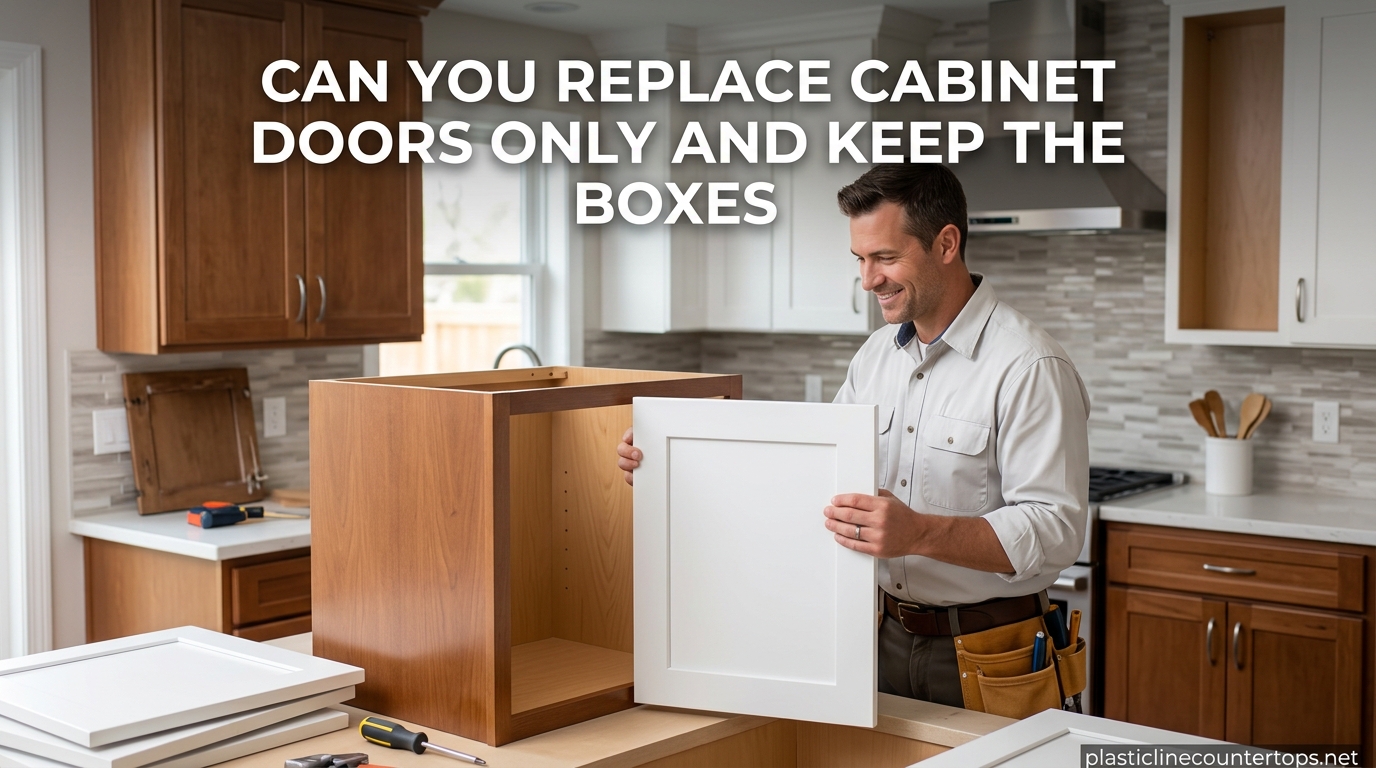
Yes, you absolutely can replace cabinet doors only while keeping your existing cabinet boxes and frames intact. This process, known as cabinet refacing or cabinet door replacement, has become one of the most popular kitchen renovation strategies for homeowners who want a fresh look without the expense and disruption of a full remodel. Our team has seen hundreds of kitchens transformed through this approach over the past few years.
Replacing just the cabinet doors and drawer fronts while keeping the boxes is significantly more affordable than full cabinet replacement. Most homeowners save 40-60% compared to installing brand new cabinets. The project typically completes in 2-5 days versus weeks for a complete tear-out and replacement.
In this guide, I will walk you through everything you need to know about cabinet door replacement. We will cover when this approach makes sense, when you should consider full replacement instead, how much it costs, and how to assess whether your existing cabinet boxes are worth keeping.
Table of Contents
What Is Cabinet Door Replacement (Cabinet Refacing)?
Cabinet door replacement, also called cabinet refacing, is the process of swapping out only the visible surfaces of your cabinets while keeping the structural boxes hidden behind them. When you reface cabinets, you replace the doors, drawer fronts, and sometimes apply a new veneer to the face frames.
The cabinet boxes themselves remain untouched. These boxes form the skeleton of your kitchen storage. They include the floor, ceiling, back panel, and shelves. As long as these internal structures are solid, you can give your kitchen an entirely new appearance simply by changing what you see from the outside.
Many homeowners confuse cabinet refacing with cabinet refinishing. Refinishing means painting or staining your existing doors. Refacing means replacing them entirely with new ones. Refacing gives you more dramatic style changes and lets you switch door profiles completely.
Cost Comparison: Door Replacement vs Full Cabinet Replacement
One of the biggest reasons homeowners choose to replace cabinet doors only is the significant cost savings. Let us break down the numbers so you can make an informed decision.
Cabinet door replacement costs typically range from $2,000 to $8,000 for an average-sized kitchen. This includes new doors, drawer fronts, hardware, and professional installation. DIYers can reduce this to $800-$3,000 by ordering doors online and handling installation themselves.
Full cabinet replacement costs run $15,000 to $30,000 or more for the same kitchen. Custom cabinets can push this to $40,000+. The higher price reflects the labor of removing old cabinets, disposing of them, installing new boxes, and potentially repairing walls and flooring.
Several factors affect your actual door replacement cost. Material choice matters most. MDF with thermofoil coating costs least. Solid wood doors cost more but last longer. Door style complexity also impacts price. Simple slab doors are cheaper than detailed raised panels. Kitchen size obviously matters too. A galley kitchen needs fewer doors than an expansive open-concept space.
When Replacing Cabinet Doors Only Makes Sense
Not every kitchen is a candidate for door-only replacement. Here are the situations where this approach works best.
Your cabinet boxes are sturdy and level. This is the most important factor. If your boxes are made from solid plywood or quality hardwood, they can last decades longer. Builder-grade cabinets from the 1980s and 1990s often used particle board that deteriorates faster. We will cover how to assess your boxes later in this guide.
Your kitchen layout works well. Door replacement does not change where cabinets sit or how drawers open. If you struggle with awkward corners, insufficient storage, or poor workflow, full replacement lets you redesign. But if you are happy with cabinet placement, refacing gives you the aesthetic upgrade without layout disruption.
You are budget-conscious. The 40-60% savings mentioned earlier is real. Many homeowners redirect those savings toward quality countertops, upgraded appliances, or professional installation. One Reddit user reported spending $2,500 on new doors from an online company and being thrilled with the results.
You own a century home. Houses built before 1950 often feature solid hardwood cabinet boxes with craftsmanship worth preserving. Replacing doors lets you modernize appearance while keeping those quality bones. Several forum users with 1900s-era homes confirmed this approach worked beautifully for them.
You care about sustainability. Keeping existing boxes out of landfills makes refacing the eco-friendly choice. The National Kitchen and Bath Association estimates full cabinet replacement generates 500-1,000 pounds of waste per kitchen. Refacing creates a fraction of that.
When NOT to Replace Just the Doors
Just as important as knowing when to reface is knowing when to avoid it. Here are red flags that indicate full replacement makes more sense.
Structural damage or water damage. Look for warped sides, swollen shelves, or delaminating back panels. Water damage spreads quickly in cabinet boxes. If the particle board or plywood has absorbed moisture, it loses strength and cannot properly support new doors.
Poor-quality original cabinets. Builder-grade cabinets from the past few decades often use thin particle board that cannot hold screws well. One forum user noted their hinges pulled out because the particle board crumbled. If your boxes feel flimsy when you push on them, they may not support new doors long-term.
You need layout changes. Door replacement cannot move a sink, add cabinets, or change drawer configurations. If your kitchen workflow frustrates you daily, invest in a full redesign rather than cosmetic changes.
Outdated plumbing or electrical. Sometimes kitchens need updates behind the walls. If your remodel includes rewiring or replumbing, removing cabinets becomes necessary anyway. In that case, install new boxes while everything is accessible.
How to Assess If Your Cabinet Boxes Are Suitable
Before ordering new doors, verify your existing boxes can support them. Here is a simple inspection checklist.
Step 1: Check for water damage. Open every cabinet and examine the floor, back panel, and sides. Look for discoloration, warping, or soft spots. Pay special attention to cabinets under the sink and near dishwashers. Press firmly on the cabinet floor. It should feel solid, not spongy.
Step 2: Verify level and plumb. Use a level to check if cabinet tops are flat. Set the level across several cabinets. They should align within 1/8 inch. Crooked cabinets mean doors will not hang properly. You may need professional adjustment before refacing.
Step 3: Test hinge attachment points. Remove one door and examine the screw holes in the face frame or cabinet side. The wood should grip screws tightly. If screw holes are stripped or the material crumbles, your boxes may not support new hardware.
Step 4: Inspect shelves and interior. Shelves should sit flat without bowing. Drawer slides should operate smoothly. If shelves sag or drawers stick, the structural integrity may be compromised.
If your boxes pass these tests, you are likely a good candidate for door replacement. If you find multiple issues, get a professional opinion before proceeding.
Types of Cabinet Doors You Can Choose
Replacing doors gives you the chance to completely change your kitchen style. Here are the most popular door types available.
Shaker Style
Shaker doors feature a simple recessed center panel surrounded by a frame. This clean, timeless design works in both traditional and contemporary kitchens. Shaker remains the most popular choice for door replacement projects. The simple lines complement almost any decor.
Slab Style
Slab doors are flat panels without any framing or detailing. They create a sleek, modern look perfect for minimalist kitchens. Slab doors cost less than detailed styles because they require less machining. They also show fingerprints more easily, so consider this if you have young children.
Raised Panel
Raised panel doors feature a center panel that rises above the surrounding frame. This traditional style suits classic, formal kitchens. The detailed profile adds visual interest but also creates more crevices to clean. Raised panel doors typically cost more than Shaker or slab styles.
Glass-Front Doors
Glass-front doors let you display dishes while keeping them dust-free. They work beautifully on upper cabinets flanking a window or on either side of a range hood. Most homeowners mix glass doors with solid doors rather than using them throughout the kitchen. You can choose clear, seeded, frosted, or textured glass.
The Cabinet Door Replacement Process
Understanding the process helps you decide whether to DIY or hire professionals. Here is how cabinet door replacement typically works.
Step 1: Measure existing doors precisely. Accurate measurements ensure new doors fit properly. Measure width, height, and thickness. Note hinge placement. Many online companies provide measurement guides. Professional measurement services cost $100-$300 but eliminate ordering errors.
Step 2: Choose your overlay type. Overlay determines how much door covers the cabinet frame. Full overlay doors cover nearly the entire frame. Partial overlay reveals some frame. Inset doors sit flush within the frame. Your existing hinge type often dictates overlay choice.
Step 3: Order doors and hardware. Lead times vary from 2-8 weeks depending on the company and customization level. Order soft-close hinges while you are at it. Forum users consistently recommend this upgrade. Expect to pay $30-$150 per door depending on material and style.
Step 4: Remove old doors and hardware. Save one old door and hinge set until new doors arrive. This gives you a reference if questions arise. Label each door location with tape to ensure new doors go in the right spots.
Step 5: Install new doors. Pre-bored doors make hinge installation straightforward. European-style concealed hinges adjust in three directions for perfect alignment. Take your time adjusting. Properly aligned doors transform your kitchen appearance. Rushed installation shows.
Where to Buy Cabinet Doors Only
You have several options for sourcing replacement cabinet doors. Each has advantages depending on your needs.
Online retailers like CabinetNow, CabinetDoors.com, and Fast Cabinet Doors offer the widest selection. They ship nationwide and provide detailed ordering guides. Most sell unfinished doors for local finishing or finished doors ready to install. Expect 2-6 week lead times.
Local cabinet makers provide custom sizing and finishing services. They cost more but ensure perfect fit and professional results. Forum users recommend this route for century homes with non-standard cabinet sizes. Search for independent cabinet shops rather than big-box stores.
Big box stores like Home Depot and Lowe’s stock standard sizes of popular door styles. You can buy immediately without waiting. However, selection is limited and sizes may not match your cabinets exactly.
IKEA sells cabinet doors separately from their cabinet systems. If your existing boxes use standard European sizing, IKEA doors might work. Measure carefully since IKEA uses metric sizing. Some homeowners successfully mix IKEA doors with other cabinet brands.
FAQ
Can I keep my cabinets and just replace the doors?
Yes, you can absolutely keep your existing cabinet boxes and replace only the doors. This process is called cabinet refacing or cabinet door replacement. As long as your cabinet boxes are structurally sound, level, and free from water damage, you can install new doors and drawer fronts to completely transform your kitchen’s appearance without the cost and disruption of full cabinet replacement.
What is the 1/3 rule for cabinets?
The 1/3 rule suggests that if your cabinet boxes are less than one-third the cost of a full replacement project, refacing makes financial sense. More broadly, it means cabinet door replacement is worthwhile when your existing boxes have at least two-thirds of their useful life remaining. If boxes are deteriorating, invest in full replacement instead.
Is it cheaper to just replace cabinet doors?
Yes, replacing cabinet doors only is significantly cheaper than full cabinet replacement. Door replacement typically costs $2,000-$8,000 compared to $15,000-$30,000+ for complete cabinet replacement. Most homeowners save 40-60% by choosing to replace doors only while keeping existing cabinet boxes.
How much does it cost to just replace kitchen cabinet doors?
The average cost to replace kitchen cabinet doors ranges from $2,000 to $8,000 for professional installation in a standard kitchen. DIY installation reduces costs to $800-$3,000. Factors affecting price include material choice (MDF vs solid wood), door style complexity, kitchen size, and hardware selection. Most homeowners spend $4,000-$6,000 total.
Is it possible to just buy new cabinet doors?
Yes, many companies sell cabinet doors separately without requiring cabinet box purchases. Online retailers like CabinetNow and CabinetDoors.com specialize in replacement doors. Local cabinet makers also sell doors separately. You will need accurate measurements of your existing doors and knowledge of your overlay type to order properly.
How do you match existing cabinet doors?
To match existing cabinet doors, measure width, height, thickness, and hinge placement precisely. Note the overlay type (full, partial, or inset) and hinge style. Take a door to a local cabinet shop for color matching if needed. For older homes with custom sizes, local cabinet makers can replicate exact dimensions that big-box retailers cannot provide.
What is the downside of cabinet refacing?
The main downsides of cabinet refacing include: layout remains unchanged, boxes must be in good condition, drawer boxes are typically not replaced (just fronts), and finding matching doors for unusual sizes can be difficult. Additionally, if your boxes are particle board, they may not support new doors well long-term. Refacing also does not address interior shelving or organizational needs.
Can you replace cabinet doors without replacing cabinets?
Yes, cabinet door replacement is specifically designed to update your kitchen while keeping existing cabinets intact. You remove only the doors, drawer fronts, and sometimes apply new veneer to face frames. The cabinet boxes remain in place. This approach works when boxes are structurally sound and you are satisfied with your current kitchen layout.
Final Thoughts: Is Cabinet Door Replacement Right for You?
Replacing cabinet doors only while keeping the boxes is an excellent option for many homeowners. You can achieve a dramatic kitchen transformation at 40-60% less cost than full replacement. The project completes in days rather than weeks. And you keep quality cabinet structures out of landfills.
The key is honestly assessing your existing cabinet boxes. If they are level, sturdy, and damage-free, door replacement will serve you well for decades. If you find warping, water damage, or crumbling particle board, invest in full replacement instead.
Start by inspecting your boxes using the checklist in this guide. Then measure accurately and explore door options from online retailers or local cabinet makers. With proper planning, you can enjoy a fresh kitchen look without the fresh kitchen price tag.