
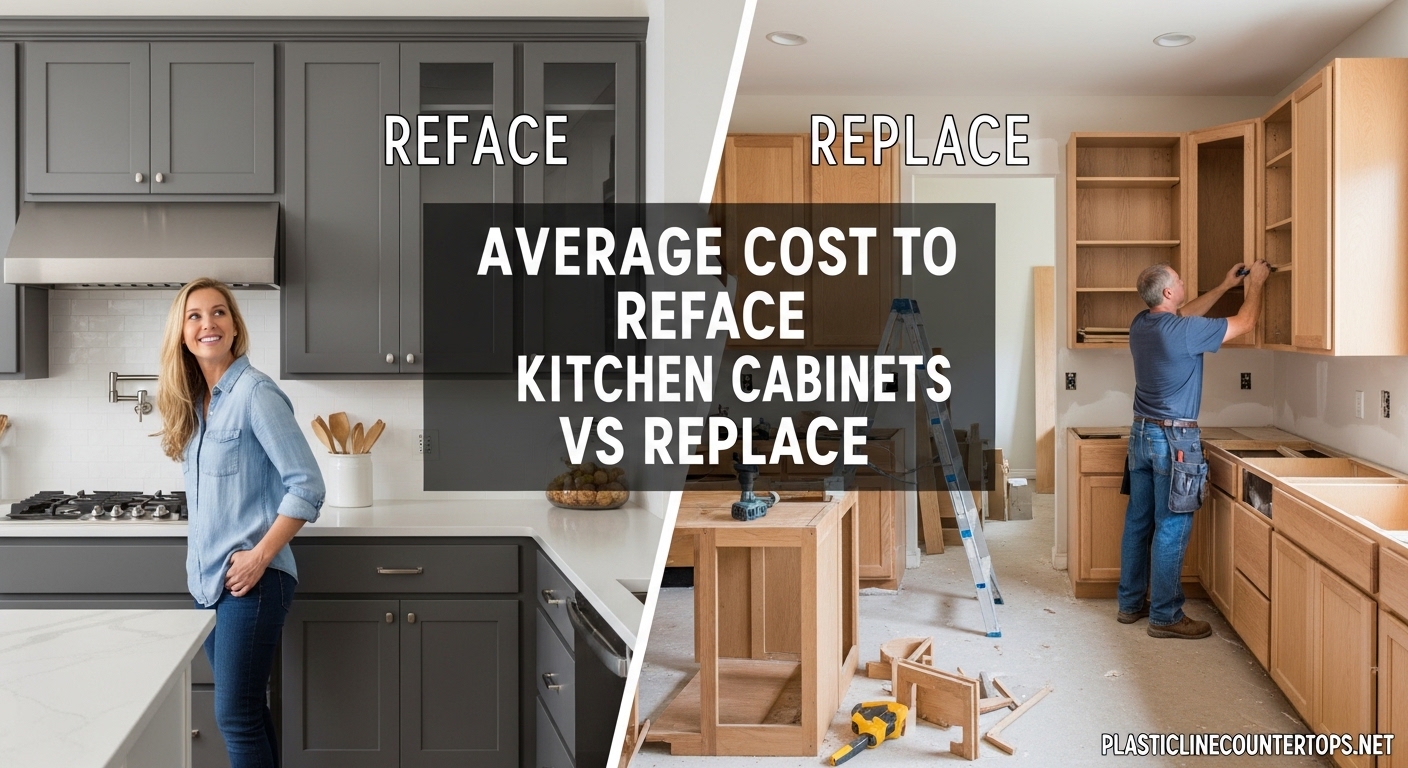
Standing in your kitchen, you are probably staring at those dated cabinets and wondering if refacing them is actually worth the savings. I have been there. The average cost to reface kitchen cabinets vs replace them can mean the difference between a $5,000 refresh and a $25,000 overhaul. In 2026, homeowners typically spend between $4,000 and $9,500 for professional cabinet refacing, while full replacement runs $12,000 to $35,000 or more.
But here is the catch nobody talks about. Sometimes refacing quotes come back shockingly close to replacement costs. I have seen Reddit threads where homeowners got three refacing quotes and three replacement quotes, and they were all virtually identical.
This guide breaks down the real costs, when refacing makes sense, and when you should bite the bullet and replace everything. Let us get into the numbers.
Table of Contents
What Is Cabinet Refacing
Cabinet refacing is a kitchen renovation method where you keep your existing cabinet boxes (the structural frames) but replace the doors, drawer fronts, and hardware. A fresh veneer or laminate is applied to the visible exterior surfaces of the cabinet frames to match the new doors.
Think of it as giving your kitchen cabinets a new skin without removing the skeleton. The process takes 2-4 days for a typical kitchen, compared to 2-6 weeks for full replacement.
Most professional refacing jobs include removing old doors and drawer fronts, cleaning and preparing the cabinet boxes, applying new veneer to exposed frames, installing new doors and drawer fronts, and upgrading hardware like hinges and pulls.
Materials Used in Cabinet Refacing
Homeowners have three main material choices when refacing cabinets. Each comes with different price points and durability levels.
Laminate is the budget option at $50-$100 per linear foot. It is durable, easy to clean, and comes in hundreds of colors and patterns. However, it can chip at edges over time and typically lasts 10-15 years.
Wood Veneer offers a real wood look at $100-$200 per linear foot. It gives you the warmth and grain of natural wood without the cost of solid wood doors. Quality wood veneer can last 15-20 years with proper care.
Solid Wood is the premium choice ranging from $200-$400+ per linear foot. These are real hardwood doors and drawer fronts that can be refinished multiple times. With proper maintenance, solid wood refacing lasts 20-30 years.
Average Cost to Reface Kitchen Cabinets
The national average cost to reface kitchen cabinets falls between $4,000 and $9,500 for a typical kitchen. Most homeowners pay around $6,750 according to industry data from 2026.
Pricing breaks down to roughly $100 to $250 per linear foot of cabinetry. A linear foot measures the total length of your cabinet runs along the wall, not the square footage of your kitchen.
Your final bill depends on kitchen size, material choice, hardware upgrades, and your geographic location. Labor costs vary significantly between regions, with metropolitan areas charging 20-40% more than rural locations.
Cabinet Refacing Cost by Kitchen Size
Small kitchens with 10-15 linear feet of cabinets typically cost $3,000 to $5,500 to reface. This covers galley kitchens or compact spaces with limited cabinetry.
Medium kitchens measuring 20-30 linear feet run $5,500 to $9,000. This is the most common size for suburban homes and includes standard L-shaped or U-shaped layouts.
Large kitchens with 30+ linear feet of cabinetry can cost $9,000 to $15,000 or more. These expansive spaces often include islands, butler pantries, and extensive wall cabinetry.
Cabinet Refacing Cost by Material
Laminate refacing costs $50-$100 per linear foot installed. For a 20-linear-foot kitchen, expect to pay $1,000 to $2,000 just for materials and installation.
Wood veneer refacing runs $100-$200 per linear foot. A mid-size kitchen with veneer finishes typically costs $4,000 to $6,000.
Solid wood refacing commands $200-$400+ per linear foot. Premium hardwoods like cherry or walnut push costs higher, often reaching $8,000 to $12,000 for standard kitchen sizes.
Average Cost to Replace Kitchen Cabinets
Full cabinet replacement is a completely different investment level. The average cost to replace kitchen cabinets ranges from $12,000 to $35,000, with most homeowners spending around $20,000.
This price includes removing and disposing of old cabinets, installing new cabinet boxes, doors, and hardware, and making any necessary plumbing or electrical adjustments.
Replacement costs vary dramatically based on cabinet grade. Understanding these tiers helps set realistic expectations.
Stock, Semi-Custom, and Custom Cabinet Costs
Stock cabinets are pre-manufactured in standard sizes and finishes. They cost $100-$300 per linear foot installed. A typical kitchen runs $4,000 to $10,000. The downside is limited sizing options and basic materials like particle board construction.
Semi-custom cabinets offer more flexibility with sizes, finishes, and features. Pricing runs $150-$650 per linear foot. Most homeowners spend $10,000 to $25,000 for semi-custom replacement. You get better quality materials and more design choices.
Custom cabinets are built to your exact specifications. Expect to pay $500-$1,200+ per linear foot. Full custom kitchens often exceed $30,000. You get premium materials, unlimited design options, and perfect fit for unusual spaces.
Additional Replacement Costs to Consider
Demo and disposal of old cabinets adds $500 to $2,000. This includes removing cabinets, hauling debris, and repairing walls where cabinets were removed.
Countertop replacement often becomes necessary during cabinet replacement. Budget $2,000 to $5,000 for new countertops, or significantly more for premium materials like quartz or granite.
Plumbing and electrical modifications may be required, especially if you are changing the sink location or adding under-cabinet lighting. These services add $500 to $3,000 depending on complexity.
Permits and inspections can run $100 to $500 depending on your local requirements. Many jurisdictions require permits for kitchen remodels involving electrical or plumbing changes.
Refacing vs Replacement Cost Comparison
Let us put these numbers side by side so you can see the real difference.
For a 20-linear-foot kitchen with laminate finishes, refacing costs $4,000 to $6,000 while replacement with stock cabinets runs $8,000 to $12,000. You save roughly 40-50% by choosing refacing.
With wood veneer refacing at $6,000 to $8,000 versus semi-custom replacement at $15,000 to $20,000, the savings drop to around 50-60%. The gap widens as you move up in material quality.
Solid wood refacing at $8,000 to $12,000 compared to custom replacement at $25,000+ still offers significant savings, though the percentage difference narrows because both use premium materials.
When Refacing Saves the Most Money
Refacing delivers maximum value when your cabinet boxes are in excellent structural condition. If the frames are solid, the internal shelving is functional, and the layout works for your needs, refacing gives you a like-new look at a fraction of the cost.
Homeowners who love their current kitchen layout save significantly with refacing. Since you are not removing cabinet boxes, you avoid the costs of reconfiguring plumbing, electrical, and potentially flooring.
Refacing also wins on timeline. A 2-4 day project means less takeout, less disruption, and faster return to normal life. Full replacement can leave you without a functional kitchen for weeks.
When Replacement Makes More Sense
Replacement becomes the smarter choice when cabinet boxes show water damage, warping, or structural weakness. Refacing damaged boxes is like putting lipstick on a pig. The new doors look great, but the underlying problems remain.
If you want to change your kitchen layout, replacement is necessary. Moving cabinets requires removing the old boxes anyway. You might as well install new ones in the right locations.
Homeowners planning to stay in their homes for 15+ years often prefer replacement. New cabinets offer better durability, modern features like soft-close drawers, and the peace of mind that everything is new.
Factors That Affect Cabinet Refacing Cost
Several variables determine where your refacing project falls within the cost range. Understanding these helps you budget accurately and avoid sticker shock.
Material Selection Impact
Your choice between laminate, wood veneer, and solid wood creates the biggest price swing. Laminate can cost half as much as solid wood for the same kitchen size.
Within each category, premium options exist. High-pressure laminate costs more than standard laminate. Exotic wood veneers command higher prices than oak or maple. Rare hardwoods like walnut or cherry significantly exceed standard oak pricing.
Kitchen Size and Layout Complexity
Linear footage drives base pricing, but layout complexity matters too. Simple straight runs cost less per foot than kitchens with multiple corners, angles, or specialty pieces.
Islands add cost because they require finishing on all exposed sides. Peninsula cabinets similarly require additional veneer application on visible surfaces.
Tall cabinets for pantries or oven enclosures cost more to reface than standard base and wall cabinets. The larger surface area requires more materials and labor.
Hardware and Accessory Upgrades
Basic hardware replacement includes new hinges and pulls. Standard hardware might add $300-$600 to your total. But many homeowners use refacing as an opportunity to upgrade functionality.
Soft-close hinges prevent cabinet doors from slamming. They add $5-$15 per door but provide a premium feel. For a kitchen with 20 doors, budget $100-$300 extra.
Under-cabinet lighting installation runs $200-$500 depending on fixture quality and kitchen size. Glass inserts in cabinet doors add $50-$150 per door. Pull-out organizers, lazy Susans, and other interior accessories can add $500-$2,000 depending on selection.
Labor Costs by Region
Geographic location significantly impacts pricing. Metropolitan areas on the coasts charge premium rates. Rural areas and the Midwest typically offer lower labor costs.
Expect to pay 20-40% more in cities like New York, San Francisco, or Boston compared to national averages. Conversely, costs in the South and Midwest often run 10-20% below average.
Getting multiple quotes is essential. One contractor quoted a Reddit user $9,500 for 14 doors and drawers through Home Depot. That works out to roughly $678 per face, which is on the high end but not unusual for certain markets.
DIY vs Professional Refacing Costs
Some homeowners consider DIY refacing to save money. Let us break down what that actually looks like.
DIY Material Costs
DIY refacing materials cost $50-$150 per linear foot depending on quality. For a 20-linear-foot kitchen, materials run $1,000 to $3,000. This includes veneer sheets, adhesive, new doors, drawer fronts, and hardware.
You will also need tools if you do not already own them. A quality brad nailer, sander, router, and various hand tools add $300-$800 if purchased new. Renting reduces this but adds rental fees.
DIY mistakes get expensive quickly. Mis-cut veneer, wrong measurements, or damaged doors require replacement purchases. Budget 10-20% extra materials for learning curve errors.
Professional Labor Rates
Professional refacing labor typically runs $50-$100 per linear foot. For our 20-linear-foot example, labor costs $1,000 to $2,000. This includes removal, preparation, veneer application, and installation.
Professionals bring expertise that shows in the finished product. They know how to handle tricky corners, match grain patterns, and ensure doors hang perfectly level. Their work usually includes warranties ranging from 1-5 years.
Time Investment Reality
Professional refacing takes 2-4 days. DIY refacing typically takes 2-4 weeks of evenings and weekends. One Reddit user reported spending 20 hours per week as an amateur and taking much longer than expected.
Time has value. Calculate your hourly rate and multiply by the time difference. For many homeowners, the $2,000 labor cost is worth avoiding weeks of messy, demanding work.
Consider your skill level honestly. Veneer application requires patience and precision. Crooked doors or visible seams ruin the look you are paying to achieve.
When Refacing Is NOT the Right Choice
Refacing works beautifully for many kitchens, but it is not a universal solution. Here are the situations where you should skip refacing and go straight to replacement.
Structural Issues With Cabinet Boxes
Water damage is the biggest dealbreaker. If your sink cabinet shows swelling, delamination, or soft spots, the box needs replacement. Refacing puts pretty doors on a rotting frame.
Check for warped shelves, sagging bottoms, and loose joints. These indicate cabinet boxes that will not support new doors properly. Refacing companies should inspect for these issues, but homeowners should know the warning signs too.
Layout Changes Needed
If your current kitchen layout frustrates you, refacing cannot fix it. The golden triangle between sink, stove, and refrigerator needs to work for your cooking style. Refacing preserves whatever layout you currently have.
Want to add a dishwasher where there is not one? Planning a kitchen island? Need to move the refrigerator to a different wall? These changes require cabinet replacement.
Mold, Mildew, or Pest Damage
Musty smells inside cabinets often indicate mold issues. Peeling laminate inside can signal moisture problems. These issues need addressing at the source, not covering with new veneer.
Pest infestations like termites or carpenter ants compromise cabinet integrity. Even if you eliminate the pests, the damage remains. Replacement ensures you are not dealing with hidden structural weakness.
How to Decide: Reface or Replace
Making the right choice requires honest evaluation of your cabinets, your budget, and your long-term plans.
Decision Checklist
Ask yourself these questions before calling contractors. Are my cabinet boxes solid and square? Does my current kitchen layout work for me? Am I happy with the amount of storage space? Do I plan to stay in this home for 5+ years? Is my budget closer to $5,000 or $25,000?
If you answered yes to the first four questions and your budget is limited, refacing is probably your answer. If cabinet boxes are damaged, the layout needs work, or budget allows, replacement offers more value long-term.
Questions to Ask Contractors
When getting quotes, ask specific questions. What condition are my cabinet boxes in? Will you handle plumbing and electrical if needed? What warranty do you offer on materials and labor? Can you show me completed projects similar to mine?
Get the quote in writing with line-item breakdowns. This prevents surprises and lets you compare apples to apples between contractors.
Getting Accurate Quotes
Schedule in-home estimates. Online calculators give rough ideas, but accurate quotes require seeing your specific kitchen. A contractor needs to measure linear footage, assess cabinet condition, and understand your material preferences.
Get at least three quotes. One Reddit user got three refacing quotes and three replacement quotes, finding them surprisingly similar. This comparison shopping revealed which contractors were competitive and which were inflating prices.
Ask about hidden costs. Will there be extra charges for removing old hardware? Is disposal included? What about touch-up painting on walls after cabinet removal?
ROI and Home Value Impact
Home improvement projects should add value to your home, not just improve your daily life. Let us look at the return on investment for cabinet refacing versus replacement.
According to industry data, cabinet refacing returns 70-80% of its cost at resale. A $7,000 refacing job adds roughly $5,000 to $6,000 to your home value. Not bad for a project that also improves your quality of life while you live there.
Full cabinet replacement returns 60-70% on average. A $20,000 replacement adds about $12,000 to $14,000 in value. The lower percentage reflects the higher total investment.
Resale Value Considerations
Kitchens sell homes. Updated kitchens attract buyers and command higher offers. Both refacing and replacement achieve the visual update that buyers want to see.
In competitive markets, the difference between refaced and replaced cabinets matters less than the overall impression. A freshly refaced kitchen in on-trend colors shows buyers the home has been maintained.
High-end markets might scrutinize cabinet quality more. In luxury neighborhoods, buyers expect custom cabinetry and might view refacing as a shortcut. Know your local market expectations.
Buyer’s Perspective
Most buyers cannot tell the difference between well-executed refacing and new cabinets. They see clean, modern doors and assume the kitchen has been updated.
However, savvy buyers might check inside cabinets. If they find dated shelving, older hardware inside, or signs of wear on cabinet boxes, they know refacing occurred. This rarely impacts offers unless cabinets show actual problems.
The key is quality execution. Poorly done refacing with misaligned doors or peeling veneer hurts value. Professional work that looks seamless protects your investment.
FAQ
What is the downside of cabinet refacing?
The main downside is that you are limited to your existing cabinet layout and box structure. If your cabinet boxes are damaged, poorly constructed, or inadequate for storage needs, refacing only masks those problems. You also cannot add features like pull-out shelves or change cabinet sizes without full replacement.
Is cabinet refacing cheaper than getting new cabinets?
Yes, cabinet refacing typically costs 50-70% less than full replacement. Refacing averages $4,000 to $9,500 while replacement runs $12,000 to $35,000. However, quotes can vary, and sometimes refacing approaches replacement costs depending on materials and labor rates in your area.
Is $30,000 enough for a kitchen remodel?
Yes, $30,000 is enough for a mid-range kitchen remodel including cabinet replacement, new countertops, updated appliances, and cosmetic improvements like paint and lighting. It is also more than sufficient for cabinet refacing with premium materials plus countertop and appliance upgrades.
How long does cabinet refacing take?
Professional cabinet refacing typically takes 2 to 4 days for a standard kitchen. This compares favorably to full cabinet replacement, which usually takes 2 to 6 weeks. DIY refacing can take 2 to 4 weeks of evenings and weekends depending on skill level and available time.
Can you reface cabinets yourself?
Yes, DIY cabinet refacing is possible for homeowners with moderate skills. You will need to measure carefully, apply veneer precisely, and install new doors level. Materials cost $50 to $150 per linear foot. However, the project requires patience and attention to detail. Mistakes can be costly and visible in the final result.
Conclusion
The average cost to reface kitchen cabinets vs replace them represents a significant decision for homeowners. Refacing offers a $4,000 to $9,500 path to a fresh kitchen look, while replacement demands $12,000 to $35,000 but delivers completely new cabinets.
Your choice depends on cabinet condition, layout satisfaction, budget, and timeline. Solid cabinet boxes and a functional layout make refacing the obvious winner. Damaged boxes or layout frustrations push you toward replacement.
Get multiple quotes, ask hard questions about cabinet condition, and calculate both immediate costs and long-term value. With the right information, you can make the choice that serves your home and your wallet.