
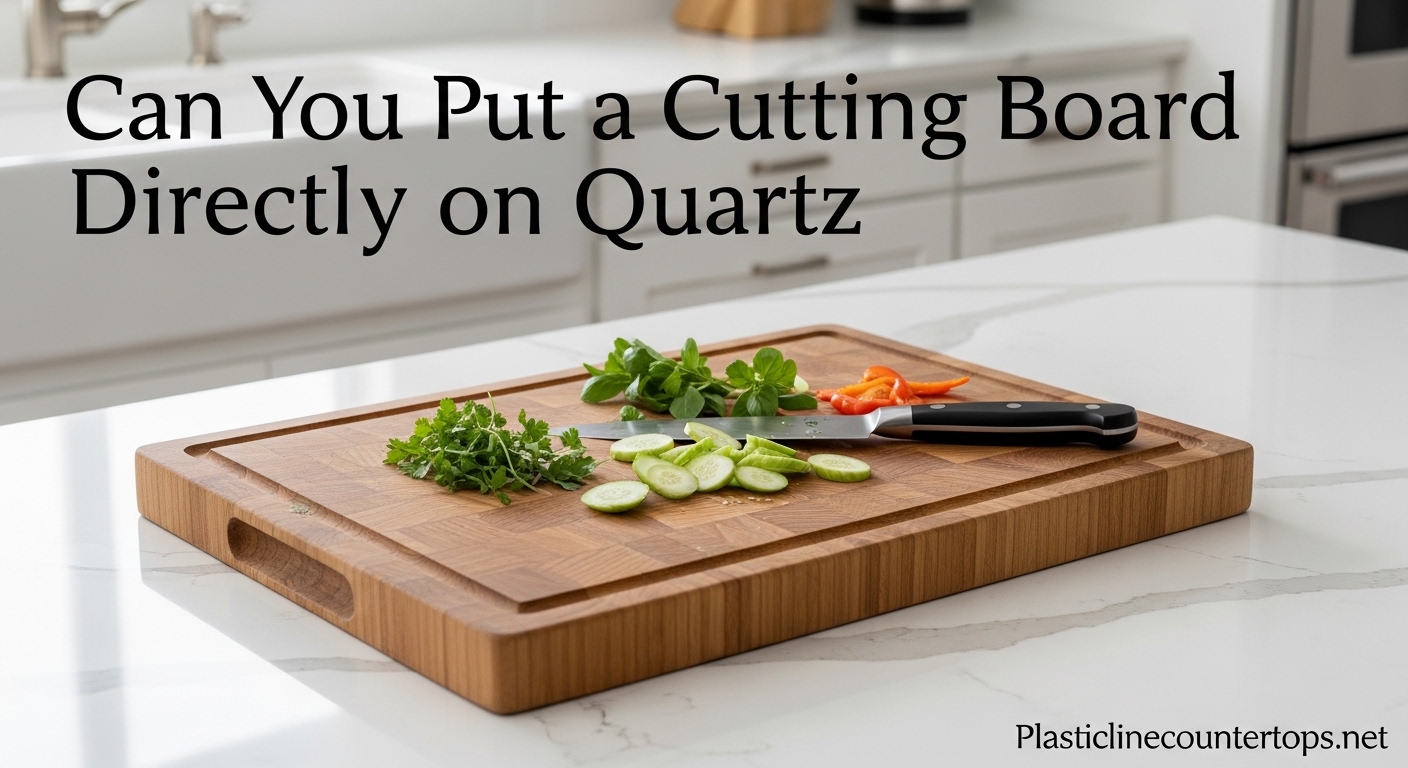
Quartz countertops are engineered stone surfaces made from approximately 90-95% crushed natural quartz mixed with resin binders. This combination creates a highly durable, non-porous surface that has become a popular choice for modern kitchens. If you are wondering whether you can put a cutting board directly on quartz, the short answer is yes, you technically can use your quartz countertop as a cutting surface, but it comes with important caveats that every homeowner should understand.
The topic of cutting directly on quartz countertops generates confusion because quartz sits at around 7 on the Mohs hardness scale, making it harder than most kitchen knife blades. While this hardness provides excellent scratch resistance, it does not make quartz impervious to damage, and the consequences of cutting directly on your countertop extend beyond simple surface wear.
Table of Contents
Understanding Quartz Countertops
Before exploring the cutting board question in detail, it helps to understand what quartz actually is. Unlike natural stone countertops such as granite or marble, quartz is an engineered surface. Manufacturers combine crushed quartz particles with polyester or epoxy resins, then press and cure the mixture to create dense, uniform slabs.
This manufacturing process gives quartz several distinctive properties. The resin binding creates a non-porous surface that resists staining and bacterial growth without requiring sealant. The crushed quartz provides exceptional hardness and durability. However, the resin component has limitations when exposed to high heat and sharp impacts, which factors into how you should use and care for your quartz countertop.
Can You Put a Cutting Board Directly on Quartz?
You can put a cutting board directly on quartz, and the surface will not immediately scratch or chip from knife contact. Quartz ranks 7 on the Mohs hardness scale, while kitchen knife steel typically measures between 4 and 6. This means your knife will dull before your countertop shows visible damage from a single cutting session.
However, the real question is whether you should cut directly on quartz, and the answer is a clear no. While quartz can withstand cutting better than many countertop materials, repeated cutting directly on the surface creates cumulative damage that compromises both your knives and your countertop over time. Additionally, using a cutting board preserves your countertop warranty, keeps your knives sharp longer, and prevents bacterial contamination from raw meat juices.
Why Using a Cutting Board Matters
Your Knives Will Suffer More Than the Quartz
One of the most compelling reasons to use a cutting board involves knife maintenance rather than countertop protection. When you cut directly on quartz, the hardness differential works against your cutlery. The abrasive surface of even a well-sealed quartz countertop will dull knife edges faster than proper cutting board materials like wood or plastic.
Fabricators with decades of experience report that knife dulling occurs significantly faster when cutting on quartz compared to using a dedicated cutting board. Beyond simple dulling, the repeated micro-abrasions from quartz can actually damage knife tips and edges, requiring more frequent resharpening or premature replacement of quality knives.
Micro-Abrasions and Surface Damage
While quartz resists scratching better than most surfaces, repeated cutting creates micro-abrasions that accumulate over time. These tiny scratches may not be visible immediately, but they gradually create a hazy pattern on the surface that diminishes the polished appearance of your countertop.
Beyond direct knife contact, acidic food juices from tomatoes, citrus fruits, and vinegar can interact with the resin components in quartz. When these liquids sit on a surface where you have been cutting, they can reach deeper into microscopic scratches and cause etching or discoloration that would not occur with a protective cutting board barrier.
Bacterial and Sanitation Concerns
Quartz is non-porous, which means it does not harbor bacteria in surface pores the way natural stone can. However, cutting raw meat directly on quartz creates contamination risks even if bacteria cannot penetrate the surface. Knife channels and microscopic scratches can trap organic material, and the cutting motion can spread contaminants across the surface.
Using a cutting board provides a disposable barrier that can be thoroughly cleaned and sanitized. If you ever need to sanitize your quartz countertop after handling raw meat, you can do so safely with appropriate cleaners, but preventing the contamination at the source with a cutting board represents better kitchen hygiene practice.
Heat Damage Warning for Quartz Countertops
While not directly related to cutting, the topic of putting things on quartz naturally extends to heat concerns. Quartz can begin to suffer damage at temperatures around 300 degrees Fahrenheit. This means placing hot pans, cast iron skillets, or baking sheets directly on quartz can cause surface cracks, discoloration, or separation of the resin binder.
Always use trivets or hot pads under hot cookware on quartz countertops. This heat sensitivity distinguishes quartz from some natural stone surfaces and represents one of the most important care distinctions homeowners need to remember. The damage from heat exposure is often irreversible and may not be covered under warranty if caused by improper use.
Quick Care Tips for Quartz Countertops
Maintaining your quartz countertop involves simple daily habits that preserve its appearance and extend its lifespan. Here are essential do’s and don’ts:
Do:
- Use cutting boards for all food preparation involving knives
- Clean spills immediately with mild soap and water
- Use trivets or hot pads under hot cookware
- Clean with soft cloths or sponges to avoid abrasive damage
- Use Dawn dish soap or other mild, non-abrasive cleaners
Do Not:
- Cut directly on the quartz surface
- Place hot pans or skillets directly on the countertop
- Use harsh chemicals like bleach, ammonia, or oven cleaners
- Use abrasive scrubbers that can scratch the surface
- Stand on or apply heavy impact force to quartz edges
Following these guidelines helps ensure your quartz countertop remains beautiful and functional for years to come while keeping your knives in good condition and your kitchen hygienic.
Frequently Asked Questions
Can you cut food directly on quartz countertops?
Technically yes, but you should not. While quartz resists scratching, cutting directly on the surface dulls your knives, creates micro-abrasions that accumulate over time, and may void your warranty. Always use a cutting board.
What can ruin a quartz countertop?
Quartz can be damaged by high heat (above 300F), sharp impacts to edges and corners, harsh chemicals like bleach or ammonia, and repeated cutting directly on the surface. Acidic foods left on the surface for extended periods can also cause etching.
Is Dawn dish soap safe on quartz?
Yes, Dawn dish soap and other mild, non-abrasive cleaners are safe and recommended for daily quartz cleaning. Avoid bleach, ammonia, or any abrasive cleaners that could damage the surface finish.
What countertop can you cut directly on?
No countertop material is ideal for cutting directly. However, marble and granite are more tolerant of cutting than quartz, though all natural stone surfaces will eventually show wear. Dedicated cutting boards protect all countertop materials and keep your knives sharp.
Conclusion
While you can technically put a cutting board directly on quartz and even cut on the surface without immediate visible damage, doing so is not recommended. Using a cutting board preserves your knives, prevents micro-abrasion accumulation, maintains proper kitchen hygiene, and protects your warranty coverage. Make cutting boards a non-negotiable part of your quartz countertop care routine, and your surfaces will remain beautiful and functional for decades.