
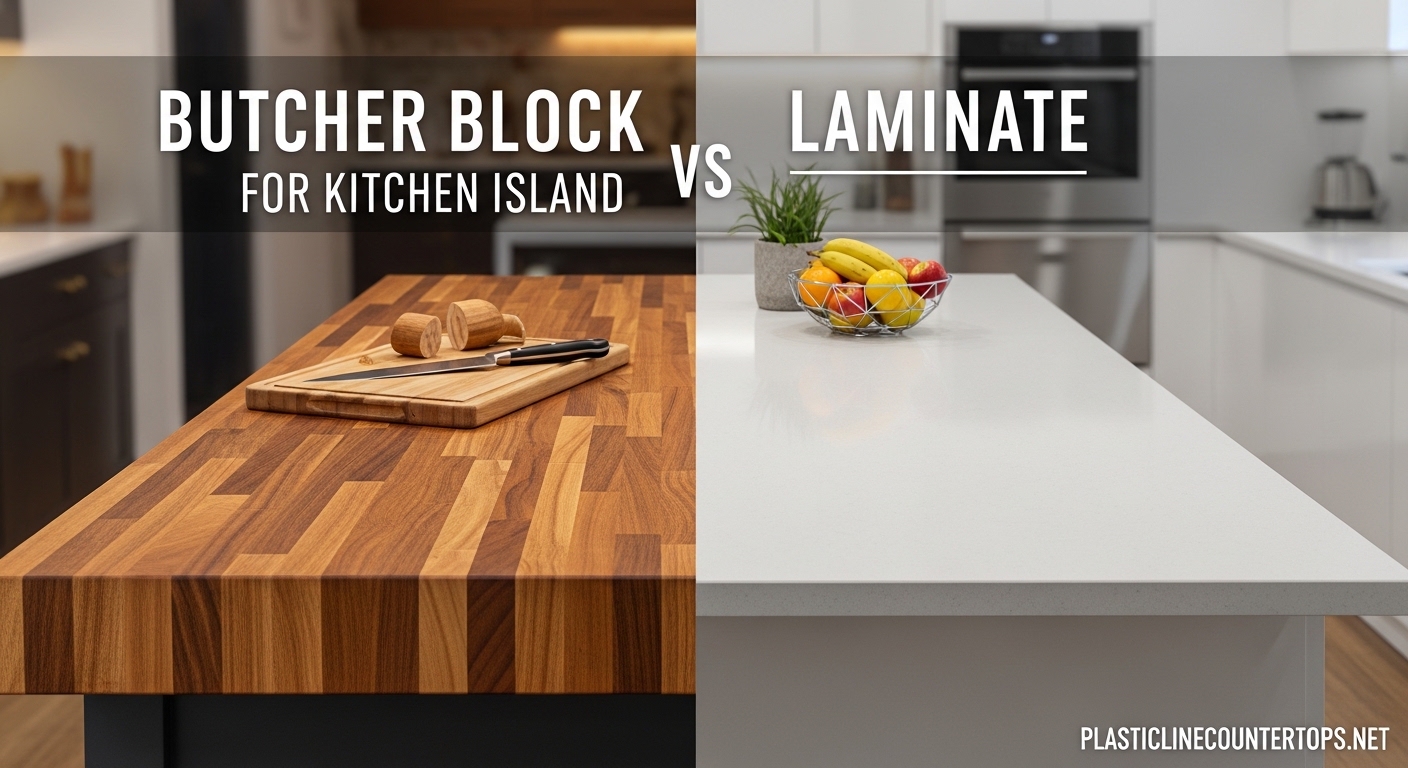
Choosing between butcher block vs laminate for kitchen island countertops comes down to balancing upfront cost against long-term maintenance and aesthetic goals. Butcher block offers warm natural beauty and repairability but demands regular oiling. Laminate provides budget-friendly convenience with minimal upkeep but limited longevity. For kitchen islands specifically, your cooking habits and how you use the space matter more than any general recommendation.
We have helped hundreds of homeowners make this decision over the past 8 years. The questions we hear most often center on real-world durability and whether the extra cost of butcher block pays off. This guide breaks down every factor you need to consider, with honest insights from actual users who have lived with both materials.
Table of Contents
Quick Overview: Butcher Block vs Laminate at a Glance
| Feature | Butcher Block | Laminate |
|---|---|---|
| Material | Natural wood (maple, walnut, cherry) | Paper/resin layers on particleboard |
| Cost per sq ft | $40-$100 installed | $15-$40 installed |
| Lifespan | 20-40 years (refinishable) | 10-20 years (replace when damaged) |
| Maintenance | High – oil every 2-4 weeks | Low – wipe clean only |
| Heat Resistance | Poor – use trivets required | Poor – use trivets required |
| Water Resistance | Fair – needs sealing near sinks | Good – but seams can swell |
| Repairability | Excellent – sand and refinish | Poor – cannot repair, must replace |
| Food Safety | Yes – antimicrobial properties | No – not for direct cutting |
What is Butcher Block
Butcher block is a wood countertop constructed from straight pieces of wood glued together to form a thick, solid surface. The term traditionally refers to thick wooden slabs used in butcher shops for cutting meat, but today it encompasses several construction styles used in residential kitchens.
End grain butcher block features wood pieces arranged so the cut ends face upward, creating a checkerboard pattern. This orientation is hardest on knives and most durable against chopping. Edge grain construction arranges wood strips so the long edges face up, showing linear patterns. This style is more common for countertops because it is more affordable while still offering excellent durability.
Hard maple remains the most popular species for butcher block due to its hardness and fine grain. Walnut offers darker tones with dramatic grain patterns. Cherry develops a rich patina over time. Oak and bamboo provide budget-friendly alternatives with distinct looks.
What is Laminate
Laminate countertops consist of multiple layers bonded together under high pressure. The core is particleboard or MDF (medium-density fiberboard) for structural support. Decorative paper printed with patterns sits atop the core. A clear melamine or polyester resin layer provides the wear surface and protection.
Modern laminate has evolved far beyond the patterns of the 1980s. Today’s options include realistic wood grain reproductions, stone lookalikes, and solid colors. Premium lines like Formica 180fx photograph actual wood and stone to create convincing textures. Textured finishes add depth that mimics real materials more convincingly than flat surfaces.
The material earns praise for consistency and predictability. Unlike natural wood with grain variations and knots, laminate delivers uniform appearance across the entire surface. This makes pattern matching easier during installation and ensures the sample you see matches the final result.
Cost Comparison
The price difference between butcher block and laminate is significant upfront but narrows when viewed over the full lifespan. Laminate typically runs $15 to $40 per square foot installed, making it one of the most budget-friendly countertop options available. Butcher block ranges from $40 to $100 per square foot installed, with premium woods and end grain construction commanding higher prices.
For a typical kitchen island measuring 6 feet by 3 feet (18 square feet), expect to pay $270 to $720 for laminate versus $720 to $1,800 for butcher block. Installation adds $500 to $1,500 depending on your location and project complexity. Both materials are DIY-friendly for experienced homeowners, potentially saving significant labor costs.
Cost per year tells a different story. A quality butcher block countertop lasting 30 years costs roughly $24 to $60 per year. Laminate lasting 15 years runs $18 to $48 per year. When you factor in refinishing costs for butcher block (every 10-15 years at $200-$400), the ongoing investment is comparable but the aesthetic and functional benefits of wood often justify the difference for homeowners who love the look.
Forum users consistently mention that while laminate saves money initially, they often regret not investing in butcher block for kitchen islands that serve as gathering spaces. One Reddit user noted they saved $800 choosing laminate for their rental property but would choose butcher block for their own home.
Durability and Longevity
Butcher block and laminate handle daily wear differently. Butcher block shows scratches and dents immediately, which bothers some homeowners but others accept as character. The material develops a patina over time, with surface marks blending into an overall lived-in appearance. The critical advantage is repairability. Deep scratches, burns, or stains can be sanded out and the surface re-oiled, essentially returning the countertop to like-new condition.
Laminate resists minor scratches better initially due to its hard wear layer. However, once scratched, the damage is permanent. Deep scratches expose the decorative paper layer beneath, creating visible marks that cannot be repaired. Burns from hot pans leave permanent dark marks. Edge chips are particularly problematic since they reveal the particleboard core.
Expected lifespan favors butcher block when properly maintained. Quality wood countertops last 20 to 40 years with periodic refinishing. Laminate typically lasts 10 to 20 years before requiring replacement, though premium products installed carefully can exceed this range. The ability to refinish wood multiple times effectively gives butcher block infinite lifespan potential.
Impact resistance favors laminate slightly. Dropping a heavy cast iron pan on butcher block can dent the wood. The same impact on laminate might crack the surface or chip the edge. However, minor impacts that would permanently scar laminate often only mark butcher block temporarily until the next refinishing.
Maintenance Requirements
The maintenance gap between these materials is where many homeowners make their final decision. Butcher block requires ongoing commitment. New countertops need initial sealing with food-safe mineral oil or specialized butcher block conditioner. After that, re-oiling every 2 to 4 weeks keeps the wood hydrated and prevents cracking. Skipping maintenance leads to dry, porous wood that stains easily and can develop cracks.
Daily cleaning for butcher block means wiping with a damp cloth and mild soap, then drying thoroughly. Standing water is the enemy. Spills should be cleaned immediately to prevent staining, especially acidic foods like lemon juice or tomato sauce that can etch the surface. Annual deep cleaning and inspection catch problems early.
Laminate maintenance is nearly effortless. Daily cleaning requires only a damp cloth or standard household cleaner. The non-porous surface resists stains without sealing. No special products or schedules needed. This low-maintenance appeal makes laminate popular for busy families, rental properties, and anyone who wants countertops that just work without attention.
Forum discussions reveal the reality of butcher block maintenance. Users report that while the initial oiling schedule seems manageable, life gets busy and maintenance slips. One homeowner shared that after two years, their once-beautiful butcher block looked “tired and stained” because they had not kept up with oiling. Another countered that they have maintained their butcher block island for 8 years and it looks better now than when new.
Water and Heat Resistance
Neither material handles heat or water perfectly, but their vulnerabilities differ. Butcher block absorbs water when the finish wears thin, causing swelling, warping, and potential mold growth. Water damage near sinks is a genuine concern. The solution is vigilant maintenance of the oil finish and immediate cleanup of standing water. Some homeowners install undermount sinks with butcher block, but this requires exceptional sealing and maintenance discipline.
Laminate resists water better on the surface due to its sealed construction. However, water penetration at seams, edges, or anywhere the wear layer is compromised causes the particleboard core to swell. This damage is irreversible and often requires countertop replacement. For kitchen islands with sinks, both materials require careful installation and maintenance around water sources.
Heat resistance is poor for both materials. Hot pans placed directly on butcher block can scorch the wood, leaving dark burn marks that require sanding to remove. Laminate can blister or delaminate under extreme heat. Trivets and hot pads are mandatory for both materials. This shared vulnerability means neither material has an advantage for homeowners who frequently cook with hot cookware.
Aesthetic Appeal for Kitchen Islands
Kitchen islands serve as visual anchors in modern homes, making material choice particularly important for overall kitchen design. Butcher block brings unmatched warmth and organic character. The natural grain patterns, color variations, and ability to develop a patina over time create a living surface that evolves with your home. Wood pairs beautifully with white cabinets, contrasting dramatically with painted surfaces while complementing natural wood cabinetry.
Laminate offers consistency and modern styling. Premium wood-look laminates can convincingly mimic butcher block at a fraction of the cost, though close inspection reveals the artificial pattern repetition. Solid color laminates in greys, whites, and blacks create clean contemporary looks. Stone-pattern laminates provide high-end aesthetics on budget constraints.
Forum users frequently mention that while laminate looks good initially, it lacks the depth and authenticity of real wood. One homeowner noted that guests always comment on their butcher block island, while their previous laminate countertop went unnoticed. Another mentioned that high-quality laminate with realistic wood grain fooled visitors until they touched the surface.
Design flexibility favors butcher block for traditional, farmhouse, and rustic kitchens where natural materials dominate. Laminate excels in modern, minimalist, and rental kitchens where clean lines and low maintenance take priority. Both materials work in transitional designs when selected thoughtfully.
Food Prep Functionality
Kitchen islands often function as primary prep stations, making food safety and functionality critical considerations. Butcher block shines here. The surface is genuinely food-safe and antimicrobial. Studies show wood surfaces naturally inhibit bacterial growth better than plastic or other synthetic materials. You can chop vegetables, roll dough, and prepare meals directly on the surface.
The 7-day rule for butcher block refers to allowing the surface to rest for 7 days after oiling before heavy food preparation. This ensures the oil fully cures and creates a stable surface. After initial curing, daily use requires only basic cleaning between tasks. Some homeowners dedicate sections of their butcher block island to cutting and chopping, accepting that these areas will show more wear and require more frequent refinishing.
Laminate is not designed for direct cutting. Knife marks permanently damage the wear layer and can harbor bacteria in the scratches. Cutting boards are mandatory for any food preparation on laminate. While perfectly safe for placing prepared foods and serving, laminate does not offer the same functional flexibility as butcher block for serious cooks.
Home bakers particularly appreciate butcher block for dough work. The slightly porous surface provides just enough grip to prevent sliding while remaining smooth enough for rolling. The natural temperature of wood is cooler than laminate, which benefits pastry work. These functional advantages make butcher block the clear winner for homeowners who use their kitchen island as a serious prep station.
Kitchen Island Specific Considerations
Unlike perimeter countertops, kitchen islands serve multiple roles that influence material choice. Islands function as dining surfaces, homework stations, buffet areas, and gathering spaces in addition to food prep. This multi-use reality affects durability needs and maintenance expectations.
Butcher block handles multi-use well but requires protection. Coasters prevent water rings from drinks. Placemats protect the surface from hot dishes when the island serves as a dining table. The ability to sand out damage from these activities means the surface can recover from heavy use, but the ongoing maintenance burden increases with more users and uses.
Laminate excels in high-traffic multi-use scenarios because it requires no protection beyond basic care. Kids doing homework, casual dining, and buffet service all happen without special precautions. The surface consistency means no water rings, heat marks from pizza boxes, or concerns about acidic foods. For families who use their island as a command center for daily life, laminate removes worry about surface damage.
The combination approach deserves mention. Many homeowners install stone or quartz on perimeter counters and use butcher block specifically for the island. This creates a functional prep zone with wood warmth while keeping low-maintenance surfaces on the main counters. This strategy works well when the island is the primary prep area but water sources remain on perimeter counters.
Size matters for kitchen islands. Larger islands (over 4 feet) show wood grain patterns beautifully but increase material costs significantly. Laminate seams are less visible on large surfaces than in the past, but joints still exist and potential failure points increase. For very large islands, the cost difference between materials becomes substantial.
DIY Installation Considerations
Both materials appeal to homeowners considering DIY installation. Butcher block comes in pre-fabricated slabs that require cutting to size, edge routing, and finishing. Basic woodworking skills and tools suffice for straightforward rectangular islands. The main challenges are achieving perfectly straight cuts and applying the initial finish evenly.
Laminate installation involves building the substrate (usually plywood or particleboard), applying the laminate sheets with contact cement, and trimming edges. The process is messier and more finicky than butcher block, with visible seams at corners requiring careful alignment. Mistakes with contact cement are difficult to correct.
Experienced DIYers report that butcher block installation is more forgiving. If a cut is slightly imperfect, the edge can be adjusted or hidden with trim. The natural variation in wood conceals minor imperfections. Laminate demands precision because mistakes are permanent and highly visible.
Professional installation costs $500 to $1,500 for an average kitchen island. For homeowners with basic tools and experience, butcher block DIY can save $800 to $1,200. Laminate DIY saves less because material costs are lower, making the investment in professional installation more justifiable for this material.
Environmental and Sustainability Considerations
Environmental impact increasingly influences material selection. Butcher block made from sustainably harvested hardwoods offers renewable resource benefits. Wood stores carbon throughout its lifespan and is biodegradable at end of life. Look for FSC-certified lumber and finishes with low VOC content. Local sourcing reduces transportation impact.
Laminate countertops involve petrochemicals in the resin layers and formaldehyde in typical particleboard cores. The materials are not biodegradable and recycling options are limited. However, the longer lifespan of quality laminate compared to lower-end alternatives does reduce replacement frequency. Some manufacturers now offer laminate with recycled content and low-formaldehyde cores.
For environmentally conscious homeowners, butcher block generally wins when sourced responsibly. The natural material aligns with sustainable living values. However, the ongoing maintenance requiring petroleum-based oils and the potential for earlier replacement if maintenance lapses complicates the calculation. Neither material is perfect, but wood edges ahead for most sustainability criteria.
Resale Value Impact
Real estate considerations matter for homeowners planning future sales. Butcher block generally adds more perceived value than laminate. Buyers view wood countertops as premium features worth paying more for. The warmth and character of butcher block photograph well in listings and create positive impressions during showings.
Laminate does not harm resale value when in good condition, but rarely adds value. High-end laminate in premium patterns can compete visually during showings, though informed buyers recognize the material difference. Rental property investors often prefer laminate because durability against tenant use matters more than sale premiums.
Forum discussions among contractors and real estate investors consistently favor butcher block for owner-occupied homes and laminate for rentals. One contractor noted that butcher block islands often become selling points, while laminate is simply accepted as standard. The investment in wood frequently returns at sale time.
FAQ
Is butcher block better than laminate countertops?
Butcher block is better for homeowners who value natural beauty, food-safe surfaces, and repairability. Laminate is better for those prioritizing low maintenance and budget. Neither is objectively superior; the right choice depends on your priorities and cooking habits.
What is the best material for kitchen island countertops?
The best material depends on use. For serious cooking and prep work, butcher block offers superior functionality. For multi-use family spaces with minimal maintenance, laminate performs better. Stone and quartz provide other options with different trade-offs.
What is the best wood for a kitchen island?
Hard maple is the most popular choice for kitchen islands due to its hardness, fine grain, and light color. Walnut offers dramatic dark tones. Cherry develops a rich patina over time. Oak provides budget-friendly durability with prominent grain patterns.
Can you use butcher block near a sink?
Yes, but with precautions. Water exposure requires diligent maintenance of the oil finish and immediate cleanup of standing water. Undermount sinks are possible but increase water damage risk. Many homeowners prefer to keep sinks on perimeter counters when using butcher block islands.
Is laminate still used in 2026?
Yes, laminate remains popular in 2026. Modern premium laminates offer realistic wood and stone patterns at affordable prices. The material is especially common in rental properties, budget renovations, and homes where low maintenance is prioritized over natural materials.
Is butcher block more durable than laminate?
Butcher block lasts longer overall due to refinishing capability, but shows wear more readily. Laminate resists minor scratches better initially but cannot be repaired when damaged. For 20-plus year durability, butcher block wins. For carefree 10-15 year performance, laminate performs well.
Conclusion: Making Your Decision
Choosing between butcher block vs laminate for kitchen island countertops requires honest assessment of your lifestyle and priorities. Butcher block rewards homeowners willing to maintain it with timeless beauty, food-safe functionality, and decades of service. Laminate serves those who want attractive countertops without the ongoing commitment.
Consider your cooking habits honestly. If you bake regularly, prep meals from scratch, and view your kitchen island as a workspace, butcher block justifies its higher cost and maintenance demands. If your island serves primarily as a gathering space, homework station, and occasional prep area, laminate frees you from maintenance worry.
Your timeline matters too. Homeowners planning to sell within 5 years might prefer laminate’s low-hassle performance. Those building their forever home often choose butcher block knowing the investment pays off over decades. Neither choice is wrong when matched to your actual needs and realistic maintenance commitment.
We recommend visiting showrooms to touch both materials and visualize them in your space. Order samples if possible. The feel of real wood under your hands compared to laminate often makes the decision clear. Whatever you choose, proper installation and realistic care expectations ensure satisfaction for years to come.