
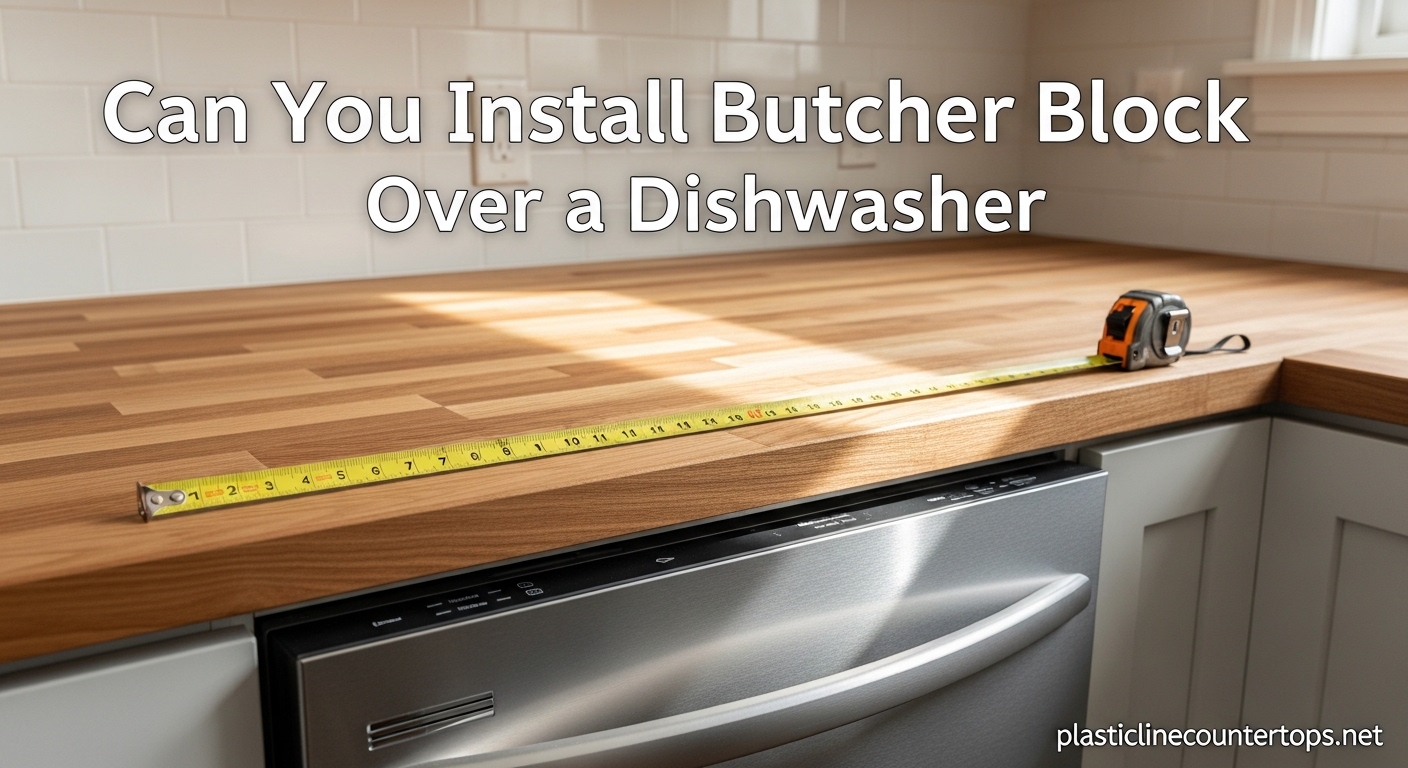
Yes, you can install butcher block over a dishwasher. The key is addressing two critical challenges simultaneously: supporting the appliance’s weight and protecting the wood from heat and moisture damage.
Our team at Plasticline Countertops has guided hundreds of homeowners through this exact installation scenario. We have seen firsthand what works and what fails. When done correctly, a butcher block countertop above a dishwasher can last for decades without warping, cracking, or moisture damage.
This guide covers everything you need to know about installing butcher block over a dishwasher in 2026, from weight support requirements to vapor barrier installation methods that actually work.
Table of Contents
Why Weight Support Matters When You Install Butcher Block Over a Dishwasher
A standard dishwasher weighs between 150 and 200 pounds when loaded. That concentrated weight sits directly beneath your countertop. Without proper support, the butcher block can sag, crack, or separate at the seams over time.
The countertop itself provides some structural support, but it is not designed to bear the full weight of a heavy appliance hanging from it. Most dishwasher manufacturers recommend additional support brackets or side-mounting to cabinets rather than relying solely on the countertop.
Three things can go wrong without adequate support: the countertop can crack along the grain, the dishwasher can pull away from its mounting brackets creating gaps, and the seal between counter and appliance can break, allowing steam to escape upward.
How to Add Support for Your Dishwasher
Install support brackets on the cabinet sides flanking the dishwasher opening. These L-brackets mount to the cabinet sides and extend underneath the countertop edge, transferring weight to the cabinets rather than the wood.
Side-mounting the dishwasher to the cabinets is another option. This removes the need for the appliance to hang from the counter entirely. Most modern dishwashers support side-mounting, though you may need to purchase a separate kit.
Support blocking between the back wall and dishwasher can also help. Cut 2×4 blocks to fit snugly between the appliance and wall, preventing backward movement and adding stability.
Moisture and Steam Protection for Wood Countertops
Dishwashers generate significant heat and steam during wash cycles. Temperatures can reach 150°F or higher, and steam rises directly toward the underside of your countertop. Unprotected wood absorbs this moisture, leading to warping, cracking, and mold growth.
The underside of butcher block is often unfinished. Manufacturers assume the bottom will not see moisture in typical applications. But above a dishwasher, that unfinished surface becomes vulnerable.
Forum users consistently report the same problem. One Houzz user shared their experience: steam from the dishwasher caused their butcher block to darken and develop a musty smell within six months of installation. The fix was stripping the counter, sealing all sides properly, and installing a vapor barrier.
Why Sealing All Sides is Non-Negotiable
Wood expands and contracts with moisture changes. When only the top is sealed, the bottom absorbs humidity while the top stays dry. This creates uneven stress that warps the board over time.
Sealing the underside prevents moisture absorption from steam and spills. It also protects against hidden mold growth that can develop in the damp space between dishwasher and counter.
Apply the same number of coats to the underside as the top. Most manufacturers recommend three to four coats of penetrating oil or two to three coats of polyurethane for full protection.
Vapor Barrier Installation Methods
A vapor barrier creates a physical shield between the dishwasher and wood, reflecting heat and blocking steam. Several methods work, each with advantages depending on your skill level and budget.
Option 1: Self-Adhering Aluminum Flashing
Self-adhering aluminum flashing is the most durable option. This material reflects heat effectively and creates a waterproof seal when properly applied. It sticks directly to the underside of the countertop.
Cut the flashing to size using tin snips. Peel off the backing and press firmly onto the clean underside of the butcher block, smoothing out air bubbles as you go. Overlap seams by at least two inches and seal edges with aluminum tape.
This Old House contractors recommend this method for areas above heat-generating appliances. The aluminum can handle temperatures well above what dishwashers produce.
Option 2: 6 Mil Poly Sheeting
Poly sheeting is the budget-friendly choice. A 6 mil thickness provides adequate vapor protection while remaining easy to work with. Staple the sheeting to the underside of the counter, then seal staple holes with silicone caulk.
One DIY forum user shared their method: staple 6 mil poly sheeting every six inches around the perimeter, apply a dab of caulk over each staple hole, then run a continuous bead of caulk along all edges. Their installation has held up for eight years without issues.
Replace the sheeting if it tears during installation. Even small holes compromise the barrier and allow steam through.
Option 3: Specialized Moisture Barrier Tape
Peel-and-stick moisture barrier tape offers the easiest installation. These products come in rolls four to six inches wide with aggressive adhesive backing. Simply clean the surface, peel, and stick.
The tape works best for straight runs and flat surfaces. It may not conform well to irregular edges or corners without cutting and overlapping multiple pieces.
Sealing and Finishing the Underside
Finish the underside of your butcher block before installation. Once the counter is in place, access becomes difficult or impossible.
Recommended Sealing Products
Polyurethane provides the most durable moisture protection. Choose a water-based formula for easier cleanup and lower odor. Apply three coats, sanding lightly between each with 220-grit sandpaper.
Waterlox is a traditional choice for wood countertops. It penetrates deeply and hardens into a waterproof finish. The original formula contains tung oil and resin, creating a warm, amber tone. Apply four to six coats for full protection.
Epoxy resin creates a thick, plastic-like coating that completely seals the wood. It is more difficult to apply but provides the best moisture barrier. Consider this option if you want maximum protection.
Application Tips for the Underside
Sand the underside to 150-grit before finishing. Remove all dust with a tack cloth. Apply finish in thin, even coats using a foam brush or lint-free rag.
Let each coat cure fully before adding the next. Rushing leads to tacky spots and poor adhesion. Water-based poly typically dries in two hours, oil-based in four to six hours, and Waterlox in 24 hours between coats.
Step-by-Step Installation Process
Follow these steps to install butcher block over a dishwasher the right way. This process takes one to two days including drying time.
Step 1: Prepare the space. Remove the old countertop and dishwasher. Inspect cabinet walls for damage and repair as needed. Ensure the cabinet opening is level and square.
Step 2: Install support brackets. Mount L-brackets to the cabinet sides at the height where the countertop will sit. Space brackets every 12 inches for adequate support.
Step 3: Finish the underside of the butcher block. Sand, clean, and apply your chosen sealer. Allow full curing time before proceeding.
Step 4: Install the vapor barrier. Cut and apply aluminum flashing, poly sheeting, or barrier tape to the underside. Seal all edges and seams thoroughly.
Step 5: Install the dishwasher. Connect water, drain, and power. Position the appliance in the opening and secure side-mounting brackets if using them.
Step 6: Install the countertop. Set the butcher block in place, ensuring it rests on the support brackets. Secure from underneath through the cabinet frames.
Step 7: Apply finish to the top. Sand and finish the visible surface with your chosen product. Seal the seam between countertop and dishwasher with silicone caulk.
Maintenance and Care for Butcher Block Above Dishwashers
Regular maintenance prevents long-term damage. Inspect the underside of the counter every six months for signs of moisture or mold. Look for dark spots, soft areas, or musty odors.
Re-seal the underside every two to three years. Remove the dishwasher if possible, or work through the toe-kick area with a long-handled brush. Touch up any worn areas of the vapor barrier.
What is the 7 Rule for Butcher Block?
The 7 rule refers to finishing schedules: apply oil once a week for the first month, once a month for the first year, and once a year thereafter. For countertops above dishwashers, consider oiling every six months instead due to the added heat and moisture exposure.
Signs of Moisture Damage to Watch For
Darkening of the wood near the dishwasher indicates moisture absorption. Raised grain or rough texture means the wood is swelling from humidity. Musty smells suggest mold growth underneath.
Address problems immediately. Remove the counter, dry thoroughly, sand affected areas, and re-seal. Replace the vapor barrier if damaged.
Common Mistakes to Avoid
Skipping the underside finish is the most common error. The top looks beautiful while the bottom absorbs moisture and warps the board.
Inadequate support causes sagging and cracking. Do not rely on the countertop alone to hold a heavy dishwasher.
Using cheap vapor barriers saves money upfront but fails within months. Invest in quality flashing or thick poly sheeting.
Rushing the finish application leads to poor adhesion. Follow manufacturer drying times exactly.
FAQ
Can you put a butcher block in the dishwasher?
No, you should never put butcher block in the dishwasher. The intense heat, water pressure, and harsh detergents will warp, crack, and ruin the wood. Butcher block countertops installed above dishwashers are fine because they sit outside the appliance and are protected by vapor barriers and proper sealing.
Do countertops need support over the dishwasher?
Yes, countertops need additional support when installed over dishwashers. A loaded dishwasher weighs 150 to 200 pounds, which can stress the countertop and cause cracking or sagging. Install support brackets on the cabinet sides or use side-mounting for the dishwasher to transfer weight away from the wood.
How to protect butcher block countertops from dishwasher?
Protect butcher block above dishwashers by sealing all sides of the wood with polyurethane or Waterlox, installing a vapor barrier such as aluminum flashing or 6 mil poly sheeting between the countertop and appliance, and ensuring proper weight support with brackets or side-mounting.
What is the best vapor barrier for butcher block above dishwasher?
Self-adhering aluminum flashing is the best vapor barrier for butcher block above dishwashers. It reflects heat, creates a complete seal, and lasts the lifetime of the counter. Six mil poly sheeting is a budget-friendly alternative when sealed properly with caulk.
How often should you seal butcher block over a dishwasher?
Seal the underside of butcher block over dishwashers every two to three years, or whenever you notice signs of wear. The top surface should be oiled every six months rather than yearly due to the added heat and moisture exposure from the dishwasher.
Conclusion
Installing butcher block over a dishwasher is absolutely possible when you address weight support and moisture protection. Take the time to seal all sides of the wood, install a quality vapor barrier, and add proper support brackets. Your countertop will stay beautiful and functional for years to come.
The investment in proper installation pays off. We have seen butcher block counters above dishwashers last 15 years or more with minimal maintenance. Skip these steps, and you may be replacing warped or mold-damaged wood within two years.
If you are planning to install butcher block over a dishwasher in your kitchen, use this guide as your roadmap. Each step builds on the last to create a durable, beautiful surface that handles daily use without problems.