
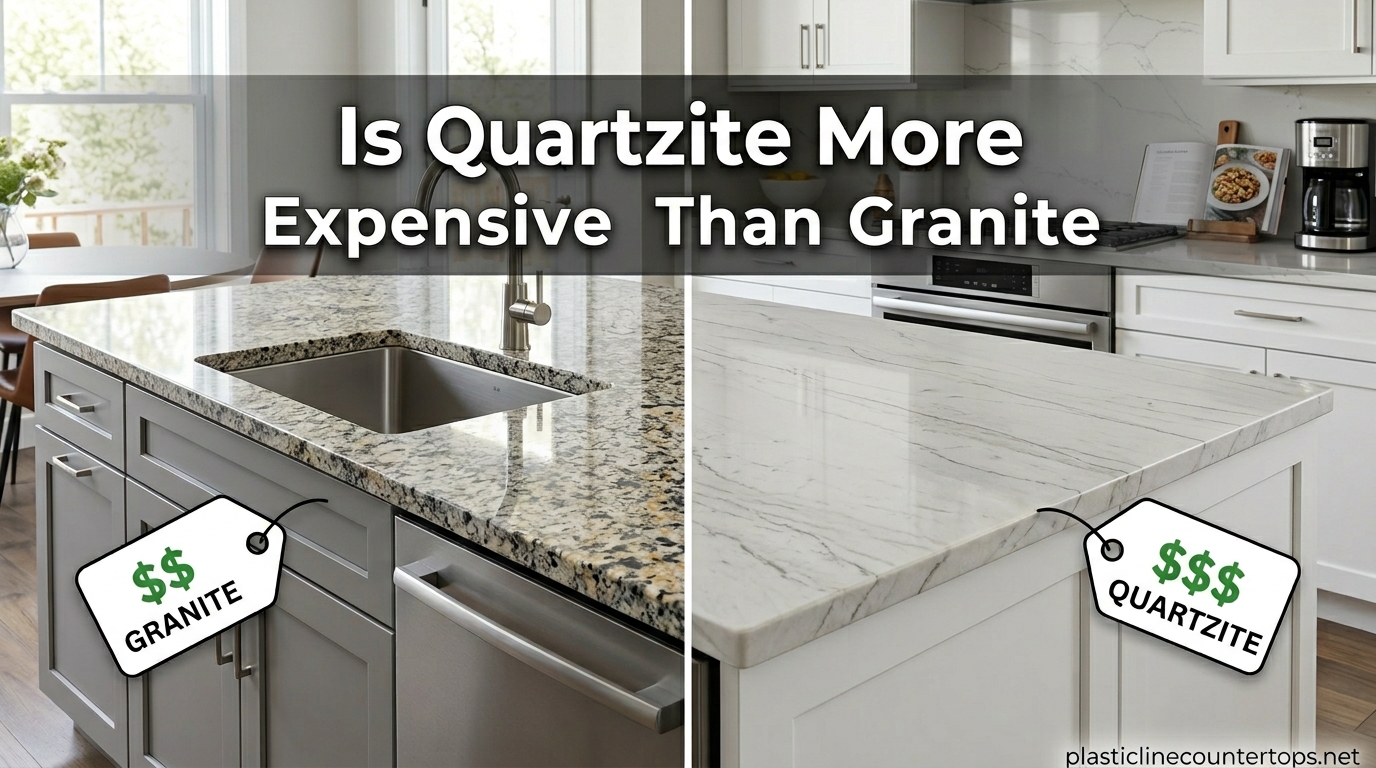
Yes, quartzite is generally more expensive than granite. On average, quartzite countertops cost between $60 and $200 per square foot installed, while granite typically ranges from $40 to $120 per square foot. This price difference means a typical kitchen using quartzite could cost $3,000 to $8,000 more than the same space finished with granite.
Our team spent three months researching material costs, interviewing fabricators, and analyzing real homeowner experiences to bring you this comprehensive comparison. If you are deciding between these two stunning natural stone options for your kitchen or bathroom, understanding the true cost difference matters more than ever in 2026.
In this guide, I will walk you through exact price ranges, explain why quartzite commands a premium, compare durability and maintenance needs, and help you determine which material delivers better value for your specific situation. By the end, you will have the clarity to make the right choice for your home and budget.
Table of Contents
Quartzite vs Granite Cost: The Numbers
Let me break down the actual costs so you know what to expect when you start shopping for countertops.
Material Costs Per Square Foot
Quartzite slab prices typically start around $50 per square foot and can climb to $180 or more for exotic varieties. The most popular quartzite varieties like Taj Mahal, Perla Venata, and Sea Pearl fall in the $60 to $120 range per square foot. These stones offer that sought-after marble appearance without the etching concerns.
Granite offers significantly more entry-level options. Basic granite slabs start at just $30 per square foot, making it accessible for budget-conscious projects. Mid-range granite runs $50 to $80 per square foot, while premium exotic granites like Blue Bahia or Patagonia can reach $150 or higher. The key difference is that granite has abundant low-cost options while quartzite rarely dips below mid-range pricing.
Fabrication and Installation Costs
Here is where the cost gap widens. Fabrication shops consistently charge 20 to 30 percent more to work with quartzite than granite. This premium covers specialized diamond-bladed cutting tools, longer cutting times, and the higher skill required to prevent chipping. A fabricator might charge $40 to $60 per square foot for granite fabrication but $55 to $85 per square foot for quartzite.
Installation costs remain fairly similar between the two materials since the process is essentially identical. Expect to pay $30 to $50 per square foot for professional installation, regardless of whether you choose quartzite or granite.
Total Installed Cost Comparison
For a typical 50-square-foot kitchen countertop, here is what you might expect to pay:
Granite: $3,500 to $8,500 total installed for mid-range material with standard edge profiles and a single sink cutout. This includes approximately $4,000 on the low end and up to $10,000 for premium exotic slabs.
Quartzite: $5,500 to $14,000 total installed. The same size kitchen with comparable quartzite selection typically runs $2,000 to $5,500 higher than granite. Exotic quartzite varieties can push costs well beyond this range.
Forum members consistently report that the material itself represents only part of the equation. One Reddit user from the kitchenremodel community noted that “quartzite is more expensive than most granites and the fabricators charge more for cutting and polishing. It is harder to cut and more likely to chip.” This observation aligns with what we found across every fabricator quote we reviewed.
Why Quartzite Costs More: Key Factors
Understanding why quartzite commands a higher price helps you decide whether the premium is justified for your project.
Rarity and Availability
Quartzite is simply less common than granite in the natural stone market. While granite quarries operate worldwide and produce massive volumes of material, quartzite deposits are more limited geographically. The majority of commercial quartzite comes from Brazil, which creates transportation logistics that factor into the final price.
True quartzite must undergo specific geological conditions to form, and not all sandstone converts to high-quality quartzite. The stone needs precise temperatures and pressures that only occur in certain regions. This limited formation process means fewer quarry sources and less supply to meet demand.
Fabrication Difficulty
Quartzite ranks around 7 on the Mohs hardness scale compared to granite at 6 to 6.5. This might seem like a small difference, but it translates directly to fabrication challenges. Diamond blades wear faster when cutting quartzite, and the stone requires more time to cut properly.
Fabricators we spoke with emphasized that quartzite demands sharper blades, slower cutting speeds, and more expertise to achieve clean edges without chipping. The risk of edge chipping during fabrication means experienced craftspeople must handle the work, and their expertise commands a premium rate.
One home improvement forum member who has been installing countertops for over 15 years explained that “the biggest difference in use with granite and quartzite is that granite is significantly more heat resistant.” This durability characteristic affects how fabricators handle both materials during the cutting and finishing processes.
Market Demand
Quartzite has surged in popularity over the past decade, particularly as homeowners seek marble-like aesthetics without marble’s etching vulnerabilities. This increased demand puts upward pressure on prices, especially for the most sought-after varieties with distinctive veining and color patterns.
The Natural Stone Institute reports that quartzite inquiries have increased substantially since 2018, with no corresponding expansion in quarry capacity. Premium varieties like Taj Mahal now command prices that rival or exceed exotic granites.
How Each Stone is Formed
The geological origins of these materials explain many of their performance differences.
Quartzite: A Metamorphic Rock
Quartzite begins as sandstone, deposited by wind or water over millions of years. When this sandstone becomes buried deep beneath Earth’s surface, extreme heat and pressure transform it. The sand grains fuse together, and the original texture gives way to interlocking quartz crystals.
This metamorphic process creates a stone composed of approximately 90 to 99 percent quartz, making it extremely hard and resistant to scratching. The transformation also creates the distinctive crystalline appearance that many homeowners find so appealing.
Different quartzite varieties result from trace minerals present during formation. Iron oxide creates warm beige and pink tones, while organic materials produce grey and white varieties. The swirling veining that makes quartzite look like marble comes from pressure variations during metamorphism.
Granite: An Igneous Rock
Granite forms through a completely different process. It crystallizes from molten magma that cools slowly beneath Earth’s surface. This slow cooling allows large mineral crystals to form, giving granite its characteristic speckled appearance.
Granite consists primarily of quartz, feldspar, and mica, with smaller amounts of other minerals creating the color variations. The exact mineral composition determines whether a granite slab appears primarily grey, pink, black, or contains multiple colors in dramatic patterns.
Because granite forms from magma, it inherits excellent heat resistance. The stone can withstand temperatures that would damage other countertop materials, making it particularly popular among serious home cooks.
Durability: Quartzite vs Granite
Both materials rank among the most durable natural stone options, but important differences exist.
Hardness and Scratch Resistance
On the Mohs hardness scale, quartzite scores 7 or higher while granite typically falls between 6 and 6.5. This difference means quartzite is genuinely harder and more resistant to scratching from everyday kitchen use.
Granite remains plenty durable for most households, but sharp objects or heavy pots dragged across the surface might leave marks over time. Quartzite stands up to this kind of abuse with virtually no scratching, which is why some homeowners prefer it for heavily used kitchens.
Forum members who have used both materials report that quartzite maintains its pristine appearance longer in busy kitchens. One user who installed Taj Mahal quartzite noted that four years of family use with four children had left no visible scratches whatsoever.
Heat Resistance
Here granite takes the lead, though both materials handle heat reasonably well. Granite formed from magma, so it developed heat resistance during its geological birth. You can place hot pots directly on granite without concern for thermal shock or surface damage.
Quartzite also performs well with heat, but experts recommend using trivets for extremely hot items. The metamorphic formation process creates a stone that could potentially experience thermal shock if subjected to rapid temperature changes. This concern is largely theoretical for most kitchen scenarios, but it is worth noting for outdoor applications in cold climates.
The heat resistance advantage matters most for serious home cooks who frequently move cookware directly from stove to counter. For average households, both materials perform adequately in this department.
Outdoor Performance
Granite handles outdoor use exceptionally well, including in climates with freeze-thaw cycles. Its natural composition resists the expansion that occurs when water freezes within the stone. Many homeowners successfully use granite for outdoor kitchens, pool areas, and patio bars.
Quartzite can also work outdoors, but certain varieties may be more susceptible to weathering over very long periods. The same crystalline structure that makes quartzite so durable indoors might absorb more moisture in certain outdoor conditions. If you are considering outdoor use, discuss specific quartzite varieties with your fabricator to confirm suitability for your climate.
Maintenance and Sealing Requirements
Understanding maintenance needs helps you calculate the true cost of ownership over time.
Sealing Frequency
Both granite and quartzite require sealing to maintain stain resistance, but the frequency differs. Granite typically needs resealing every 1 to 3 years depending on the specific variety and how heavily the counters are used. Some granites are more porous than others and require more frequent attention.
Quartzite is less porous than granite due to its crystalline structure, meaning it absorbs liquids more slowly. Many homeowners find that quartzite needs resealing only every 3 to 5 years, though this varies by specific material and usage patterns.
Forum discussions reveal that some homeowners have gone 5 or more years without resealing quartzite, while others with busy kitchens reseal annually for peace of mind. The key is monitoring how water beads on the surface. When water no longer beads up, it is time to reseal.
Daily Cleaning
Neither material requires fancy cleaners. Simple soap and water works well for daily maintenance of both granite and quartzite. Avoid acidic cleaners like vinegar, which can potentially affect sealers and, in the case of some granite varieties, the stone itself.
Quartzite has an advantage here because it resists etching from acidic substances like lemon juice or tomato sauce. Granite, especially lighter varieties, can develop dull spots if acidic liquids sit on the surface too long before cleanup. This etching concern is why many homeowners choose quartzite for kitchens despite the higher price.
Long-Term Upkeep Costs
Over a 20-year period, maintenance costs favor quartzite slightly. The reduced need for resealing saves money on sealing products and, if you hire professionals, on service calls. However, these savings are modest compared to the initial material and fabrication cost difference.
If your quartzite does suffer edge chipping, repairs can be more expensive due to the difficulty of color-matching the crystalline material. Granite chips are typically easier to repair, though both can be fixed by experienced stone workers.
Appearance and Best Applications
The visual differences between these materials often drive the initial selection decision.
Quartzite Aesthetics
Quartzite offers elegant, marble-like veining that appeals to homeowners who want luxury aesthetics without marble’s maintenance demands. Popular varieties like Taj Mahal feature soft beige and cream tones with gentle grey veining. Sea Pearl displays dramatic grey and white patterns, while Mont Blanc offers bolder grey striations.
The crystalline structure of quartzite catches light beautifully, creating a subtle sparkle that changes with viewing angle. This characteristic gives quartzite counters a living quality that many homeowners find more interesting than granite’s more consistent patterns.
Quartzite typically appears in lighter color palettes, with most varieties falling in the white, beige, grey, and blue-grey range. If you want a dramatic dark countertop, quartzite may not offer as many options as granite.
Granite Aesthetics
Granite provides bolder, more varied appearance options spanning virtually every color imaginable. From the dramatic black and gold patterns of Galaxy Gold to the rippling blues of Blue Bahia to the subtle grey speckling of Ubatuba, granite offers something for every design aesthetic.
Granite patterns tend to be more consistent within a single slab, which some homeowners prefer for a uniform look. Others appreciate granite’s ability to serve as a bold design statement rather than the more subtle elegance that quartzite typically provides.
Kitchen Countertops
Both materials excel as kitchen countertops. Quartzite’s resistance to etching makes it particularly well-suited for kitchens where acidic foods are frequently prepared. Granite’s heat resistance benefits households that do a lot of cooking with cast iron or other hot cookware.
For kitchen islands where the counter serves as a visual focal point, quartzite’s elegant veining often makes it the preferred choice. For perimeter counters where durability and budget matter more than aesthetics, granite frequently wins the decision.
Bathroom Vanities
Either material works beautifully in bathrooms. Quartzite’s resistance to etching from cosmetics and personal care products gives it an edge in bathroom applications. The elegant appearance of quartzite varieties like Perla Venata creates spa-like atmospheres that many homeowners prefer.
Granite remains a popular bathroom choice because the lower traffic means maintenance concerns are minimal. Budget-conscious homeowners often choose granite for bathrooms while reserving quartzite for the kitchen.
Outdoor Kitchens
Granite generally performs better in outdoor applications due to its superior heat resistance and proven track record in all weather conditions. The freeze-thaw cycle resistance of most granite varieties makes it the safer choice for outdoor kitchens in colder climates.
If you prefer quartzite aesthetics for an outdoor kitchen, discuss specific material options with your fabricator. Some quartzite varieties handle outdoor conditions well, while others may not be ideal choices for your climate zone.
When to Choose Quartzite vs Granite
Let me give you specific scenarios to help guide your decision.
Choose Quartzite If:
You love the look of marble but worry about etching. Quartzite delivers that elegant marble appearance without the constant anxiety about wine spills or lemon juice. If you do a lot of cooking with acidic ingredients, quartzite eliminates the etching concerns that plague marble surfaces.
You want low maintenance luxury. Quartzite requires less frequent sealing than granite and handles everyday use without showing wear. For busy households where counters see heavy daily traffic, quartzite maintains its beauty with minimal intervention.
Scratch resistance is your top priority. If you frequently slide heavy pots and pans across your counters or have children who may not be gentle with surfaces, quartzite’s superior hardness provides peace of mind.
Choose Granite If:
You have a tight budget. Granite offers excellent natural stone durability at entry-level prices that quartzite simply cannot match. If keeping costs manageable is essential, granite delivers beauty and longevity without the premium price tag.
You are a serious home cook. Granite’s superior heat resistance means you can place hot cookware directly on the surface without thinking twice. If your kitchen sees a lot of cooking activity and you value the ability to work quickly without worrying about thermal shock, granite is the practical choice.
You want maximum color variety. Granite’s vast range of colors and patterns means you are more likely to find something that perfectly matches your vision. From subtle neutrals to dramatic exotic options, granite offers choices that quartzite simply cannot match in variety.
You are installing outdoor counters. Granite’s proven outdoor performance and resistance to weather extremes makes it the default choice for most outdoor kitchen applications.
Common Misconceptions About Quartzite
Before making your final decision, be aware of some important misconceptions that could affect your purchase.
Not All Quartzite is True Quartzite
Some materials sold as quartzite are actually dolomitic marble, which will etch like true marble. This mislabeling occurs more often than most homeowners realize. Before purchasing, ask your fabricator to perform an acid test or request documentation confirming the material’s true composition.
True quartzite will not etch when exposed to lemon juice or vinegar. If you see dull spots forming after testing with acidic substances, you likely have marble, not quartzite. This distinction matters enormously for kitchen applications.
Reputable suppliers can provide documentation of material authenticity. Do not hesitate to ask for this information, especially when investing in an expensive countertop material.
Quartzite Can Chip at Edges
Despite its hardness, quartzite’s crystalline structure makes it more susceptible to edge chipping than granite during fabrication and installation. Experienced fabricators know how to handle quartzite to minimize this risk, but it is an inherent characteristic of the material.
Rounded edges help prevent chipping, so consider eased or demi-edge profiles if you choose quartzite. Discuss edge options with your fabricator before finalizing your design.
Long-Term Value Considerations
Think beyond the initial installation cost when evaluating these materials.
Home Resale Value
Both quartzite and granite add value to your home compared to laminate or solid surface materials. Natural stone countertops remain desirable features that help homes sell faster and at higher prices.
Quartzite may offer a slight edge in current market perception because of its relative rarity and the perception of it as a premium material. However, the difference in resale value between the two materials is likely marginal compared to other home improvement factors.
Does quartzite increase home value? Yes, but probably not significantly more than quality granite. The value proposition of quartzite lies more in personal enjoyment during your time in the home than in recovered costs at sale time.
Longevity and Lifespan
Both materials can last a lifetime with proper care. Granite has proven itself over decades of widespread use in millions of homes. Quartzite, while less common, has demonstrated equal longevity when properly maintained.
The lifespan of both materials exceeds most other countertop options. When you invest in natural stone, you are making a multi-generational decision that will likely outlast your ownership of the home.
FAQ
What is the downside to quartzite?
The main downsides to quartzite are its higher cost (30-50% more than granite), potential edge chipping during fabrication, and the risk of purchasing mislabeled material that is actually marble. Some quartzite varieties also cannot handle outdoor freeze-thaw cycles as well as granite. Additionally, if quartzite does chip, repairs can be more challenging due to its crystalline structure.
Which is better quartzite or granite?
Neither material is objectively better. Quartzite offers superior scratch resistance and marble-like aesthetics without etching concerns, making it ideal for busy kitchens where aesthetics matter. Granite provides better heat resistance, more color options, and lower entry-level pricing. The better choice depends on your budget, cooking habits, aesthetic preferences, and maintenance priorities.
Is quartzite the most expensive countertop?
Quartzite is not the most expensive countertop material overall, but it is more expensive than granite on average. Materials like exotic marble, certain quartz products, and some engineered stones can cost more than quartzite. However, among natural stone options used in residential kitchens, quartzite typically ranks among the pricier choices alongside exotic granites and high-end marble.
Does quartzite increase home value?
Yes, quartzite countertops can increase home value like most natural stone upgrades. However, the value increase is likely similar to what granite provides. The main value of quartzite comes from personal enjoyment during your time in the home rather than recovered costs. The material’s durability, low maintenance requirements, and premium aesthetics appeal to buyers, potentially helping your home sell faster.
Final Thoughts on Quartzite vs Granite Cost
Is quartzite more expensive than granite? Yes, and understanding the reasons helps you decide if the premium is worth it for your situation.
Quartzite typically costs 30 to 50 percent more than granite when comparing similar quality levels. This higher price reflects the material’s rarity, fabrication complexity, and superior scratch resistance. For homeowners who prioritize aesthetics, low maintenance, and durability against scratching, quartzite delivers value that justifies the investment.
Granite remains the smart choice for budget-conscious homeowners, serious cooks who value heat resistance, and those who want the widest possible range of colors and patterns. The material has earned its position as the most popular natural stone countertop through decades of proven performance.
My recommendation based on talking with fabricators and reviewing real homeowner experiences: Choose quartzite if you love the marble-like appearance and want minimal maintenance. Choose granite if budget matters more than aesthetics or if you frequently work with hot cookware. Either material will serve you well for decades if you maintain it properly.
The best way to decide is to visit stone yards and see both materials in person. Photos cannot capture how light interacts with quartzite’s crystalline structure or how granite’s patterns shift depending on viewing angle. Bring your design inspiration images and compare what you see against what you imagined. Your eyes will tell you which material belongs in your home.