
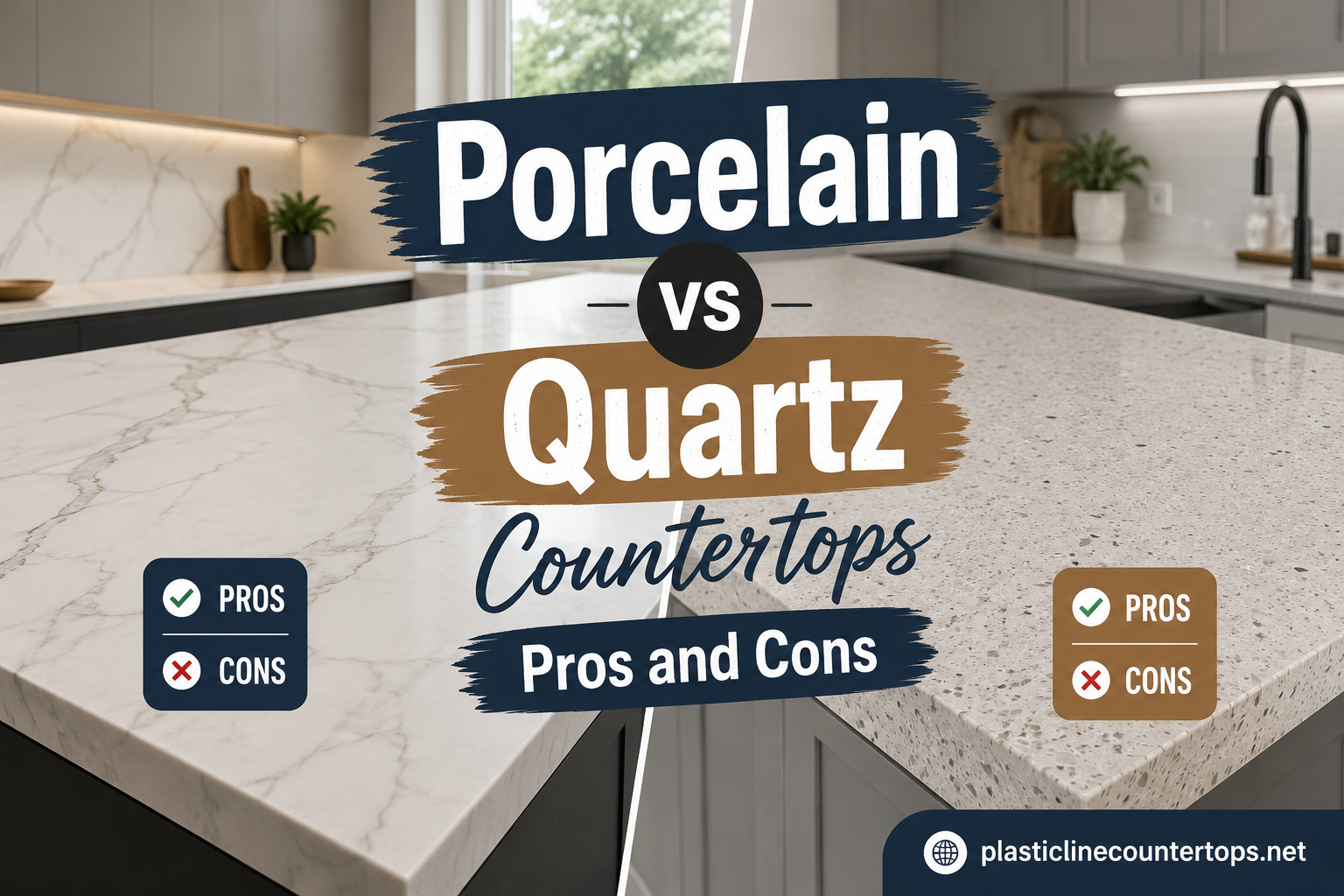
Choosing between porcelain and quartz countertops feels like an impossible decision when both materials look stunning in showroom displays. Our team has guided hundreds of homeowners through this exact dilemma over the past five years, and we have learned that the right choice depends entirely on how you actually use your kitchen. In this guide, you will learn the critical differences between porcelain and quartz countertops, including real durability tests, heat resistance limits, maintenance requirements, and cost breakdowns that salespeople rarely mention.
Porcelain and quartz are two of the most popular countertop materials for kitchens and bathrooms in 2026, each offering unique benefits that appeal to different lifestyles. Understanding these porcelain vs quartz countertops pros and cons will help you make an informed decision you will not regret five years from now.
Table of Contents
What is Porcelain Countertop?
Porcelain countertops are manufactured surfaces created from ceramic clay mixed with mineral oxides and other natural materials. The mixture is ground into an extremely fine powder, combined with water, shaped into slabs, and fired at temperatures between 2,200 and 2,600 degrees Fahrenheit.
This extreme heat creates an incredibly dense, non-porous surface with a water absorption rate of just 0.05 percent. The material scores around 7 to 8 on the MOHS hardness scale, making it highly resistant to scratches from normal kitchen use. Porcelain has been used for over 1,500 years in various forms, but modern manufacturing techniques have made it viable for large-format countertops only in recent decades.
The surface receives its color and pattern through inkjet printing technology that applies designs to the top layer. This allows manufacturers to create porcelain slabs that mimic natural stone, concrete, wood, and even metal finishes with remarkable accuracy.
What is Quartz Countertop?
Quartz countertops are engineered stone surfaces made from approximately 90 to 93 percent ground natural quartz crystals combined with 7 to 10 percent resin binders and pigments. Unlike porcelain, which is purely ceramic, quartz countertops blend natural minerals with modern polymers.
The manufacturing process involves crushing pure quartz into small pieces, mixing it with polyester resins and colorants, then compressing the mixture under intense pressure and heat to form solid slabs. This creates a material that scores around 7 on the MOHS hardness scale while maintaining some flexibility that pure ceramic lacks.
Because the color and pattern run throughout the entire thickness of the material, quartz offers consistent appearance from surface to edge. The resin content makes quartz slightly more forgiving under impact than porcelain, though it also creates limitations with heat resistance that homeowners must understand.
Porcelain vs Quartz Countertops: Quick Comparison
Before diving into detailed analysis, here is how these materials compare across the factors that matter most for kitchen and bathroom countertops.
| Feature | Porcelain Countertops | Quartz Countertops |
|---|---|---|
| MOHS Hardness | 7-8 | 7 |
| Heat Resistance | Excellent (up to 2,200°F+) | Limited (150-200°F max) |
| Water Absorption | 0.05% | 0.04-0.05% |
| UV Stability | Excellent | Can yellow over time |
| Scratch Resistance | Excellent | Excellent |
| Chip Resistance | Moderate | Good |
| Repairability | Very difficult | Possible |
| Weight | Light (40% lighter than quartz) | Heavy |
| Cost per sq ft | $60-$100 installed | $70-$150 installed |
Durability Comparison: Which Lasts Longer?
Both materials offer excellent scratch resistance for daily kitchen use. You can cut vegetables directly on porcelain or quartz without worrying about knife marks, though cutting boards are always recommended to preserve the finish.
Where durability differs significantly is impact resistance and chipping. Porcelain is more brittle than quartz due to its ceramic composition. While the surface itself is incredibly hard, sharp impacts from heavy pots or pans can chip the edges more easily than with quartz. Our research from forum discussions revealed multiple homeowners reporting chipped porcelain edges after accidentally dropping cast iron cookware.
Quartz offers slightly better impact resistance because the resin binders provide some flexibility that absorbs shock. However, quartz is not immune to damage either. Both materials can crack if excessive weight is concentrated on a small area or if cabinets are not properly leveled during installation.
Heat Resistance: The Critical Difference
Heat resistance represents the most dramatic difference between porcelain and quartz countertops. Porcelain can withstand extreme temperatures above 2,200 degrees Fahrenheit without damage, allowing you to place hot pots and pans directly from the stove or oven onto the surface.
Quartz countertops have significant heat limitations due to the resin content. Exposing quartz to temperatures above 150 to 200 degrees Fahrenheit can cause the resin to melt, discolor, or crack. We have seen quartz countertops develop permanent white marks from hot pizza boxes left on the surface for extended periods.
If you frequently cook with hot cookware and prefer not using trivets or hot pads, porcelain offers clear advantages. For quartz users, strict discipline with hot items is essential to avoid costly damage.
Maintenance and Care Requirements
Both materials are non-porous, meaning they do not absorb liquids or harbor bacteria. This makes both porcelain and quartz NSF-51 certified for food preparation surfaces and extremely hygienic for kitchen use.
Cleaning requirements are minimal for both materials. Daily wiping with mild soap and water removes most spills and debris. Neither material requires sealing, unlike natural stone countertops such as granite or marble.
Stain resistance is excellent in both materials due to their non-porous nature. Wine, coffee, oil, and acidic substances wipe away without leaving permanent marks. However, quartz can be slightly more susceptible to chemical damage from harsh cleaners containing bleach or ammonia, while porcelain tolerates stronger cleaning agents.
Cost Comparison: What You Will Actually Pay
Porcelain countertops typically cost between $60 and $100 per square foot installed, while quartz ranges from $70 to $150 per square foot installed. The price variation depends on brand, color complexity, edge profiles, and local labor costs.
Installation costs for porcelain may run higher than expected because fewer fabricators have the specialized equipment and expertise to work with large-format porcelain slabs properly. Porcelain requires diamond-tipped blades and specific handling techniques to prevent cracking during fabrication.
Over a 15 to 20 year lifespan, total cost of ownership tends to equalize. Porcelain may require professional repair for edge chips, while quartz may need replacement if heat damage occurs. Neither material offers significant long-term cost advantages over the other.
Appearance and Design Options
Both materials offer extensive design flexibility. Porcelain uses inkjet printing technology that creates highly realistic stone, wood, and concrete patterns on the surface. However, the pattern exists only on the surface layer, which becomes visible at exposed edges unless the fabricator applies special edge treatments.
Quartz provides through-body color and pattern, meaning the design extends through the entire thickness of the slab. This creates more seamless appearance at edges and allows for more decorative edge profiles.
Finish options vary by manufacturer but typically include polished (glossy), honed (matte), and leathered (textured) surfaces. Porcelain offers more finish variety because manufacturers can texture the surface during production, while quartz finish options depend on the polishing process.
Porcelain Countertops: Pros and Cons
Porcelain offers several distinct advantages for specific applications. The material excels in outdoor kitchens because it resists UV radiation without fading or yellowing. Its lightweight nature makes it easier to install on upper cabinets and large island overhangs without additional structural support.
The extreme heat resistance means you never worry about hot cookware damaging the surface. Porcelain also comes in very large slab sizes, reducing visible seams in expansive kitchens.
However, porcelain has notable disadvantages. The surface pattern does not extend through the material, so edges may reveal the white ceramic body unless specially treated. Porcelain is more difficult to repair if chipped, often requiring professional replacement of damaged sections. The material requires highly skilled fabricators, limiting your contractor options.
Quartz Countertops: Pros and Cons
Quartz dominates the engineered stone market for good reasons. The material offers excellent durability with slightly better impact resistance than porcelain. Edge chips and minor damage can often be repaired by professionals, extending the countertop’s lifespan.
The through-body color means edges look as good as the surface, allowing for decorative ogee, bevel, and waterfall edge profiles. Quartz also offers more fabricator availability, giving you more options for installation contractors and competitive pricing.
The primary disadvantages center around heat sensitivity and UV exposure. You must always use trivets or hot pads with quartz. Outdoor use or areas with strong direct sunlight can cause yellowing over time due to resin degradation. Quartz is also significantly heavier, requiring sturdy cabinet support.
Installation Considerations
Porcelain installation requires specialized skills that not all countertop fabricators possess. The material is brittle during fabrication and transport, requiring careful handling to prevent cracks. Diamond-tipped cutting tools are essential for clean edges without chipping.
Quartz installation follows more standard procedures familiar to most countertop professionals. The material is more forgiving during cutting and edge profiling, allowing for more decorative treatments.
Both materials require level cabinets and proper support. Porcelain’s lighter weight provides some advantage for overhangs and upper cabinets, while quartz may require additional bracing for large spans.
Outdoor Use Suitability
Porcelain significantly outperforms quartz for outdoor applications. The material does not fade, yellow, or degrade under UV exposure. Temperature fluctuations from freezing winters to hot summers do not affect porcelain’s structural integrity.
Quartz is generally not recommended for outdoor kitchens or areas with direct sunlight. The resin binders break down under UV radiation, causing discoloration and surface degradation. Even indoor areas with significant sun exposure may show quartz yellowing over 5 to 10 years.
For outdoor kitchens, barbecue areas, or poolside applications, porcelain is clearly the superior choice.
Porcelain vs Quartz Countertops Pros and Cons: FAQ
Is porcelain or quartz better for kitchen countertops?
Quartz is generally better for most kitchen countertops due to its superior chip resistance, easier repairability, and through-body color consistency. However, porcelain is superior for applications requiring extreme heat resistance, outdoor use, or where weight is a concern. Choose quartz for general kitchen use and porcelain for specific needs like outdoor kitchens or heavy cooking environments.
What is the most popular countertop right now?
Quartz remains the most popular countertop material in 2026, commanding approximately 60 percent of the engineered stone market. Its combination of durability, design options, and brand availability makes it the default choice for most homeowners. Porcelain is growing in popularity for modern designs and outdoor applications but remains a smaller segment of the market.
Is porcelain more fragile than quartz?
Porcelain is more brittle and prone to chipping than quartz, particularly along edges and corners. While porcelain scores higher on the MOHS hardness scale for scratch resistance, its ceramic composition makes it more susceptible to impact damage from heavy objects. Quartz contains resin binders that provide slight flexibility, making it more forgiving under impact.
What is the downside of porcelain countertops?
The main downsides of porcelain countertops include difficulty repairing chips, edge pattern limitations since designs only exist on the surface, higher fabrication skill requirements, and potential chipping from heavy impacts. Porcelain also has fewer available fabricators in some regions, potentially increasing installation costs and wait times.
Can you put hot pans on porcelain countertops?
Yes, porcelain countertops can withstand extreme heat above 2,200 degrees Fahrenheit, allowing you to place hot cookware directly from stoves and ovens without damage. This is one of porcelain’s major advantages over quartz. However, using trivets is still recommended to prevent thermal shock from extreme temperature changes.
Do porcelain countertops chip easily?
Porcelain countertops do not chip easily from normal use, but they are more susceptible to chipping than quartz from heavy impacts. Dropping cast iron cookware, heavy pots, or sharp objects on edges can cause chips. The material is hard but brittle, requiring more care than quartz in high-impact areas.
Which countertop lasts longer?
Both porcelain and quartz countertops last 20 to 30 years or more with proper care. Quartz may have slightly longer practical lifespans because chips and minor damage can be repaired, while porcelain damage often requires replacement. However, porcelain’s heat resistance and UV stability may give it advantages in specific applications where quartz would degrade faster.
Is quartz worth the extra cost over porcelain?
Quartz is worth the extra cost for most homeowners who prioritize repairability, edge profile options, and fabricator availability. The ability to repair chips and the through-body color consistency justify the 15 to 30 percent price premium for many buyers. However, porcelain offers better value for outdoor use, heat-intensive cooking, or modern minimalist designs.
Final Verdict: Which Should You Choose?
After analyzing the porcelain vs quartz countertops pros and cons, quartz emerges as the better choice for most indoor kitchen applications. Its repairability, through-body color, and wider fabricator availability make it practical for everyday family use.
Choose porcelain if you need extreme heat resistance, plan outdoor installations, want lighter weight for upper cabinets, or prefer modern minimalist aesthetics with large format slabs. Choose quartz if you want maximum durability against impacts, decorative edge profiles, easier repairs, and broader contractor availability.
Both materials offer excellent scratch resistance, non-porous hygiene, and decades of service life. Your specific cooking habits, design preferences, and installation location should guide your final decision. We recommend viewing full-size samples in your actual kitchen lighting before committing, as showroom appearances can differ significantly from home installations.