
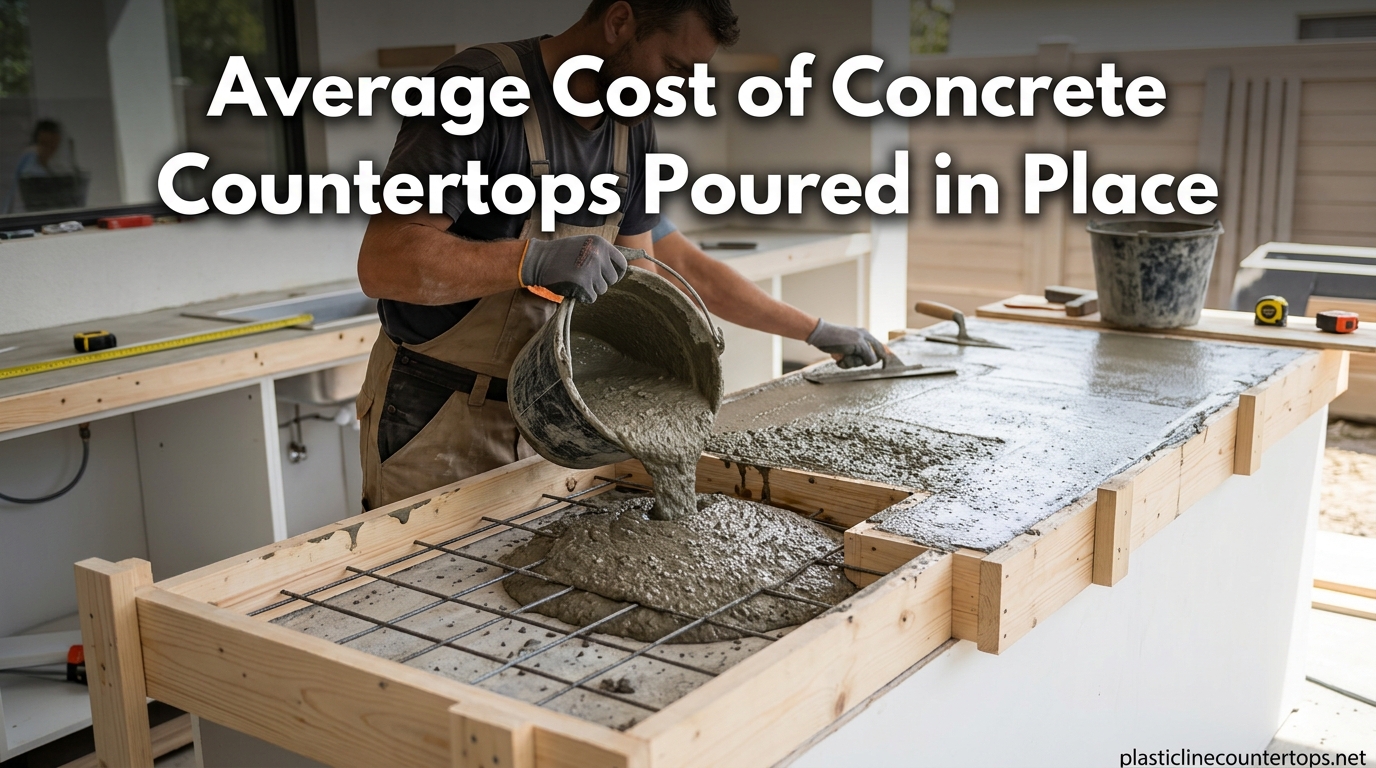
If you are budgeting for a kitchen or bathroom remodel, you have probably wondered about the average cost of concrete countertops poured in place. The national average runs between $65 and $150 per square foot installed, with most homeowners spending $3,500 to $7,500 total for a standard kitchen. That range covers materials, labor, and basic finishing, but the final number depends on several factors that can push your project toward the lower or higher end of that spectrum.
Poured-in-place concrete countertops, also called cast-in-place counters, are formed right on top of your cabinets. A contractor builds custom molds on-site, mixes and pours the concrete, then finishes and seals the surface after it cures. The result is a seamless, one-of-a-kind countertop that fits your space exactly with no visible seams between sections.
In this guide, our team breaks down every cost factor you need to know. We cover cost per square foot, the difference between poured and precast methods, finish options, hidden expenses, and honest pros and cons. We also share real homeowner experiences from people who have completed these projects, so you can budget with confidence.
Table of Contents
Concrete Countertop Cost Per Square Foot
The average cost of concrete countertops poured in place ranges from $65 to $150 per square foot, including both materials and professional installation. Most homeowners land somewhere in the middle at $90 to $120 per square foot for a standard kitchen countertop with a basic finish and straightforward edge profile.
Here is how the total cost typically breaks down by project size. These numbers include materials, labor, and standard finishing for a poured-in-place installation:
- Small bathroom vanity (10 to 15 square feet): $650 to $2,250 total
- Small kitchen (25 to 30 square feet): $1,625 to $4,500 total
- Average kitchen (35 to 50 square feet): $2,275 to $7,500 total
- Large kitchen with island (55 to 75 square feet): $3,575 to $11,250 total
Keep in mind that these are base ranges. Custom features like decorative aggregates, integrated sinks, or complex edge profiles will add to the total. A good rule of thumb is to budget an extra 15 to 20 percent above your estimate for unexpected costs.
Material Costs vs Labor Costs
On a typical poured-in-place project, materials make up roughly 30 to 40 percent of the total cost, while labor accounts for 60 to 70 percent. This split makes sense when you consider that cast-in-place work requires skilled contractors to build forms on-site, mix and pour concrete with precision, and hand-finish the surface over multiple visits.
Material costs alone run about $8 to $25 per square foot. This includes the concrete mix, reinforcement mesh or fiber, pigments, sealers, and forming materials. Labor typically costs $40 to $80 per square foot, reflecting the specialized skills and multi-day timeline required for a proper pour-in-place installation.
One homeowner on a popular DIY forum shared that their 50-square-foot pour-in-place project ran approximately $500 in materials alone, with the concrete mix and additives costing about $300 and forming materials adding another $200. That aligns closely with the $10 per square foot material-only average when you tackle the work yourself.
Poured-in-Place vs Precast Concrete Countertops: Cost Comparison
When researching the average cost of concrete countertops poured in place, you will also encounter precast concrete countertops as an alternative. Both methods produce beautiful concrete surfaces, but they differ in how and where the concrete is formed, which directly affects the price you pay.
What Is Poured-in-Place?
Poured-in-place (or cast-in-place) means the contractor builds molds directly on top of your cabinets and pours the wet concrete right there in your kitchen or bathroom. The concrete cures in position, creating a seamless surface with no joints between sections. This method allows for truly custom shapes, integrated backsplashes, and perfect fits around walls and corners.
What Is Precast?
Precast concrete countertops are fabricated in a workshop or factory, then transported and installed as finished slabs. The contractor takes precise measurements of your space, builds the forms in their shop, pours and finishes the concrete under controlled conditions, and delivers the cured slabs for installation.
Cost Comparison
Here is how the two methods compare on cost:
- Poured-in-place: $90 to $150 per square foot installed
- Precast: $70 to $110 per square foot installed
Precast is generally 20 to 30 percent less expensive because the controlled workshop environment reduces waste and allows the fabricator to work on multiple projects simultaneously. The trade-off is that precast slabs require seams at joints, and there is a small risk of damage during transport.
Which Method Should You Choose?
Choose poured-in-place if your project has complex curves, unusually shaped spaces, or you want a completely seamless look. Go with precast if your layout is fairly standard, you want the best value per square foot, or your contractor recommends it for your specific situation.
Forum discussions among homeowners reveal an interesting trend. Several people noted that pour-in-place can sometimes result in a slightly less refined surface compared to precast, because the controlled shop environment allows for more precise finishing. However, many homeowners prefer the seamless result of cast-in-place and feel the aesthetic benefit is worth the extra cost.
Factors That Affect the Cost of Concrete Countertops Poured in Place
Several variables determine where your project falls on the $65 to $150 per square foot range. Understanding these factors helps you make informed decisions about where to invest and where you can save.
Thickness
Standard concrete countertops are 1.5 inches thick, and most base prices assume this thickness. Going thicker increases both material use and structural requirements. A 2-inch slab adds roughly 15 to 25 percent to the cost, while a 3-inch slab can add 30 to 50 percent. Thicker countertops also weigh significantly more, which may require cabinet reinforcement.
Edge Profiles
The edge profile you choose affects both the look and the price. Straight or eased edges are typically included in base pricing, while decorative profiles cost extra:
- Straight or eased edge: Included in base price
- Beveled edge: $5 to $10 extra per square foot
- Bullnose (full or half): $8 to $15 extra per square foot
- Chiseled or rock edge: $10 to $20 extra per square foot
- Custom ogee or waterfall: $15 to $30 extra per square foot
Complex edges require additional form work and hand finishing, which drives up the labor portion of your cost.
Installation Location
Where your countertops are installed matters more than you might think. Kitchen countertops are the standard baseline for pricing, but other locations can affect the final bill:
- Kitchen countertops: $90 to $150 per square foot (standard baseline)
- Kitchen island: $85 to $140 per square foot (simpler forms, fewer cutouts)
- Bathroom vanity: $95 to $160 per square foot (smaller area, minimum charges apply)
- Outdoor kitchen: $100 to $170 per square foot (requires weather-resistant mix and sealant)
- Bar top: $90 to $155 per square foot (thinner profile, decorative focus)
Small projects like bathroom vanities often cost more per square foot because contractors typically have minimum charges to cover setup, travel, and the fixed costs of bringing equipment to your site.
Layout Complexity
Straight runs with simple right-angle corners are the most affordable. Complex layouts with L-shapes, curves, unusual angles, or multiple transitions all require more form-building time and skilled labor. Expect to pay 10 to 25 percent more for complex layouts compared to a simple rectangular run.
Labor Costs
Concrete countertop contractors typically charge $50 to $100 per hour, with pour-in-place projects requiring 20 to 40 hours of labor depending on the size and complexity. A 40-square-foot kitchen with a straightforward layout might take 20 to 25 hours of labor, while a complex 60-square-foot kitchen with an integrated island could take 35 to 40 hours.
Labor costs vary by region. Contractors in major metropolitan areas and coastal cities charge more than those in smaller towns and rural areas. Getting at least three quotes from experienced concrete countertop professionals is the best way to establish a realistic budget for your area.
Concrete Countertop Finish Options and Their Costs
The finish you select has a major impact on both the appearance and the final cost of your concrete countertops poured in place. Each finish requires different techniques, tools, and time commitments from your contractor.
Polished Finish
A polished finish is achieved by grinding the concrete surface with progressively finer abrasives until it develops a smooth, glossy sheen. This is one of the most popular options because it creates a refined, high-end look that works well in modern and transitional kitchens.
Cost: $5 to $15 extra per square foot above the base price. Polishing requires multiple passes with specialized grinding equipment, which adds time and labor to the project.
Ground or Exposed Aggregate Finish
Grinding the surface to reveal the sand, small stones, or decorative aggregate within the concrete mix creates a textured, speckled appearance. This finish is popular for homeowners who want an earthy, organic look that highlights the natural character of the material.
Cost: $8 to $18 extra per square foot. The grinding depth must be carefully controlled to expose the aggregate evenly without weakening the surface.
Stained or Integral Color Finish
Concrete can be colored in two ways. Integral color means pigment is mixed directly into the concrete before pouring, so the color runs all the way through. Acid staining is applied to the surface after curing, creating rich, variegated tones that mimic natural stone.
Cost for integral color: $3 to $8 extra per square foot. Cost for acid staining: $5 to $12 extra per square foot. Acid staining tends to produce more unique, varied results, while integral color provides a more uniform appearance.
Textured or Pressed Finish
Textured finishes are created by pressing materials into the wet concrete surface before it cures. You can use rubber mats with stone, slate, or wood grain patterns to create a tactile surface that adds visual depth. This option works especially well for outdoor kitchens and bar tops.
Cost: $6 to $14 extra per square foot, depending on the complexity of the texture pattern.
Embedded Objects
One of the most distinctive features of concrete countertops is the ability to embed objects directly into the surface. Recycled glass, shells, metal accents, pebbles, or even personalized items can be set into the concrete during pouring. After curing, the surface is ground to expose the embedded items.
Cost: $10 to $30 extra per square foot, depending on the type and quantity of embedded materials. Custom work like this requires careful planning and skilled execution.
Which Finish Offers the Best Value?
If you want the best balance of appearance and cost, an integral color finish with a polished surface delivers the most visual impact for the money. It adds $8 to $23 per square foot total while creating a high-end look that rivals natural stone at a fraction of the price.
Additional Costs to Budget For
The cost per square foot covers the countertop itself, but several additional expenses can catch homeowners off guard. Planning for these upfront prevents budget surprises later.
Old Countertop Removal
If you are replacing existing countertops, removal and disposal typically costs $200 to $500 depending on the material being removed and how it was installed. Laminate comes off relatively easily, while tile or stone countertops require more labor to remove without damaging the cabinets below.
Cabinet Reinforcement
Concrete countertops are heavy. A standard 1.5-inch thick slab weighs approximately 18 to 25 pounds per square foot. That means a 40-square-foot kitchen countertop could weigh 720 to 1,000 pounds. If your existing cabinets are not built to support that weight, reinforcement is necessary.
Cabinet reinforcement typically costs $200 to $600, which may include adding plywood underlayment, reinforcing corner brackets, or installing additional support framing. This is especially important for upper-floor installations where weight distribution matters. Several homeowners on remodeling forums reported being surprised by this requirement, so ask your contractor to assess your cabinets during the initial consultation.
Sink Cutout and Installation
Cutting precise openings for undermount or drop-in sinks requires skill and care, especially in poured-in-place installations. Sink cutouts typically cost $150 to $400 each, depending on the sink type and whether plumbing modifications are needed.
Matching Backsplash
A concrete backsplash that matches your countertops creates a cohesive look and protects your walls from splashes. Expect to pay $300 to $800 for a matching concrete backsplash, depending on the height and length of the run.
Sealant and Initial Treatment
All concrete countertops need to be sealed to protect against stains and moisture penetration. The initial sealing is sometimes included in the installation price, but it can also cost $100 to $300 as a separate line item. Ask your contractor upfront whether sealing is included.
Ongoing Maintenance Costs
Concrete countertops require resealing every one to three years depending on use and the type of sealant applied. Professional resealing costs $100 to $250 per treatment, or you can do it yourself for $30 to $60 in materials. Factor this into your long-term budget when comparing concrete to lower-maintenance options like quartz or solid surface.
One homeowner on a home improvement forum noted that their biggest surprise was the annual maintenance. They spent roughly $45 on high-quality food-safe sealant and devoted a Saturday afternoon to reapplying it each year. It was not expensive, but it was an ongoing commitment they had not originally planned for.
DIY vs Professional Installation: What to Consider
The cost difference between DIY and professional poured-in-place concrete countertops is dramatic. Doing it yourself can cut your costs to $8 to $15 per square foot for materials only, compared to $65 to $150 per square foot for professional installation. But the gap in quality and risk is equally significant.
DIY Material Costs
For a standard 40-square-foot kitchen, here is what a typical DIY material budget looks like:
- Concrete mix and additives: $150 to $350
- Reinforcement (fiberglass mesh or rebar): $40 to $80
- Pigment or integral color: $30 to $75
- Form materials (melamine, caulk, screws): $100 to $200
- Sealant: $50 to $100
- Polishing supplies (if desired): $75 to $200
- Total materials: $445 to $1,005
One Reddit user reported completing a 50-square-foot DIY project for approximately $500 in materials, with concrete and additives accounting for about $300 and form materials adding another $200. Their results were decent but not professional quality.
The Case for Hiring a Professional
Poured-in-place concrete work is one of the more challenging countertop installations. It requires working with wet concrete on a strict timeline, building watertight forms on uneven cabinet surfaces, and achieving a smooth finish before the material sets. Mistakes are expensive to fix and sometimes impossible to correct without starting over.
Common DIY mistakes include form leaks that waste material, uneven surfaces that require extensive grinding, air bubbles that create unsightly pits, and cracking caused by improper reinforcement or curing. Hiring a professional eliminates these risks and comes with warranties that protect your investment.
Our recommendation: hire a professional for poured-in-place installations. The precision required to build forms, pour, and finish concrete on-site is significant. Save the DIY approach for smaller precast projects where you can work in a controlled environment.
Pros and Cons of Poured-in-Place Concrete Countertops
Before committing to concrete countertops poured in place, it helps to weigh the benefits against the drawbacks. Here is an honest look at both sides based on real homeowner experiences and contractor feedback.
Pros
- Completely seamless: Poured-in-place creates one continuous surface with no seams between sections, which is impossible to achieve with precast or stone slabs.
- Fully customizable: You choose the color, finish, edge profile, thickness, and embedded elements. Every countertop is one of a kind.
- Heat resistant: Concrete handles hot pots and pans without scorching, though trivets are still recommended to protect the sealant.
- Unique aesthetic: Concrete delivers an industrial-modern look that stands apart from granite, quartz, and marble.
- Long lifespan: With proper care and regular sealing, concrete countertops can last 50 years or more.
- Perfect fit: Since the forms are built on-site, the countertop conforms exactly to your walls and cabinet layout, even in older homes with uneven surfaces.
Cons
- Higher cost: Poured-in-place is the most expensive concrete countertop method, running $90 to $150 per square foot installed.
- Cracking risk: Hairline cracks are the most common complaint among concrete countertop owners. While usually cosmetic, they can be frustrating for homeowners expecting a flawless surface.
- Requires sealing: Concrete is porous and must be sealed initially and resealed every one to three years to prevent staining.
- Heavy: At 18 to 25 pounds per square foot, concrete may require cabinet reinforcement, adding cost and complexity.
- Long cure time: Your kitchen will be out of commission for several days during the curing process. Plan accordingly.
- Limited contractor availability: Not all countertop installers work with concrete, especially poured-in-place. Finding an experienced contractor can be challenging depending on your location.
Forum discussions reveal that the two biggest complaints among concrete countertop owners are hairline cracking and the ongoing sealing requirement. Both issues are manageable with proper installation and maintenance, but they are important to understand before committing. Cracking prevention starts with proper reinforcement and controlled curing, while sealing becomes a simple routine once you get the hang of it.
FAQ
Are poured concrete countertops expensive?
Yes, poured concrete countertops are among the more expensive countertop options. They cost $90 to $150 per square foot installed, which is comparable to high-end granite and more expensive than laminate or tile. The specialized labor and on-site form building drive the cost above precast concrete and many natural stone options.
Can concrete countertops be poured in place?
Yes, concrete countertops can be poured in place. This method, also called cast-in-place, involves building custom molds on top of your cabinets and pouring wet concrete directly into them. The concrete cures in position, creating a seamless surface. It requires skilled contractors and typically costs $90 to $150 per square foot.
How much does it cost to pour concrete countertops?
The total cost to pour concrete countertops ranges from $2,275 to $7,500 for a standard 35 to 50 square foot kitchen, or $65 to $150 per square foot. Material costs alone run $8 to $25 per square foot, while labor makes up the remaining 60 to 70 percent of the total project cost.
What are the disadvantages of concrete countertops?
The main disadvantages of concrete countertops are the risk of hairline cracking, the need for regular resealing every one to three years, their heavy weight requiring possible cabinet reinforcement, higher cost compared to many alternatives, limited availability of experienced installers, and the long cure time that takes your kitchen out of use for several days.
Do concrete countertops increase home value?
Concrete countertops can increase home value, particularly in modern and industrial-style homes where their unique aesthetic is a selling point. However, because they are a niche choice, they may not appeal to all buyers. In the right market, quality concrete countertops can offer a return of 50 to 70 percent of the installation cost in added home value.
How long do concrete countertops last?
Concrete countertops can last 50 years or more with proper care and regular sealing. The concrete itself is extremely durable, but the surface sealant needs reapplication every one to three years to maintain stain and moisture resistance. Hairline cracks may develop over time but are typically cosmetic and do not affect structural integrity.
Are concrete countertops cheaper than granite?
It depends on the granite. Basic granite starts around $40 to $60 per square foot installed, which is less than poured concrete at $90 to $150 per square foot. However, high-end exotic granite can cost $100 to $200 per square foot, making it comparable to or more expensive than poured concrete. In general, concrete is priced similarly to mid-range to high-end granite.
Is the Investment Worth It?
The average cost of concrete countertops poured in place falls between $65 and $150 per square foot, with most standard kitchen projects totaling $3,500 to $7,500. That investment buys you a completely custom, seamless surface that no other material can replicate. If you value unique design, want a seamless look, and are prepared for annual sealing maintenance, poured-in-place concrete delivers an exceptional result.
For homeowners working with a tighter budget, precast concrete offers a similar aesthetic at 20 to 30 percent less cost. And for those who prioritize low maintenance over customization, materials like quartz may be a better fit despite lacking the artisanal character that makes concrete special.
The best next step is to contact two or three concrete countertop contractors in your area for quotes. Ask about their experience with poured-in-place installations specifically, request photos of completed projects, and discuss your design preferences. With the right contractor and realistic expectations, concrete countertops can become the centerpiece of your kitchen or bathroom for decades to come.