
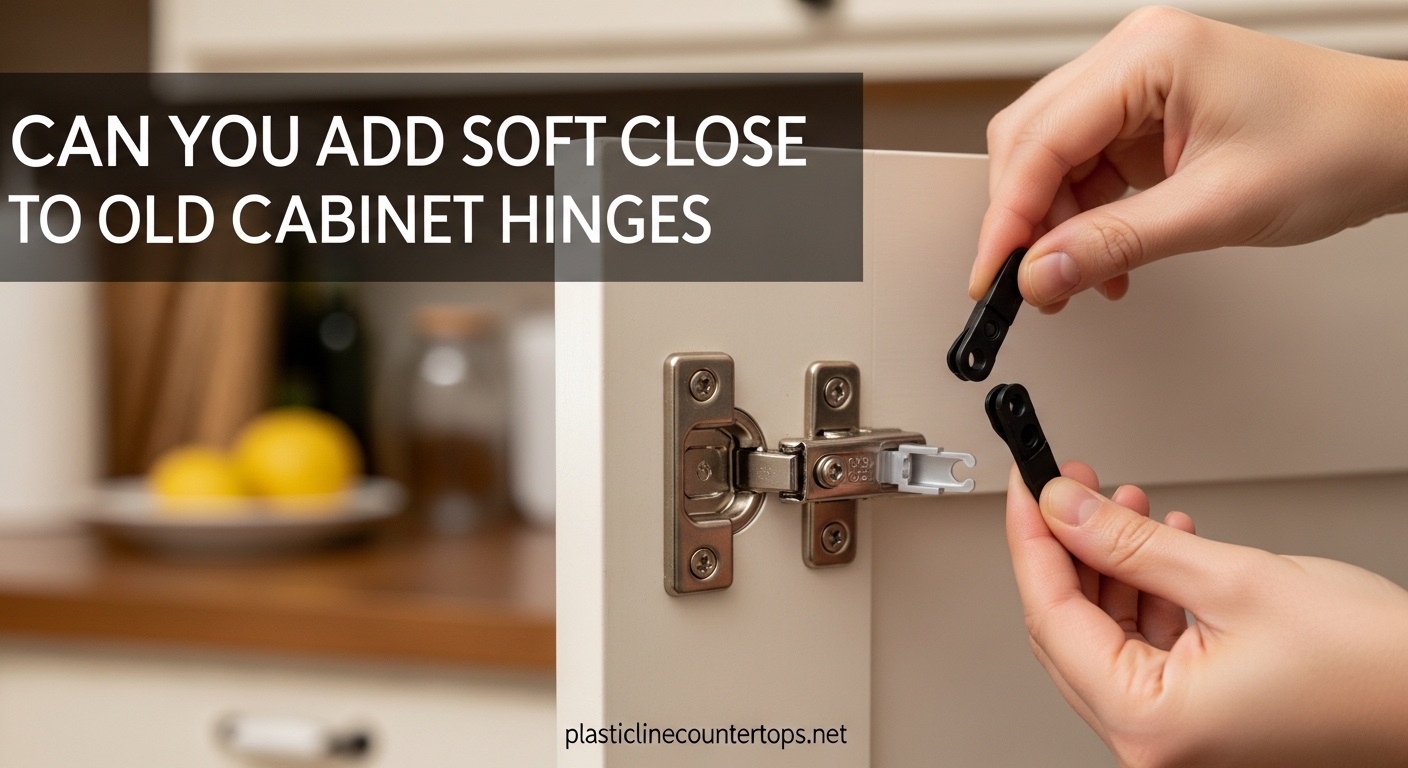
Can you add soft close to old cabinet hinges? Yes, you absolutely can. There are two proven methods: installing soft close adaptors that work with your existing hinges, or replacing the hinges entirely with soft close models. Both approaches will stop those annoying cabinet door slams and protect your cabinetry from damage.
I have helped dozens of homeowners upgrade their cabinets over the years. In this guide, I will walk you through everything you need to know about adding soft close functionality to old cabinet hinges. You will learn how to identify your current hinge type, choose the right method for your situation, and complete the installation yourself.
By the end of this article, you will have a quiet kitchen with doors that close smoothly every time.
Table of Contents
Understanding Your Current Hinge Type
Before you start buying hardware, you need to identify what type of hinges are currently on your cabinets. This matters because it determines which soft close method will work for you.
Self-Closing vs Free-Swing Hinges
Self-closing hinges have a spring mechanism that pulls the door closed automatically. You can identify these by gently pulling the door open about 6 inches and releasing it. If the door closes on its own without any push, you have self-closing hinges.
Free-swing hinges stay wherever you leave them. Open the door partially and it will just hang there. These require a full hinge replacement to add soft close functionality.
Checking Your Hinge Style
Look at how your hinges mount to the cabinet. Face frame cabinets have a visible wooden frame around the door opening, while frameless cabinets have no front frame and the door attaches directly to the cabinet box. Most older cabinets are face frame style, which affects hinge compatibility.
Take a photo of your hinge with the door open. This will help you match the style when shopping for replacements or adaptors.
Two Methods to Add Soft Close to Old Cabinet Hinges
Now that you know what you have, here are your two options. Each has advantages depending on your budget, skill level, and current hinge type.
Method 1: Soft Close Adaptors
Adaptors are small hydraulic dampers that mount inside your cabinet. They work with existing self-closing hinges to slow the door during the final inches of closing. This is the easiest and cheapest option.
Adaptors cost about $2-4 each and take 5-10 minutes to install per door.
Method 2: Full Hinge Replacement
This involves removing your old hinges and installing new soft close concealed hinges. These have the damping mechanism built right into the hinge. This is required for free-swing hinges and gives the cleanest look.
Soft close hinges cost $8-15 per pair and take 20-30 minutes per door to install.
Can You Add Soft Close to Old Cabinet Hinges Using Adaptors
Soft close adaptors are my go-to recommendation for most homeowners. They provide excellent results with minimal effort.
What You Will Need
- Soft close adaptors (one per door, about $3 each)
- Phillips head screwdriver
- Drill with 1/8 inch bit
- Measuring tape
- Pencil
Step 1: Confirm Hinge Compatibility
Adaptors only work with self-closing hinges. Test your door as described above. If it closes on its own, proceed. If not, skip to the full hinge replacement method.
Step 2: Determine Mounting Location
Open the cabinet door fully. You will mount the adaptor on the cabinet frame (not the door) at the hinge side. The adaptor should contact the door about 2-3 inches before it fully closes.
Step 3: Mark and Drill Pilot Holes
Hold the adaptor against the cabinet frame in the correct position. Mark the screw locations with your pencil. Drill pilot holes about 1/2 inch deep to prevent splitting the wood.
Step 4: Install the Adaptor
Secure the adaptor with the provided screws using your screwdriver. Do not over-tighten. The adaptor arm should move freely and make contact with the door surface.
Step 5: Test and Adjust
Close the door slowly. You should feel resistance during the final few inches as the hydraulic mechanism engages. The door should close quietly and smoothly. If it slams, the adaptor may need adjustment or a second adaptor for heavier doors.
Method 2: Replacing with Full Soft Close Hinges
Sometimes a full replacement is the better choice. This applies if you have free-swing hinges, want a cleaner look, or your current hinges are damaged or outdated.
When to Choose This Method
Replace the entire hinge when: your hinges are free-swing, you want a more modern concealed look, your existing hinges are worn or rusted, or adaptors are not compatible with your hinge style.
Measuring for Replacement Hinges
You need to measure the overlay to buy the correct hinges. The overlay is how much the door covers the cabinet frame. Close the door and measure from the edge of the door to the edge of the cabinet frame. Common overlays are 1/2 inch, 3/4 inch, or full overlay (door covers the entire frame).
For face frame cabinets, you will also need to measure the frame width to ensure the new hinge plates will fit.
Step-by-Step Hinge Replacement
Step 1: Remove the old door by unscrewing the hinges from the cabinet frame while leaving them attached to the door.
Step 2: Remove the old hinges from the door completely.
Step 3: Install the new soft close hinges on the door using the provided screws. Most use a 35mm cup that requires drilling, but some retrofit styles use existing holes.
Step 4: Mount the hinge plates to the cabinet frame. For face frame cabinets, these attach to the inside of the frame. For frameless cabinets, they attach to the cabinet side wall.
Step 5: Hang the door by clipping the hinge into the plate. Most modern hinges click into place.
Step 6: Adjust the door alignment. Use the adjustment screws to move the door up, down, in, or out until it sits perfectly flush and closes quietly.
Cost Comparison: Adaptors vs Full Replacement
Budget matters when planning your cabinet upgrade. Here is the real cost breakdown for a typical kitchen with 30 cabinet doors.
Soft Close Adaptors
At $3 per adaptor, you will spend about $90 for the entire kitchen. Add $20 for any tools you do not already own. Total cost: approximately $110.
Time investment: 2-3 hours for the whole kitchen.
Full Hinge Replacement
At $12 per pair of hinges, you will need 30 pairs for $360. You may need a 35mm Forstner bit for drilling hinge cups, adding $15-25. Total cost: approximately $375-400.
Time investment: 8-10 hours for the whole kitchen.
My Recommendation
For most homeowners with self-closing hinges, adaptors provide 90% of the benefit at 25% of the cost. Only replace the full hinge if your current ones are free-swing, damaged, or you want the modern concealed look.
Troubleshooting Common Installation Issues
Even simple projects can hit snags. Here is how to fix the most common problems I have encountered.
Doors Not Closing Properly After Installation
If the door hangs open or does not latch, check the hinge adjustment screws. Most soft close hinges have three adjustment points: horizontal, vertical, and depth. Turn the screws in small increments until the door aligns correctly.
Screw Holes Do Not Align
This is common when replacing old hinges with new ones. If the new hinge plate holes miss the old holes, you have two options. First, fill the old holes with wood filler and drill new ones. Second, look for hinge plates with slotted screw holes that allow slight adjustment.
Doors Still Slam
With adaptors, one damper may not be enough for heavy solid wood doors. Install a second adaptor on the opposite hinge side. With replacement hinges, check that you bought hinges rated for your door weight. Heavier doors need stronger hydraulic mechanisms.
Adapters Making Contact Too Early
If the door slows down too soon or feels like it is fighting you, the adaptor is mounted too far from the hinge. Move it closer to the door edge so it only engages in the final 2-3 inches of closing.
FAQ
Can you replace regular cabinet hinges with soft close hinges?
Yes, you can replace regular cabinet hinges with soft close hinges. This is actually one of the two main methods for adding soft close functionality. You will need to remove the old hinges and install new soft close concealed hinges. Make sure to measure your door overlay (how much the door covers the frame) before purchasing to ensure you get the correct hinge type.
Can you add self-closing hinges to old cabinets?
Yes, you can add self-closing hinges to old cabinets. Self-closing hinges pull the door shut automatically and are the best choice if you want full soft close functionality but your current hinges are free-swing. These are commonly available at hardware stores and online. Installation requires removing the old hinge and drilling a 35mm cup hole if your cabinet doors do not already have them.
Can you add soft close hardware to existing cabinets?
Yes, you can add soft close hardware to existing cabinets without replacing the hinges. Soft close adaptors or dampers are small hydraulic devices that mount to the cabinet frame and contact the door to slow its closing. They work with existing self-closing hinges and cost only about $3 each. This is the easiest and most budget-friendly method.
Can you add soft close to old cabinets?
Yes, you can add soft close to old cabinets regardless of their age. The method depends on your current hinge type. If you have self-closing hinges, use soft close adaptors. If you have free-swing hinges or want a cleaner look, replace the hinges entirely. Both methods work on cabinets from any era as long as the doors and frames are structurally sound.
Conclusion
So, can you add soft close to old cabinet hinges? Absolutely. Whether you choose the budget-friendly adaptor route or the full hinge replacement, you can enjoy quiet, slam-free cabinets by this weekend.
The key is identifying your current hinge type first. Self-closing hinges work with adaptors. Free-swing hinges need replacement. Either way, the project is DIY-friendly and delivers immediate results.
Start with one cabinet to test your chosen method, then tackle the rest of your kitchen. Your ears (and your family) will thank you.