
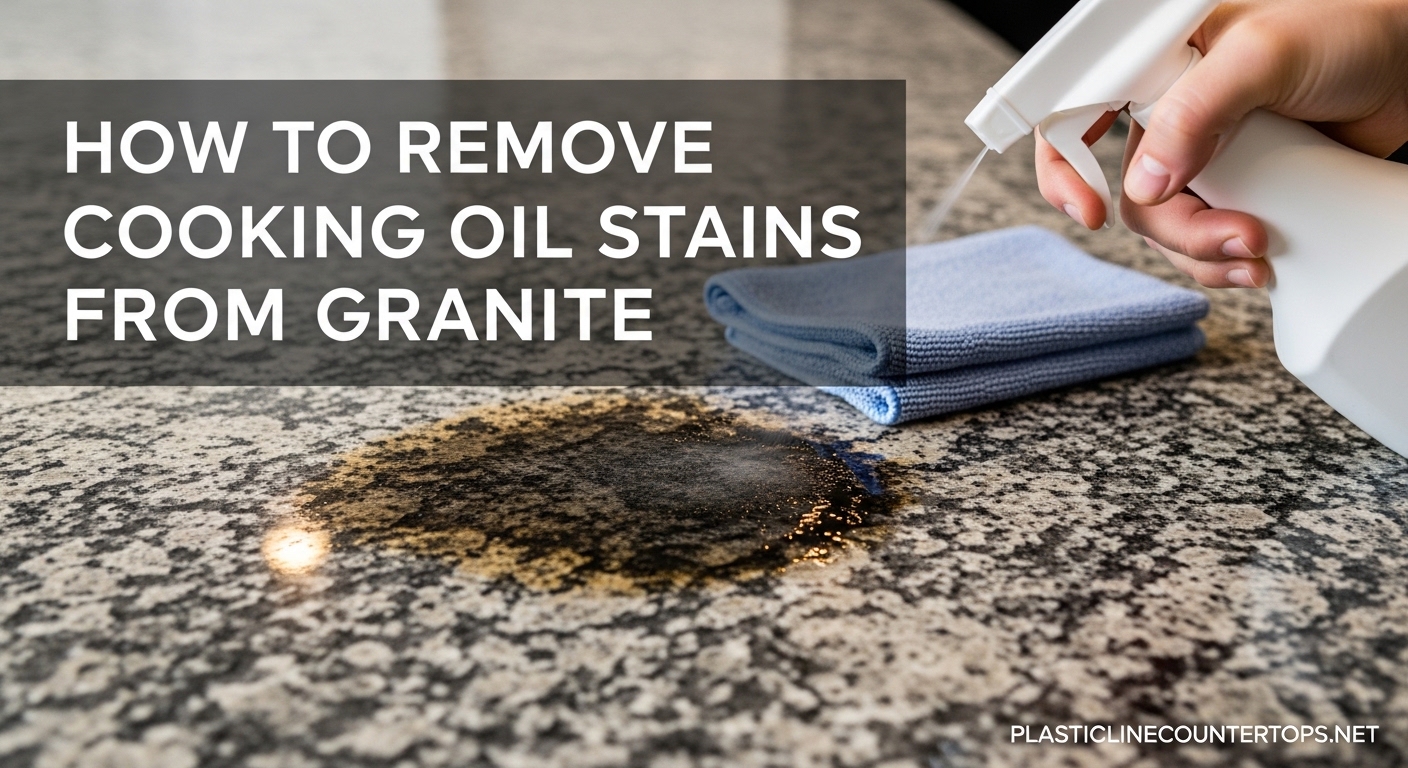
Grease splatters happen. One minute you are chopping vegetables for dinner, and the next, a splash of olive oil has left a dark spot on your granite countertop. The frustrating part is that granite looks so smooth and polished, yet cooking oil seems to sink right in. I have dealt with this myself, and I want to share what actually works so you do not have to guess.
Granite is a natural stone with tiny pores that run throughout the material. Even a polished surface has microscopic openings that can absorb oils and liquids. When cooking oil hits your granite countertop, it does not just sit on top. It works its way down into those pores, and the longer it sits, the deeper it goes. That is why acting fast matters, and also why set-in stains require stronger methods than just wiping with a cloth.
In this guide, I will walk you through exactly how to remove cooking oil stains from granite, starting with the immediate steps you should take when a spill happens. I will cover three removal methods, from simple dish soap to a baking soda poultice and even acetone for stubborn cases. I will also share prevention tips to help you avoid future stains.
Table of Contents
Why Does Cooking Oil Stain Granite?
Granite is porous. That is the short answer. The longer answer involves understanding what that means for your countertop.
Your granite countertop might look completely smooth, but under magnification, you would see a network of tiny pores and capillaries. These natural spaces exist throughout the stone. When cooking oil, grease, or other liquids contact the surface, they can be drawn into these pores through capillary action. The oil then spreads within the stone, and as it settles, it leaves a dark stain that is visible from the top.
Sealed granite resists this penetration better than unsealed granite. However, even properly sealed granite can absorb oil if the sealant has worn down in spots or if the oil sits for too long. High-use areas near your cooktop are particularly vulnerable because they face constant exposure to grease and cooking splatter.
The dark stain you see is not just surface discoloration. It is the oil trapped within the stone itself. That is why some stains respond to surface cleaning while others seem impossible to remove without pulling the oil out from deeper in the stone.
Immediate Response: The Blotting Technique
When cooking oil first spills on your granite, your first move should be blotting. Not wiping. Blotting.
The difference matters. Wiping spreads the oil around and pushes it deeper into the pores. Blotting lifts the oil off the surface before it has a chance to penetrate. Grab a clean paper towel, fold it into a thick pad, and press it firmly onto the spill. Hold steady pressure for 30 to 60 seconds. Lift and check. If you still see liquid, fold the towel to a fresh side and blot again.
Repeat this process until no more oil transfers to the paper towel. For fresh spills caught within seconds, this alone might be enough to prevent a stain entirely. Do this before reaching for any cleaning solution. It is the single most important step in the entire process.
Use paper towels or a clean white cloth. Colored materials can transfer their own dyes onto the stone, which creates a separate problem you do not need. Change to a fresh section of the towel frequently so you are not just moving the oil around.
Method 1: Dish Soap and Warm Water for Fresh Stains
If the oil has been sitting for a few minutes but less than an hour, dish soap and warm water is your first line of defense. This method works well for stains that have not fully set into the stone.
Mix a few drops of pH-neutral dish soap with warm water. Avoid harsh cleaners or anything with citrus, as these can damage the granite sealant over time. Dawn dish soap is a common choice because it cuts grease effectively without strong chemicals.
Dip a soft microfiber cloth into the soapy water and wring it out well. You want damp, not soaking. Wipe the stained area using gentle circular motions. This lifts the oil from the surface and the upper portions of the pores. Rinse the cloth frequently and repeat as needed.
After cleaning, rinse the area with a clean cloth dampened with plain warm water. This removes any soap residue that could attract dirt later. Dry the countertop thoroughly with a fresh towel.
For light-colored granite, some homeowners add a small amount of hydrogen peroxide to the mix. This can help lift stains without damaging the stone. Test any additive on a hidden area first to make sure it does not affect the finish.
Method 2: Baking Soda Poultice for Set-In Stains
When stains have been sitting for hours or even days, simple washing rarely works. The oil has worked its way deeper into the stone, and you need to pull it out. That is where a baking soda poultice comes in.
A poultice is a paste that draws substances out of porous stone. The baking soda draws the oil up and out through osmosis. You apply it, cover it, and leave it to work overnight.
Here is how to make and apply a baking soda poultice. Mix baking soda with just enough water to form a thick paste. You want it spreadable but not runny. It should hold its shape when you scoop it onto the stain. If needed, add water a small amount at a time.
Apply the paste directly over the stain, extending slightly beyond the visible stain edges. The paste should be about one-quarter inch thick. Cover the area with plastic wrap. This traps moisture and prevents the paste from drying out too quickly. If the stain is large, you can tape the edges of the plastic wrap down to hold everything in place.
Leave the poultice in place for 24 hours. During this time, the baking soda pulls the oil from deep within the stone up to the surface, where the paste absorbs it. The waiting is not optional. Rushing this step reduces effectiveness significantly.
After 24 hours, remove the plastic wrap and let the paste dry completely. Once dry, it will look crusty and lighter in color, which indicates it has absorbed the oil. Scrape the dried paste away with a plastic spatula or a credit card. Wipe the area clean with a damp microfiber cloth and dry thoroughly.
If the stain is still visible, you can repeat this process. Some deeply set stains require two or three applications before they fully disappear. Between applications, let the area dry completely before reapplying.
Real users in home improvement communities have reported success with this method on stains that were several days old. One person described applying the poultice before bed and waking up to find the stain noticeably faded. Another mentioned that a stain from an olive oil spill that happened during cooking responded after one overnight application.
Method 3: Acetone Treatment for Stubborn Stains
Old stains that have been ignored for weeks or months often do not respond to dish soap or baking soda. The oil has bonded with the stone at a deep level. In these cases, you need a solvent that can break down the oil. Acetone fits this role.
Acetone is a powerful solvent found in nail polish remover and some cleaning products. It dissolves oils and greases effectively. However, it also evaporates quickly and can affect the granite sealer if used too frequently. Use it as a last resort for stains that survive other methods.
Before using acetone, test it on a hidden area of your countertop. Apply a small amount to a cloth and wipe an inconspicuous spot. Wait a few minutes and check for any damage or discoloration to the finish.
To apply, dampen a clean white cloth with acetone. Do not soak it. Blot the stained area with the dampened cloth. Let the acetone sit on the stain for 5 to 10 minutes. This gives it time to break down the oil. Then blot with a dry section of the cloth to lift the dissolved oil.
Repeat this process several times. Between applications, let the area air dry briefly so fresh acetone can work on any remaining oil. You may need to apply the acetone five or six times for older stains.
After the stain is gone, clean the area with dish soap and warm water to remove any acetone residue. This step is important because leaving acetone on the surface can degrade the sealant. Rinse thoroughly and dry the countertop.
Be aware that repeated acetone use can strip the sealant from your granite. After using this method, consider resealing the affected area if it is not already protected. This is a maintenance step that protects against future stains.
Commercial Stain Removers: When to Consider Them
Sometimes home remedies are not enough. Commercial products designed specifically for granite stain removal can offer stronger formulation without the guesswork. Two names come up repeatedly in reviews and recommendations: Weiman Granite Stain Remover and StoneTech Oil Stain Remover.
Weiman is widely available and designed for regular use. It works best on fresh stains or as part of routine maintenance. The process is simple: apply to the stain, cover with plastic wrap, and leave for 24 hours. The product is formulated to pull stains from stone without damaging the surface.
StoneTech offers a more heavy-duty option for set-in stains. It is often recommended by granite professionals and comes in smaller quantities for targeted use. If you have granite countertops in a busy kitchen, keeping a small bottle on hand for emergencies makes sense.
Whatever product you choose, read the label carefully and follow the instructions. Not all stone cleaners are safe for granite. Avoid anything with acids, citrus, or ammonia, as these can etch or dull the surface over time.
Prevention: Protecting Your Granite from Oil Stains
Removing stains is one challenge. Preventing them is another. A few habits and maintenance steps go a long way toward keeping your granite looking clean.
Seal your granite regularly. Granite sealers fill the pores and create a barrier that resists liquid penetration. Over time, this sealant wears down from daily use. Test whether your granite needs resealing by sprinkling a few drops of water on the surface. If the water beads up, the sealant is working. If the water soaks in and leaves a dark spot within a minute, it is time to reseal.
Apply granite sealer at least once a year, or as directed by the manufacturer. Clean the countertop thoroughly before applying. Let it dry completely according to the product instructions before using the surface.
Wipe up oil spills immediately. The longer oil sits on granite, the deeper it goes. Keep paper towels near your cooktop for quick cleanup. When you finish cooking, do a final wipe-down of the surrounding countertop to catch any splatters you might have missed.
Avoid placing hot pans directly on granite. Extreme heat can degrade the sealant and cause thermal shock in some granite types. Use trivets and hot pads under cookware.
Clean with pH-neutral cleaners for daily maintenance. Dish soap and warm water work well for regular cleaning. Avoid abrasive scrubbers that can scratch the surface and create places where stains can grab hold.
When to Call a Professional
Some stains resist everything you try. If you have applied dish soap, a baking soda poultice, and acetone without success, the stain may be too deep for home treatment. Professionals have access to stronger solvents and specialized equipment that can extract stains from deeper within the stone.
Professional stone restoration services can also reseal your entire countertop, addressing areas that have worn through and helping prevent future stains. If your granite is honed rather than polished, it may require different care, as the matte finish tends to be more susceptible to staining.
Do not wait too long before calling for help if a stain is affecting a large area or is in a prominent spot. The longer you delay, the more embedded the stain becomes.
FAQ
Can oil stains be removed from granite?
Yes, oil stains can be removed from granite. Fresh stains often come out with dish soap and warm water. Set-in stains typically require a baking soda poultice left on for 24 hours. Old or stubborn stains may need acetone treatment. The key is acting quickly and using the right method for how long the stain has been there.
Is Dawn dish soap okay for granite?
Yes, Dawn dish soap and other pH-neutral dish soaps are safe for granite. They cut grease effectively without harsh chemicals that could damage the stone or strip the sealant. Mix a few drops with warm water and wipe with a soft microfiber cloth. Avoid dish soaps with citrus additives.
How do I get the grease stain off my granite countertop that looks like it’s soaked into the granite?
For grease stains that appear soaked in, use the baking soda poultice method. Make a thick paste of baking soda and water, apply it over the stain, cover with plastic wrap, and leave it for 24 hours. The paste draws the oil out through osmosis. Remove the dried paste, clean the area, and repeat if needed for stubborn stains.
Does cooking oil harm granite?
Cooking oil itself does not chemically damage granite. However, it can cause permanent discoloration when it penetrates the pores and becomes trapped. The longer oil sits on an unsealed or poorly sealed countertop, the deeper it goes and the harder it becomes to remove. Regular sealing helps prevent this.
Can old oil stains be removed?
Yes, old oil stains can often be removed, though it may require multiple treatments or stronger methods like acetone. Deeply set stains that have been ignored for months are the most difficult. In some cases, professional restoration services with specialized equipment may be the only option for complete removal.
Summary
Cooking oil stains on granite are frustrating, but they are not permanent. The key is acting quickly with the blotting technique, then using the right method for your situation. Fresh stains respond to dish soap and warm water. Set-in stains need a baking soda poultice left on for 24 hours. Stubborn stains may require acetone treatment.
Regular sealing and prompt cleanup habits prevent most stains from becoming a problem. If you are dealing with a stain that will not budge, do not keep trying the same method over and over. Move to a stronger approach or call a professional before the stain sets deeper.
Your granite countertop can look clean and beautiful for years with proper care. A little attention to spills and routine maintenance goes a long way toward preserving that natural stone appearance you paid for.